Tag Archives: cuneiform tablets

Mesopotamian, Sumerian & Babylonian Cuneiform: Wisdom Tablets, “Destiny” as Origins of Astrology

claytabletsheader

3. “When disaster is self-made, no man can interfere.” (1)

Mesopotamian religious and spiritual traditions carry a uniquely dynamic vision of ‘divinity’ and ‘spirit’. As explained in Secrets of Sumerian Language,” the cuneiform ‘cross’ sign ‘dingir‘ (Akk., ilu ) that prefixes divine names of the Anunnaki pantheon also applies to ‘celestial’ or ‘heavenly’ bodies – “planets” and “stars” symbolic and representative of the Anunnaki pantheon thought to hold precedence over mundane affairs. The belief literally stood that all physical worldly manifestations and outcomes on earth (in the material world) possessed an ‘unseen’ influence of “perturbation” by ‘divine’ and ‘otherworldly’ energetic currents (from the ‘spiritual’ or metaphysical world). Initial correspondents of these currents between individual Anunnaki and their associated planets. Additional systematization of these concepts led the Babylonian inception of astrological traditions still observed today.
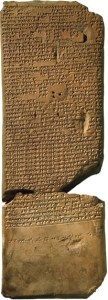
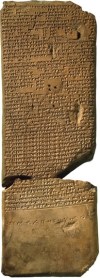
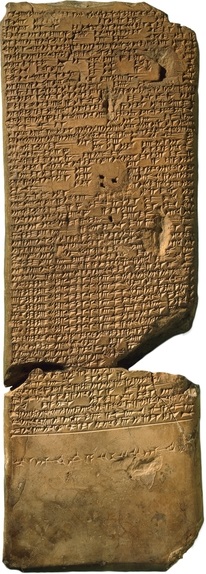
cuneisdgsdg nig-ku-lam-ma dingir-ra-na-ka su—tu-tu nu-ub-zu (2)
‘The destruction is from his own (personal) god; he knows no savior.’ (3)

Literal translation of dingir-ra(-na-ka) indicates that the aforementioned disaster comes from “one’s own personal god.” While ancient Sumerian and Babylonian spirituality did incorporate personal tribal or familial (ancestral) ‘deities’ and “guardian spirits,” such are generally related to lesser spirits: the sedu (spirits) and lamassu (guardians) that make greater appearances in the religion and magical traditions of the (post-Sumerian) Babylonian (Akkadian and Assyrian) Mardukites. Modern interpreters of this line read it literally and translate the sentiment as: when a man loses his favor with his personal deity then he has no one to appeal for him to the higher powers. (6)

sumlangthumb In Secrets of Sumerian Language, the distinct philosophical difference in Mesopotamia between ‘fate’ and ‘destiny’ is described based on its cuneiform usage. A person’s life has a ‘destination’ or ‘destiny’ that is fixed “in the heavens” by the gods or ‘stars’ in “zones of influence.” In comparison, a person’s ‘fate’ refers to subconsciously chosen environmental conditions that comprise a life-path that is not necessarily “fixed” while they are on their way to a destination that is fixed. In other words, it is the ‘route’ one travels on their way to a final ‘destiny’. Whether decreed by one’s own ‘personal god’ or ‘personal star’ or even erupting from one’s own “god-self,” this cuneiform line seems to indicate a ‘thing’ that is unavoidable or cannot be prevented by the person themselves or another human: such a thing on earth has been decreed in the heavens. (3)

SUMERIAN VOCABULARY
[nig-] – ‘abstract’ / a thing (7)
ku-lam-ma – destruction (4); a thing forgotten (8)
dingir – ‘prefix determinative’ / god, star, planet, spirit (5)
su—tu-tu nu-ub-zu – it cannot be prevented; or ‘avoided’ (9)
MesopotamianReligionFrontcrop Original analysis of the original Sumerian Proverb tablet series occurred using an elementary understanding of cuneiform script and Mesopotamian languages. Thorkild Jacobsen replaced Gordon’s original translation of su—tu-tu as “savior,” noting the Akkadian equivalent (‘ekimu‘) implies to “rob, steal or take away” (and not “to save”), meaning that the disaster/destruction that has been brought on into one’s life cannot be “touched” or “interfered” with and is thus “inevitable.” This more advanced rendering reveals a much deeper understanding of the ideal that what a person is due, they are due and a person receiving the harsh lessons of their life is unable to be assisted or coddled through it by any other power – they must simply experience, endure and, hopefully, survive the course with lessons learned. Quite simply, no one can interfere and safeguard against a person hellbent on making their own mistakes. (3)(9)


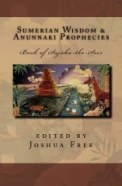
(1) Translation of Sumerian Proverb tablet by Joshua Free for Sumerian Wisdom II (tentative title) materials, the forthcoming sequel to Sumerian Wisdom & Anunnaki Prophecies: The Book of Sajaha the Seer edited by Joshua Free. These tablets attempt to preserve Sumerian language proverbs in cuneiform script during the Old Babylonian period.

(2) Derived from the original “Sumerian Proverbs” collection found in Nippur by the University Museum of the University of Pennsylvania. Some transliterations omit the ‘-na-ka‘.

(3) Original translation provided in the “Sumerian Proverbs” museum monograph by Edmund Gordon. The translation and interpretation has since been updated by Thorkild Jacobsen in the 1959 edition notes to the monograph: “–the disaster is of his own making (lit., ‘is of his personal god’), it brooks no interference.” His interpretation warns that “against self-imposed burdens, self-willed destruction, others can do very little.”

(4) Vocabulary supplement derived from the ‘Sumerian Glossary and Concordance’ for the Gordon “Sumerian Proverbs” museum monograph.

(5) Vocabulary inclusion of student translation is derived from the Mardukite handbook: Secrets of Sumerian Language edited by Joshua Free.

(6) Edmund Gordon explains his interpretation: “When a man’s personal god is against him, he has no one to intercede on his behalf before the assembly of the gods.”

(7) The Sumerian cuneiform prefixing sign ‘nig‘ – found at the start of lines throughout this particular series of ‘proverb’ tablets – indicates an attached statement regarding a ‘thing’ as an “abstraction” (concept) rather than always to be treated as a literal “thing” (object).

(8) An alternate translation to nig-ku-lam-ma is offered in the collected notes and revised additions of the 1959 edition by Edmund Gordon as: “a thing which has been forgotten.”

(9) Alternatively suggested by Joshua Free as “no one can prevent” or “no one can avoid” from the literal Akkadian ekimu – “none may ‘steal’ away.”

1 Comment

Filed under akkadian, ancient esoterica, ancient near east, assyrian, babylonian, excerpt, mardukite, mesopotamian, new babylon, new release, news, plans & proposals, research development, special offer, sumerian, truth seeker press

Sumerian Wisdom & Babylonian Cuneiform Tablets: Wisdom on Civil Disobedience, Submission & Defiance

2. “What is given in submission is a catalyst for defiance.” (1)

The ‘Near East’ of the ancient world, now called the ‘Middle East’ today, has never found an equilibrium of political or military peace. Imaginary borders and boundaries, not to mention total conquest of the Babylonian Empire, meant a king could be a true conqueror of the ‘known world’ and legitimately the most powerful of figures in its midst.

cuneisdgsdg nig-gu-gar-ra nig-gaba-gar-ra (2)
That which is given in submission becomes a medium of defiance.‘ (3)

When the annals of Mesopotamian history are examined, a seeker discovers a broad legacy of constantly shifting sands of power, dynastic reign and the geographical realm of an empire’s capital city all play a part in military management of these ancient forces that fought for control of the Tigris and Euphrates river valley (Mesopotamia), the resources it contained (abundant when tapped properly), the recognition of and authority over a sweeping population (the largest urban centers of the ancient world) and the state-religions governing the whole system (that have gone on to shape even the programming of the modern world).

sumlangthumb The actual cuneiform verse can be translated in two different ways. Both are meant to convey the same sentiment. Early transliteration scholars recognized that ‘gu-gar‘ and ‘gaba-gar‘ refer to ‘things’ of submission (gu-gar) and defiance (gaba-su-gar), which makes the statement we have above possible. However, if the ‘figure of speech’ is to be taken literally, then the ‘thing’ given is a “neck” (gu) beneath (“submission”) your opponents foot – or else, “sticking your neck out” – and this ‘thing’ becomes a ‘thing’ (placed) against the opponents chest, a sign of “defiance.” (7)

SUMERIAN VOCABULARY
[nig-] – a thing / ‘abstract’ (4)(7)
gu-gar – to submit / give submission (4)
gu – neck (5)
gaba-su-gar – of defiance / to defy (4)
gaba – chest / breast (4)

sajahafronthumb The cuneiform author suggests ‘taking one for the team’, giving motivational due to one who executes gainful sacrifice for a better future outcome – or, at least, the possibility of one. Considered in the spirit of ‘civil disobedience’ as suggested by classic writer, Henry David Thoreau, the advice may be for the ‘common folk’ rather than warlords and kings, and suggests that one keeps their head down in order to ‘fight another day’. (6)


(1) Translation of Sumerian Proverb tablet by Joshua Free for “Sumerian Wisdom II” materials, forthcoming sequel to Sumerian Wisdom & Anunnaki Prophecies: The Book of Sajaha the Seer edited by Joshua Free. These tablets attempt to preserve Sumerian language proverbs in cuneiform script during the Old Babylonian period.
(2) Derived from the original “Sumerian Proverbs” collection found in Nippur by the University Museum of the University of Pennsylvania.
(3) Original translation provided in the “Sumerian Proverbs” museum monograph by Edmund Gordon.
(4) Vocabulary supplement derived from the ‘Sumerian Glossary and Concordance’ for the Gordon “Sumerian Proverbs” museum monograph.
(5) Vocabulary inclusion of student translation is derived from the Mardukite handbook: Secrets of Sumerian Language edited by Joshua Free.
(6) As explained by Edmund Gordon, regarding ‘passive resistance’ alluded to in this tablet: “…the enemy will eventually be overthrown by means of whatever has been surrendered to him.”
(7) The Sumerian cuneiform prefixing sign ‘nig‘ – found at the start of lines throughout this particular series of ‘proverb’ tablets – indicates an attached statement regarding a ‘thing’ as an “abstraction” (concept) rather than always to be treated as a literal “thing” (object).

1 Comment

Filed under akkadian, ancient esoterica, ancient near east, babylonian, excerpt, mardukite, mesopotamian, new babylon, new release, news, nexgen, plans & proposals, research development, sumerian, truth seeker press

Sumerian Proverbs & Babylonian Wisdom: Ancient Cuneiform Tablets Reveal Emphasis on “Truth”

claytabletsheader

“Whoever partners with Truth, creates Life.” (1)

At the forefront of the ‘Sumerian Proverbs’ [Liber-P] Old Babylonian (Akkadian) cuneiform tablet series is a homage to the universal and ineffable spirit of Truth – that enigmatic force – a driving pursuit at the core of all language arts at the cradle of modern human civilization sciences…

cuneisdgsdg nig-ge-na-ta a-ba in-da-di nam-ti i-u-tu (2)

‘Whoever has walked with truth generates life.’ (3)

Communicating this philosophy to modern minds in English language is difficult. The sentiment carried is greater than to simply say: ‘whoever is true’ or ‘whoever is with truth’. It also does not say ‘whoever is filled with truth’. Whether we adopt the -da/-ta (together with) or -ta[b] (partnered with) interpretation, the implication is that ‘whoever’ is deeply ingrained or ‘bound’ to Truth; it is next to them, it is their companion, or else they have taken it as a friend, forsaking all others that might break that bond.

sumlangthumb I favor this preferred meaning over the original interpretation of having ‘walked with truth’ (impermanent past-tense). I understand the original author/translator meaning to imply the ‘walking with a companion’, but the interpretation seems vague if not misrepresenting the actual Sumerian Lexicon being evoked.

SUMERIAN VOCABULARY

[nig]-ge-na – truth (4)

-da/-ta – beside, in vicinity of, together with (5)

-ta[b] – friends, companion, partner (5)

a-ba – who? / whoever (5)

nam-ti – fate/nam; life/ti (5)

u-tu – to bear ‘children’, give birth to (5)

MesopotamianReligionFrontcrop Given that the word for ‘generating’ or ‘creating’ life given here is the same word meant to imply literal ‘birth-giving’, the romantic interpretation of this proverb is that ‘whoever partners with Truth as a lover’ will ‘give birth to Life’ – they will ‘radiate’ or ‘generate’ a prosperous life. The subject is not simply ‘building’ or ‘constructing’ the life out of preexisting materials but is literally ‘giving birth to’ their existence, life or reality as a result of their union with Truth – living in harmony with observed cosmic forces and thereby manifesting the desired life and result. (6)


(1) Translation of Sumerian Proverb tablet by Joshua Free for “Sumerian Wisdom II” [Liber P] materials, forthcoming sequel to Sumerian Wisdom & Anunnaki Prophecies: The Book of Sajaha the Seer edited by Joshua Free, with translation assistance by Khem Juergen. These tablets attempt to preserve Sumerian language proverbs in Old Babylonian (Akkadian) cuneiform script.

(2) Derived from the original “Sumerian Proverbs” collection found in Nippur by the University of Pennsylvania, combined with lines 1-2 of the “GGG” tablet text (catalogue number U.17207-58) excavated from Ur and transliterated for the 1959 edition.

-GGG-

1. nig-ge-na-ta a-ba in-da-[DI]

2. nam-ti ia-u-t[u].

(3) Original translation provided in the “Sumerian Proverbs” museum monograph by Edmund Gordon.

(4) Vocabulary supplement derived from the ‘Sumerian Glossary and Concordance’ for the Gordon “Sumerian Proverbs” museum monograph.

(5) Vocabulary inclusion of student translation is derived from the Mardukite handbook: Secrets of Sumerian Language edited by Joshua Free.

(6) As explained by Edmund Gordon: “…a man who lives in accord with the universally recognized ‘cosmic and immutable truths’ will be able to obtain for himself all the good things in life.”

1 Comment

Filed under akkadian, ancient esoterica, ancient near east, babylonian, excerpt, mardukite, mesopotamian, new babylon, new release, news, nexgen, plans & proposals, prophecies & predictions, research development, sumerian

Babylonian Astrology & Age of Aquarius: How the Sumerians Measured the Heavens

10514761_482280898571526_123244564401630173_n2

“The ancient Sumerians understood the connection between cycles, time and mathematics. In addition to the pragmatic use of the wheel or circle, they also developed the initial calculations of the circle to be 360 degrees. Their use of base-60 ‘sexagesimal’ math in the systematic measurement of time has carried with humanity to this day…”

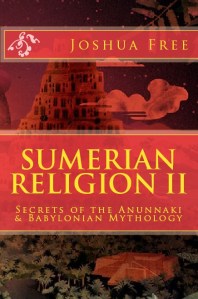
[This mardukite.com blog post is officially excerpted from Liber 51/52, available in the anthology Mesopotamian Religion by Joshua Free. It is also available as the stand-alone title: Sumerian Religion II, and in the Mardukite Year-2 Anthology: Gates of the Necronomicon by Joshua Free.]

MesopotamianReligionFrontcrop The annual year was originally only divided into three seasons: beginning, middle and end. A year in Babylonia was separated into a cycle of 12 periods of 30 degrees or days. These periods, equated to the ‘moon’, were called ‘moonths’ or more appropriately ‘months’. Of course, the sky-wise priests were aware of the actual appearance of 13 lunar cycles in a year, so an additional shortened month was acknowledged to make the cycle fit. In most cases, a ‘new moon’ meant a ‘new month’ and so the days counted in a month are the days counted in the progression of a moon – though naturally the disparities between lunar and solar time had to be accounted for, and with time the ‘Chaldeans’ had perfected it.

cuneisdgsdg The annual cycle was marked distinctly by two primary religious festivals – the spring festival of Akitu and the winter festival of Zagmuk. Both appear to be represented or distinguished by the symbol of ‘divine marriage’, later meaning the relationship between the ruling king and his lands.

Originally, however, the more popular fertility interpretation of these festivals, particularly in the spring, were based on land renewal and with the development and spread of these tradition, Akitu became known as Ostara – the pagan Easter – in dedication to Ishtar (Inanna). Not too surprisingly, the pre-Christian account incorporated into the symbolism of the later Judeo-based traditions also includes the proverbial theme of resurrection – in our case: the infamous story of Ishtar’s ‘descent‘ into the ‘Underworld’, where she is perceived of as ‘dead’ for three days.

vlcsnap-2011-08-13-21h32m43s221 Given the way modern calendars are oriented, the start of each ancient month would be considered near the ‘middle’ of current months – much like the seasonal observations. Although the festivals in ancient times were oriented to the naturally occurring solstices and equinoxes, it was often customary to observe them ceremonially during the closest full moon. All of this gave way to a generally ‘fluid’ incorporation of time into society that is varied in its interpretations among modern scholars.

The ancients made use of ‘water-clocks’ at night and ‘sun-clocks’ during the day. But more important to the survival of an agricultural society then gauging the minutes of a day for a ‘time-punch’ was the tracking of the annual cycle for planting and harvesting. Quite different than what the remainder of the Western World has familiarity with, the seasonal cycles in the deserts of Babylonia are unique. We have a recognizable summer in June, July and August where there is not rain and nothing grows – as we might expect – but then the region is plunged right into its rainy season in September, and farmers must be ready to plant their barley by October with a harvest necessary before the summer sun returns.

Gates3rdEdfrontcropMINI A different system of observation was used to calculate and measure ‘divine time’ in relation to ‘earth time’. This gave rise to what contemporaries call an ‘age’ – such as the current ‘age’ of Pisces and the forthcoming ‘age’ of Aquarius. Apart from the garbled nonsense of today’s horoscopes, the observation of zodiacal ages and alignments during the year are very real events. For whatever credibility the modern mind might wish to give the ancient astrologie omen tablets, the ability to perfectly chart time over long periods by using verifiable astronomical events, that we can even rely on today as investigators into this ancient culture, is quite impressive by any standards.

We can establish the chronological procession of the ages, but not necessarily a definition of when they have absolute turning points. They are measured in 2,160 year periods (72 x 30), connected to their ‘domain’ of visibility in the ‘Celestial Sphere’. The progression is visible in the stars but the clear boundary line that defines each is in many ways obscure. For example, when specifically does the current age enter ‘Aquarius’? Counting backward, the Mardukite school of thought might have suggestive input to apply.

259202494_2439cd36a1_o2 Following earlier thwarted attempts to solidify global rulership, the real Babylonian Reformation by the Anunnaki god MARDUK, with the aid of Nabu, occurred as a result of the ‘Age of Aries’ having arrived and ‘promised power’ not being ‘passed’ to him. This would have to be circa 2150 B.C., when the movement became notably public.

How long prior to this, pointing to the turn of the ‘Age of Aries’, would they have waited? If it were only ten years, then the Piscean Age really would have been marked by the birth of Jesus Christ – exactly 2,160 years later – notoriously represented by the fishes. Other ‘scholarly’ dates for the start of the Age of Aries include 2200, 2150, 2000 and 1875 B.C. Based on these figures, this ‘era’ of reportedly ‘new consciousness’ could be in effect now, later in this century, in the year 2150 or even closer to 2600…

Time, as we have found no different today then yesterday, is indeed entirely relative!

1 Comment

Filed under ancient esoterica, ancient near east, babylonian, excerpt, mardukite, mesopotamian, new babylon, nexgen, plans & proposals, prophecies & predictions, research development, sumerian, truth seeker press

Babylonian King Hammurabi and Law Code of Marduk the Sumerian Anunnaki god of Babylon

Whereas Sargon seems to have relied upon his power and his terror tactics to keep people under control, Hammurabi presents himself almost like a modern politician in that he wants to be loved; he wants the people to like him; he’s going to set up laws that will protect them, not laws that will terrify them or force them into submission.
~ Amanda Podany, Cali State Polytech, Pomona, CA

Gates3rdEdfrontcropMINI [This mardukite.com blog is officially extracted from Liber-51/52, available as the standalone title SUMERIAN RELIGION II, in the Liber-50/51/52 anthology MESOPOTAMIAN RELIGION or the new exclusive economical Mardukite Year-2 anthology GATES OF THE NECRONOMICON edited by Joshua Free.]

In the post-SumerianMardukite” era of MESOPOTAMIA, the traditions and systems of the Anunnaki were sealed under MARDUK, heir of ENKI. During the shift to the Age of Aries – the sign of MARDUK, represented by the Ram – religion, spirituality and the global reality experience became fueled by ‘divine politics’.

MesopotamianReligionFrontcrop The famous ‘creation stories’ and ‘mystical definitions’ (that serve as the basis for future traditions and ‘societal reality systems’) were forged onto tablets of propaganda supporting the ‘Babylonian‘ paradigm by the priestscribes of (‘led by’ or ‘dedicated to’) NABU, heir of MARDUK. Figures that appear central to the infrastructure of MARDUKITE BABYLONIAN systems are the younger generations of Anunnaki.

The BABYLONIAN tradition is a direct evolution of the earlier Sumerian legacy – it is the progression of a particular Anunnaki family in MESOPOTAMIA and not simply the assimilation or recreation bring applied to a similar pantheon elsewhere (as we see in cases of later developed ‘classical mythoi’, which simply regurgitate to us the ancient themes with new names. After the vision put forth by Sargon, King Hammurabi (c. 1790 B.C. by the short chronology) is the next most famous and contributory ruler toward a Mardukite Babylon in MESOPOTAMIA.

SumerianReligion2crop In homage of MARDUK‘s own legacy put forth in the ENUMA ELIS (‘Epic of Creation‘), King Hammurabi reconstructed the ziggurat temple-shrine earth-home of the Anunnaki god MARDUK, the Esagila – built in even more ancient times to establish a Mardukite ‘World Order’ prematurely during MESOPOTAMIA‘s evolution – an effort brought down as an archetype of the ‘Tower of Babel’ ziggurat by the Enlilite Sumerians.

Related Blog: Enuma Elis: Secrets of Ancient Power and Magic of Marduk the Anunnaki god of Babylon

The region of Babylon experienced human occupation since at least the Third Millennium B.C. (since at least the period of Sargon of Akkad c. 23rd century B.C.). That being said, the independent BABYLONIAN city-state of the “Mardukite” legacy we know today is launched primarily through the efforts of the Amorite Dynasty; specifically Hammurabi, who goes on to replace the former Enlilite Sumerian tradition with a complete MARDUKITE BABYLONIAN re-write.

hammurabi21233 Sumerian language is denationalized and scribes record all literature in the “new” Akkadian-Old Babylonian that accounts for the majority of pre-Assyrian cuneiform tablets found and translated today. The BABYLONIAN cuneiform tablet literary revolution by the priest-scribes of NABU made way for the means to establish a firmly rooted evolution of the Anunnaki tradition emphasizing MARDUK as the supreme ‘King of the Gods‘ and completely replacing the previously accepted SUMERIAN paradigm.

King Hammurabi is considered the greatest empire engineer since Sargon of Akkad. Efforts conducted over the forty-three year period of his reign allowed a centralized ‘world government’ of BABYLON to form that not only served the people on an emotional, cultural and religio-spiritual level, but also reaching energetic and monetary heights in global wealth, power and influence.

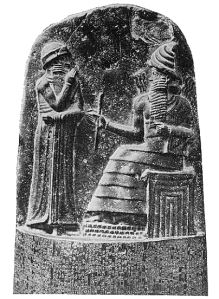
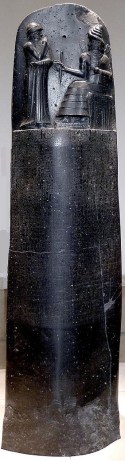
P1050763_Louvre_code_Hammurabi_face_rwk Ruling in honor of MARDUK allowed King Hammurabi to bring BABYLON to fruition with cultural and spiritual heights not visited again for at least one-thousand years when over a millennium later, the Neo-Babylonian era of Nebuchadnezzar II. Of the many conventions introduced to human civilization from BABYLON, the Hammurabic legal system is one of the most significant to note – made popular in consciousness as the “eye for an eye” methodology known as the CODE OF HAMMURABI. Although tyrannical and draconian penalties are the most frequently cited examples of the ‘Code’, the details of 282 laws established the citizen rights, property rights, social rights and even feminine equality rights in addition to the creation of a “class” system.

The CODE OF HAMMURABI, by its own account, does not originate from the mind of King Hammurabi himself, who considered himself merely a catalyst for the reign and power of something ‘greater’ than himself: that of the patron deity, MARDUK. The ‘Code’ or Law of Hammurabi, is in fact what the modern MARDUKITE CHAMBERLAINS movement dubbed the Book of the Law of Marduk.

2 Comments

Filed under akkadian, ancient esoterica, ancient near east, assyrian, babylonian, excerpt, magick & mysticism, mardukite, mesopotamian, modern occultism, new babylon, new release, plans & proposals, research development, sumerian, truth seeker press, youtube

New Babylon Rising – Mesopotamian Anunnaki Gods & The Mardukite Necronomicon, Lughnassadh Issue 2014

NBRheaderSMALLnotuse

GREETINGS SEEKER!

Welcome to the the eighth online eZine installment of “New Babylon Rising“, a continuous effort provided to the public by the Mardukite Truth Seeker Press, dedicated to the preservation of ancient literary records — primarily those cuneiform — and the human traditions they inspired on the planet. Together we unveil these antiquated mysteries and shine a new crystalline light on the most critical subjects of our time and in understanding where we came from, where we are and where we are going: the origins and development of human beliefs, internal potentials and external manifestations, especially those ancient “divine” encounters, establishment of artificial social “systems” among the population, the future evolution of transhumanism and, of course, fragmented languages, religions, and the dispersion and corruptions in esoteric or occult knowledge regarding superior spiritual knowledge that engineers the reality we experience everyday and the progression of immortal spirits beyond this realization.

We have entered dangerous territory, indeed…

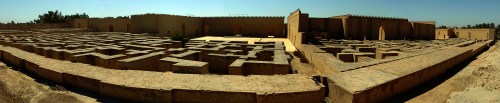
Babylonian ruins of babylon

BABYLON, Gateway of the Gods: Energy Signatures, Mardukite Sigils, Anunnaki Signs & Glyphs
mardukite.com — 3, July 2014
The Anunnaki sealed within this system are seven. Among them is MARDUK, who sealed the others to Gates of Babylon. Before them all is the Earth Gate [Foundation of Heaven and Earth]. Beyond them all is the Ring [Gate] of Pass Not – wherein resides the Ancestral Chiefs of the Supernal Trinity – The Elder Gods: ANU, ENLIL & ENKI…

ENKI – Babylonian Lord of the Earth, Sumerian God EA and Gnostic Demiurge
mardukite.com — 10, July 2014
The spirito-mystical trinity that composes the ancient pantheon is concluded with Enki, brother of Enlil. Most genealogies, particularly emphasized by post-Sumerian civilizations, will conclude that Enki and Enlil are, in actuality, half-brothers. Both are divine sons of Anu, the “Sky-Father,” but as heir to “Kingship of Heaven,” En-lil is reported as the son of Antu (the “official” consort of Anu), while Enki is descended from Nammu [which is often equated to Tiamat in Babylonian lore and perhaps the justification of the descent of Marduk from Tiamat in some versions]…

BOOK OF GENERATIONS, Ancient Cuneiform Tablets of Anunnaki gods, Understanding ENKI & ENLIL
mardukite.com — 20, July 2014
The Book of Generations concerning the true and ancient story of the Creation of Man now lies open for all to read. According to the most ancient sources existing on the planet, the ANUNNAKI, particularly ENKI and MARDUK — with the assistance of a “birth-goddess” [hence the origins of the “One Mother”] — eased the toils of the IGIGI-Watchers by fashioning a race of slave workers for the fields and mines: humans…

mesopotamianmagicheadline

Dark Paths & Outer Gateways, Lights & Shadows of the Necronomicon Tradition with Joshua Free
necrogate.com — 6, July 2014
Those who work with these mysteries grow beyond the mere “mortal” understanding of good and evil – as without such self-honesty, the exploration of the Great Mysteries and the Great Deception become at once impossible…

NECRONOMICON ANUNNAKI BIBLE – SIXTH EDITION — mardukite.com exclusive Anniversary Edition!
necrogate.com — 18, July 2014
A tome of incredible grandeur drawn from the original archives of the Mardukite Reseach Organization (Mardukite Chamberlains)… NEARLY 600 PAGES — SIX EDITIONS — THOUSANDS IN PRINT… The Necronomicon
of Mesopotamia… Sumerians… Star-Gates of Babylon… The Anunnaki… Ancient Alien Gods… HERE is the definitive work in its much anticipated 5th Anniversary revised and expanded 6th edition!

Babylonian Book of Dead Names: Mardukite Anunnaki Necronomicon edited by Joshua Free
necrogate.com — 23, July 2014
THE BABYLONIAN NECRONOMICON – Here is the Book of the Chronicles of Ancestors [Dead Names] who descended “from the Heavens to the Earth,” created the race of mankind and the race of MARDUK, and led the races of men against the race of MARDUK, stemming from political conflicts among multiple generations of the ANUNNAKI…

Leave a comment

Filed under akkadian, ancient esoterica, ancient near east, assyrian, babylonian, excerpt, limited edition, magick & mysticism, mardukite, mesopotamian, modern occultism, new babylon, new release, nexgen, plans & proposals, prophecies & predictions, research development, sumerian, truth seeker press

BOOK OF GENERATIONS, Ancient Cuneiform Tablets of Anunnaki gods, Understanding ENKI & ENLIL

To the ADAMU they sought to bestow the face of the gods.
For the remainder of the period they heard the drum beat.
From the flesh of the god the spirit remained to the End of Days.
It was made known to the living gods by the sign marked,
Without which he be allowed to be forgotten, so the spirit remained.

–‘Book of Generations’, LIBER-N

Babylonian ruins of babylon

The Book of Generations concerning the true and ancient story of the Creation of Man now lies open for all to read. According to the most ancient sources existing on the planet, the ANUNNAKI, particularly ENKI and MARDUK — with the assistance of a “birth-goddess” [hence the origins of the “One Mother”] — eased the toils of the IGIGI-Watchers by fashioning a race of slave workers for the fields and mines: humans.

NecroBible6ththumb [The complete cuneiform compilation entitled the ‘Book of Generations’ is found in the Year-1 (2009) Mardukite Research anthology, NECRONOMICON – THE ANUNNAKI BIBLE edited by Joshua Free. They are catalogued by the Mardukite Truth Seeker Press as the Tablet-G series, first appearing in Liber-N in 2009.]

Remnants of this lore has filtered out into the current controversies over races and bloodlines, but such tendencies remove the Seeker even farther from the truth. This religious magick has come to be taken for granted by many classes of supposed “New Agers” from naïve gothic teens to soul-sold masonic rock-stars. [Excerpting the ‘Preface’ to the Tablet-G series.]

Lore from these ancient tablets reveal a key point in the Creation of Man, that neither the ANUNNAKI, ENKI, MARDUK, ENLIL or even ANU is necessarily viewed in themselves by the actual ANUNNAKI and IGIGI beings as “God” or “gods” in the sense that contemporary historians have incorrectly interpreted global mythologies.

cuneisdgsdg Some-“thing” exists outside of the dimensions inhabited by these beings, and yet the ancient world collaborates on the belief that these specific intermediaries or emissaries are the ones responsible not only for the existence of humans but also a feud over our “care-taking” during the Deluge.

According to these most antiquated cuneiform tablet writings, it is ENLIL — who is revered as “Jehovah” in Enlilite territories (identified in contemporary biblical scriptures as the “Holy Lands”) — that is actually displeased with human creation from the start and also any salvation for the race through the ‘Deluge’.

Enki2 ENKI who appears as humanity’s “saving deity” this time and yet the ludicrous notion of Olympian Monotheism always attributes positive qualities to a singular “God” with the backwash byproducts give to a “Devil” figure. Consequently what was actually initiated as a disagreement among a “holy family” later funneled down to modern minds as “good vs. evil” in the name of religious dualism — such as we see among the later Mardukite-inspired Persian Zoroastrians.

Discover MORE about the amazing legacy described on cuneiform tablets from Mesopotamia. They are the only surviving comprehensible proof of a time since forgotten — one which has been heralded as the birthplace of the arts of modern human civilization, all of which gifted by the Sumerian ANUNNAKI who engineered the people and their reality since the inception of ‘human kind’.

1 Comment

Filed under akkadian, ancient esoterica, ancient near east, assyrian, babylonian, excerpt, magick & mysticism, mardukite, mesopotamian, modern occultism, new babylon, new release, research development, sumerian, truth seeker press

Mesopotamian Magic, Maqlu Cuneiform Tablets, Babylonian Dark Rites of Anti-Witchcraft

mesopotamianmagicheadline

“Climb the ladder of lights and appeal to the gods for their protection and for the destruction of the enemy and all evil-doers, wicked witches and warlocks of the world…”
–Necronomicon Anunnaki Bible

How often we have heard of the “Dark Arts” born of a ‘polarized’ and often ‘dualistic’ view of the universe – and the forces that occupy it. For every ‘white witch’ there is a ‘black spell’ and to every system of Order, there is a Chaos factor; for no fragmented experience of reality can ever actually find “balance”, but the pendulum swing – the tidal ebb and flow of universal currents will always seek it.

maqluthumb This mardukite.com blog post is extracted officially from Mardukite Liber M, available as either MAQLU MAGIC or NECRONOMICON SPELLBOOK II, in addition to the Year-3 anthologies either MESOPOTAMIAN MAGIC or NECRONOMICON WORKBOOK and the mega-anthology NECRONOMICON GNOSIS.

…So, too is movement possible in the physical world – or at least one’s perception of the ‘3-D’ reality experienced. As such, with the once united ‘crystal’ being cracked into the varied refractions of human experience, language and culture, a ‘dualistic’ world emerged in consciousness; right before the very eyes of ancient Mesopotamians – at the heart and cradle of human civilization.

WHAT IS THE MAQLU CUNEIFORM TABLET SERIES?

Before approaching the more ‘colorful’ elements of the tradition – those that could most appropriately be given classifications as ‘Dark Arts’, ‘Sumerian Sorcery’, ‘Babylonian Witchcraft’, ‘magickal warfare’ or ‘wizards duels’ – it is important that the context for which such exists, a background screen onto which to express the story of the MAQLU in its projected spectrum of rainbow lights and kaleidoscope glory.

MesopotamianThumb The name MAQLU can be interpreted differently as with most things – such variegated perceptions are not even restricted to foreign languages for even a shared one is not free of semantic issues in its own vocabulary. Most typically, MAQLU is translated to mean “the Burnings” by ‘Sumeriologists’ and such. This is a good ‘base’ for our context, as we do indeed find the origins of a community bonded for ‘burning evil in effigy’.

The Simonian work, in regards to a Babylonian Necronomicon practice, interprets the tablets as ‘Rites of Burnt Offering’ or else a ‘Book of Burnings’ for literary purposes. As with most of the work ‘restored’ by the Mardukite Chamberlains, a surface interpretation is never accepted and a ‘deeper mystery’ can often be uncovered in the very ‘literal’ meanings behind these very old words that do not appear to have had the same ‘metaphorical’ meaning that modern language users often take for granted – for the Mardukites have interpreted the MAQLU more appropriately – and not without its other diverse cultural parallels – as Burning Man [maq-lu].

cuneisdgsdg Though it seems that the MAQLU operation was once a much more simple, internalized, meditative and solitary application used by early priests and magicians in Mesopotamia, it later developed more dramatically as a public Fire Festival in Sumer and Babylonia, involving the entire population of the community who gathered together in a ‘combined’ and ‘harmonic’ effort of intention to ‘drive out’ or ‘dispel’ the “evil” and “evil-doers” of the land.

As “ridiculous” as this might sound to the naïve skeptic or right-wing fundamentalist, it can and should be noted that more recent public scientific studies all over the globe have now shown the effective abilities of consciousness moving energies when large groups, or better, the majority of the population is focused on a single emotional event.

These types of ‘quantum’ effects appear to have very real ramifications for the population of the planet and the greater cosmos as a whole in this entangled universe whether or not people are aware of this phenomenon taking place in their environment and even internal ‘spirito-mental’ being (which are self-honestly All-as-One).

necrognosisTHUM In the instance of the MAQLU, the Burning Man is the representation of the ‘evildoers’ of the world – those who ‘plagued’ humanity with their wickedness and thereby upsetting the ‘world order’ of the gods, in addition to the gods themselves. Upsetting such a balance was usually felt in the community as ‘illness’ and ‘pestilence’, ‘disease’ and ‘famine’. Such could prove devastating to still developing human civilizations, and as such they were considered ‘evil’, the most wicked of ‘demons’ and anything that might lead to them – mostly uncleanliness and misappropriated living – were considered taboo (the original non-moral tribal sins) and for good reason.

Eating from an unclean plate was taboo (a sin) because it could lead to the spread of disease. Ancient humans were far from primitive in their understanding of the natural world and their relationship with
it. Before the wrongful use of authority in classical times, the taboos and sins were not given from dogma, but from medicinal necessity.

Representative images are often used in ‘idol magic’ or ‘sympathetic magic’, but not as a result of worship – as some mythographers have repeatedly put forth – but to actually embody the ‘energetic current’ that is universally entangled to ‘focal object’ and its form.

WICKER MAN OF THE DRUIDS

cunei The representation of a ‘demon’, like the ‘plague-god’ Namtaru, was not to worship the deity with homage or to glorify the ‘daemonology’ of the Babylonian priests. Such statuary was typically constructed only to be ‘ceremonially’ annihilated or buried as a ‘ward’ against what the statue (deity) was representative of. In making such an object, the magicians show their understanding of the ‘entanglement’ of the universe in its mystical oneness and the interconnection of all things.

Certainly not primitive.

It is almost impossible to bring up the topic of the Burning Man without conjuring to mind a much more geographical and time-recent example made popular in the images of motion pictures and familiar Roman-inspired writings of the Celtic Druids – and that is the Wicker Man, also called ‘Burning Man’ by some neopagans.

Far removed in time and space we see evidence for the same rite being conducted and for similar reasons – the preservation of the early agricultural civilizations that were ‘guided’ by Sky God traditions – called the Anunnaki on Mesopotamian tablets or the Tuatha de Dannan (Tuatha d’Anu) in European Celtic and Druidic sources.

1001015_318340804969022_2026839541_n “Fire” is a very common element to the early ‘magical’ and ‘shamanic’ systems, and its mastery in correlation to the development of modern humans is certainly indisputable. Any connection to the Fire Festivals of Europe is going to be difficult for one to understand without having been familiarized to the rigorous research found in other Mardukite materials that gives Mesopotamia as the birthplace of the Druidic Tradition.

Sir Francis Frazer (Golden Bough) mentions both a ‘solar’ alignment and ‘purification’ style to these types of operations. The later European Wicker Giants appear to be more ‘agricultural’ in nature then the MAQLU version that targets actual ‘practitioners’ of the ‘Dark Arts’ that negatively affect the well-being of the greater population, the community at large and by extension the “moral balance” perceived of ‘universal forces’.

The ancient Sumerians and Babylonians were no less dependent on the ‘agricultural’ fertility then the Celts – far from it. Thriving of a human numbers in the lands of Mesopotamia were so heavily dependent on the skilled use of arid land and the redirection of water from the Tigris and Euphrates rivers in a skillful way since lost to the Arabs and other occupiers of the land since.

babel98769878 In Europe, we find the appearance of the Burning Man during the fertile and seed-sowing and nurturing ‘spring’ seasons, particularly the Equinox (Easter) observation, Beltane (a notorious ‘Fire Festival’) and finally Midsummer. The annual survival of the agricultural Celts was wholly dependent on the success of this season above all others.

IN CONCLUSION…

One of which does correlate with Europe is an esoteric observation of Beltane – opposite it, Samhain (modern-day Halloween) is also significant. The Sumerio-Babylonian AKITU festival is concurrent with the Spring Equinox. So, regardless of where we turn, there is a unifying (universal) picture forming to define the ceremonial observation of the Burnings.

Leave a comment

Filed under akkadian, ancient esoterica, ancient near east, assyrian, babylonian, excerpt, magick & mysticism, mardukite, mesopotamian, modern occultism, new babylon, plans & proposals, research development, sumerian, truth seeker press

Mardukite Necronomicon Babylonian Anunnaki Bible – Inside the Fifth Anniversary Edition

claytabletsheader

The Necronomicon of Mesopotamia… Sumerians… Star-Gates of Babylon… The Anunnaki… Ancient Alien Gods… The Mardukite Babylonian Religion…

NEW 5th ANNIVERSARY PAPERBACK EDITION

NEW 5th ANNIVERSARY PAPERBACK EDITION

The world has waited long enough! Here it is! An authentic NECRONOMICON for the masses! Released in commemoration of the 5th Anniversary of the Necronomicon Anunnaki Bible, the Mardukite Truth Seeker Press proudly presents the new abridged compact portable travel edition of Joshua Free’s NECRONOMICON BABYLONIAN BIBLE excerpting the primary source book of the Mardukite Chamberlains Research Organization uncovered during their first active year of development in 2009!

cuneisdgsdg Following the Mardukite StarGate Ceremony on Beltane 2009 — also coinciding with the initiation of the first official ‘Mardukite Chamberlains’ — the first of a series of installments arrived for the Year-1 Cycle of materials… called simply: NECRONOMICON… the book that later became the basis for an entire revival of interest into Sumerian Anunnaki and Babylonian Tablets, led by world-renown esoteric expert JOSHUA FREE. Containing a wealth of information not found in the original ‘Liber-N’ hardcover, this new 5th Anniversary Edition of the NECRONOMICON is a new prestigious portable abridged travel edition of the ‘Babylonian Anunnaki Bible‘ excerpting critical portions of the 5th Edition NECRONOMICON ANUNNAKI BIBLE — also found in the mega-anthology: NECRONOMICON – ANUNNAKI LEGACY (SILVER EDITION).

SO… WHAT TABLET SERIES ARE EXCERPTED OR ABRIDGED IN THIS NEW PAPERBACK EDITION ???

Here’s the inside scoop!

COMPLETE INTRODUCTION
Preface to the Third Edition (December 2009)
Preface to the Second Edition (June 2009)
Preface to the First Edition ( May 2009 )
An Introduction to Necronomical Studies
Toward a New Vision: Egypto-Babylonian Structure
First Steps Toward Gatekeeping
The Magick of the Necronomicon Anunnaki Bible

TABLET EXTRACTIONS, EXCERPTS & SELECTIONS
Tablet A – Book of the Anunnaki & Igigi (Liber N)
Tablet B – Book of Babili StarGates (Liber N)
Tablet C – Book of Crossings (Liber N)
Tablet D – Book of Dzyan (Liber L)
Tablet E – Book of Eclipses & Astrologie (Liber L)
Tablet F – Book of the Fifty Names of Marduk (Liber N)
Tablet G – Book of Generations (Liber N)
Tablet H – Book of Headaches & Demonologie (Liber 9)
Tablet J – Book of Al-Jilwah (Liber 9)
Tablet K – Book of Kings & Dragonblood (Liber N)
Tablet L – Book of the Law of Marduk (Liber L)
Tablet M.0 – Book of Exorcisms & Banishings (Liber N)
Tablet N – Book of Nemesis [Enuma Elis] (Liber N)
Tablet O – Book of Chaldean Oracles (Liber G)
Tablet P – Book of [Anunaki] Prayers (Liber L)
Tablet Q – Book of Qlippoth (Liber 9)
Tablet R – Book of the Return & Last Days (Liber N)
Tablet T – Book of Nabu-Tutu (Liber L)
Tablet U – Book of the Underworld (Liber C)
Tablet V – Book of Variations (Liber C)
Tablet W – Book of Marduk by Nabu (Liber W)
Tablet X – Book of Crossings II (Liber G)
Tablet Y – Book of Ceremonies of Marduk (Liber G)

NEW 5th ANNIVERSARY PAPERBACK EDITION

NEW 5th ANNIVERSARY PAPERBACK EDITION

This compact abridged 5th Anniversary edition of the NECRONOMICON edited by Joshua Free, is not Lovecraftian or Simonian (while it could serve to offer validity to materials from both sources for those who seek it), neither is it “dangerous” or a “hoax” (though those who fear the revelation of these truths for the world will think it the former and label it the later). This portable edition of the full NECRONOMICON ANUNNAKI BIBLE is the single most ancient and pure unaltered lore concerning the hottest topics of our time and all times, including divinity, creation, human origins, aliens, religion, pantheistic magickal traditions, alternate dimensions, portals and the afterlife.

“In this new millennium of uncertainties, it is most likely that the uncovering of the past will reveal our future…” — Joshua Free

1 Comment

Filed under akkadian, ancient esoterica, ancient near east, assyrian, babylonian, limited edition, magick & mysticism, mardukite, mesopotamian, modern occultism, new babylon, new release, new release, nexgen, plans & proposals, prophecies & predictions, research development, sumerian, truth seeker press

Oldest Writings Reveals Sumerian Anunnaki Stargate Religion Seeks All-as-One God

claytabletsheader

Cuneiform tablet sources, the most ancient written records kept by humans, identify The Primordial Abyss, which later came to be viewed as the “all-source” for the first manifestations of material existence — it was originally nameless…

SumerianReligion2ndfrntcrop [This mardukite.com blog post is officially excerpted from Mardukite Liber 50, available as Sumerian Religion by Joshua Free, materials also found in the Year-2 anthology Gates of the Necronomicon and the mega-anthology Necronomicon: The Anunnaki Legacy silver edition.]

Fundamentally, the beauty and simplicity of the infinitude of space and pure potentiality of existence is enough for an “All-Existing Being” — but this is an almost “static” existence with no forces in movement – quite simply All-is-One (or none!) in the universe.

The non-existence was not animated, not yet manifest and so required the “motion” of existence. This was born of duality, but of the highest spiritual intent and not to be confused with physical morality – for it was by the vary opposition of the currents of “chaos” and “order” set in motion with a gentle pendulum-like drive toward constant activity with one another that caused existence.

cuneisdgsdg A common interpretation of the ancient Sumerian semantics of this All-Being is best given as “ILU” in Chaldeo-Babylonian literature, a concept derived from the Sumerian “DIN.GIR” meaning essentially the “All-God”, drawn from the Source, but later pantheistic interpretations would translate this as a plural form: gods.

[SUMERIAN RELIGION — Prolific writer, Joshua Free, presents this topic such as the modern world has never before had access to, developed from the revolutionary work conducted by the next generation of Seekers actively using a revival Anunnaki tradition in the present day…]

The name ILU was held in reverence to the priests of Babylon who sought to “re-connect” with this source by “ascending” the “Ladder of Lights” or “BAB.ILU”The Gateway to/of God (also known as the “Tower of Babel”). Later, when the name became blended with “gods” it was also connected to “stars” and the function of such became more clearly defined to some as a “Gateway to the Stars” or (as Daniel Jackson would prefer) a StarGate.

SumRelSet The simplicity is immediately shattered when enter the philosophers and religious scientists for we have all-too-easily overlooked the stumbling block of our most ancient tablets concerning divinity.

“[For] the idea of Ilu was too comprehensive and too vast to receive a very definite exterior form, and consequently [too obscure for] the adoration of the people. The personality of Ilu was not clearly defined for a long time; his office and title as ‘God One’ were at first given to Anu, ‘the ancient god,’ and the first person of the supreme trinity, which was afterward held to emanate from Ilu; the priests did not distinguish the primordial principle from the chief of this trinity.”
–M. Lenormant, Chaldean Magic & Sorcery (1874)

Biblical scholars now have conceded to the idea that the Semitic books of Genesis are indeed the product of a far more ancient Mesopotamian influence. God, the creator of existence, is found alone and everywhere at once, a “primordial sea” washing through an infinite abyss.

cunei “First was the primeval sea. Nothing concerning the origin or creation of the primeval sea has as yet been discovered in the available Sumerian texts, and the indications are that the Sumerian sages looked upon the primeval sea as a kind of first cause and prime mover, never asking themselves what preceded it in time and space.”

–S.N. Kramer, Sumerian Mythology (1944)

1 Comment

Filed under akkadian, ancient esoterica, ancient near east, assyrian, babylonian, excerpt, magick & mysticism, mardukite, mesopotamian, new babylon, new release, nexgen, plans & proposals, research development, sumerian, truth seeker press, Uncategorized, youtube