Tag Archives: babylonian magick

BABYLONIAN MAGIC – Ancient Art of Priests, Kings & Magicians Revealed! by Joshua Free

“Systematic traditions, ‘hermetically sealed’ within themselves, rose from the Semitic grimoire-styled ceremonial magic, not surprisingly influenced by ‘Egypto-Babylonian’ forms of ritual magic (first the domain of Enki but later passed into the possession of Marduk and his scribe-son Nabu). The priest-magicians of Babylon would not actually have personally used a grimoire-like magic themselves, as this was not their way. At best, they would invoke the powers of the Anunnaki with incantations in the name of Marduk – but this manner of using the ‘secret names’ as properties of Marduk, or any other demigod, was a much more recent addition to the system…” –Joshua Free
[This blog-post appears courtesy of Mardukite Liber-51/52 available within the NEW Deluxe Edition of Sumerian Religion by Joshua Free. These materials are also available in the Year-2 Mardukite Anthology: Gates of the Necronomicon.]

During the era of the first ziggurat temples – the Anunnaki age – all of the magic constituted the ‘spiritual assistance’ that was governed by the state, ruled by priest-kings and temple attendants. The ‘mystics’ of Babylonia were all employed by the temples and scribe-houses, though there were undoubtedly those who confined themselves to their arts in the outlands, beyond the awareness of the societal realm.

The peasant class, however, did not practice much by way of ‘magic’ (as classified by anthropologists) outside of their own personal religious devotions, which in itself was mostly restricted to hymns and prayers learned from the temples. These personal devotions were also completely inclination-based, as there does not appear to be any prescribed devotional method or temple attendance required of a Babylonian citizen, nor even participation in national festivals.

Access to the ‘incantation-prayers’ of the priests were also not generally given to just anyone – and you had to be able to read them, or at the very least memorize them. General collections of these tablets were seldom kept, with the exception of priest-kings who might house their own personal libraries. An example: the Kuyunjik collection, called nis-kati (preserved in the British Museum) which was the private property of the Assyrian king Ashurbanipal.

The Altar of Offering set before the ‘Boat of the Gods’ (imagery also appearing in the Egyptian Tradition – a ‘Boat of the Gods’ carrying seven figures – e.g. the Seven Anunnaki Gods of the Babylonian ‘Younger Generation’) was also located at the official shrines – although personal altars could surely be constructed by a devotee appealing to their god, this would come much later during an era of ‘figurative mysticism’ because originally, these offerings would be physically received by a god in person, or via their ‘priestly secretaries’.

Common religious offerings included food and drink, incense and oil, even lavish jewelry and clothing – which were carried up the ziggurat steps of the ‘ladder to heaven’ to be placed before the feet of the god, or at the very least, at his ‘boat’ to be lifted to them.

When the appearance of the gods, themselves, was not present, it was customary to have an official piece of statuary left in there place. This became more and more figurative with the passage of time, and it is easy to see how many of these originating concepts evolved into later magical and religious practices – which were one and the same at their start.

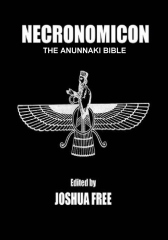
Gold and lapis lazuli commonly appear as both ‘magical ritual aids’ and prestigious offerings to the ‘gods’ via their temples. Wands, necklaces and bags of loose lapis are often mentioned in esoteric texts (cuneiform tablets) from the Mesopotamians, in addition to golden rings and ‘amulet-plates’ marked with specific seals and cuneiform glyphs. Practical “underground” investigations into this type of work later developed into a modern standard used by the Mardukites who practice a contemporary Babylonian tradition, making use of illustrated sigil-seals and cuneiform signatures of the seven of the “Younger Generation” (as well as the Supernal Trilogy) – making ten sets in total. (See also the Necronomicon Anunnaki Bible and/or Book of Marduk by Nabu.)

Implementation of a practical magical system from the Babylonian ideal is somewhat different than what the contemporary mind, even an ‘esoteric’ one, is fundamentally familiar with. As opposed to the later magicians who appear to have had to connive and fool the hierarchies of spirits into assisting them, threatening them and even in fear of some retroactive revenge – the original magical system used by the priests of Babylonia was rooted in the deep personal relationship – running as deep as blood – that the Sumerian priest-kings and Mardukite NABU priest-scribes maintained with the sources of not only their religious power, but the basis of the entire system of civilization that allowed the progression of the human species into today.

All of this, according to tradition, resided in the influence of the Anunnaki gods – and the priest-kings and scribes were installed to be sure no one forgot this…

DISCOVER EVEN MORE IN THE NEW DELUXE EDITION OF SUMERIAN RELIGION BY JOSHUA FREE!
Leave a comment

Filed under ancient esoterica, ancient near east, babylonian, magick & mysticism, mardukite, mesopotamian, modern occultism

Divine Magic & Secret Holy Names : High Magickal Tradition Origins in Ancient “Alien” Priesthoods

sumerians-65429007-589x171

Above all of the possible magic words to be invoked, the Divine Names are held in the highest regard by priest-magicians and wizards – meaning, of course: “names” for God. Joshua Free explains in the new Fifth Anniversary Second Edition of Mardukite Liber-K: ENOCHIAN MAGIC & KABBALAH: SUMMONING ANGELS, ALIENS, UFOs & OTHER DIVINE ENCOUNTERS.

enochianmagic2017cropsmallPutting aside the more ‘conventional’ implements of the magical arts; the garments and regalia, the tools and sigil seals – it is NAMES and WORDS that appear most significant when encountering ‘higher forms’ of the esoteric mysteries…


Similar to the way in which ‘existence’ becomes more dense and fragmented as the varying lights and veils are perfected until we reach the manifested existence within human perceptual abilities, the Names of God became increasingly ‘mutated’ with time and the myriad of ‘language semantics’ that were later applied to this form of cryptomancy.

Given the emphasis put on ‘words’ and ‘names’ in the Anunnaki tradition – as found evident on Sumerian and Babylonian cuneiform clay tablets – it is not surprising that we should see a mystical lore related to the same carried by the priests and magicians of the later derived system-traditions: the Kabbalah, Egypto-Greek Hermetics and of course native Chaldean and Zoroastrian movements – all of which based on a ‘personal’ relationship with Divinity by means of a ‘secret’ or ‘esoteric’ lore that enabled them to call upon and recognize these ‘forces’.

enochian-banner

Priests of the Anunnaki tradition acted as intermediaries between the human population and the beings perceived as “Divine” that often resided in their very cities, occasionally occupying the ‘ziggurat-temples‘ built on the highest mounds of each region. In the proto-Sumerian traditions, the priest-magicians were the only ones who were able to transmit any communication with the Anunnaki “Sky Gods” of their observed pantheon.

This shifts during the post-Sumerian or Babylonian-Mardukite period, as a rise in local or ‘personal’ magic becomes present among the common folk. During this post-Sumerian period, many individual members of the Anunnaki group became patron ‘central’ deities to different areas, an act that furthered the fragmentation of knowledge.

hammurabi21233 After the magical arts were given to the people, the Hermetic attempts began at ‘unlocking’ the esoteric secrets withheld by the original priests and caretakers of the traditions. Uncovering Divine Names was one of the more ‘paramount’ acts to making the newer systems function – a means of going around the intermediaries socially and politically installed to oversee the religion and spirituality of the people. It is here that we begin to see ‘magic’ as a part of ‘counter-culture’ existing outside of, and in many cases in opposition to, the Realm.

Rather than being a state-religious affair celebrated openly in public view, the practice of magic began to turn ‘inward’ and was pushed further and further underground as the growing populations and varying personalities each had their influence on its character.

Mystical use of the Kabbalah, such as we find with the Enochian system and other methods involved in the late 19th century ‘magical revival’ by members of the Hermetic Order of the Golden Dawn, is heavily dependent on the use of “Divine Names” or other “less-divine” (even “infernal”) names as words of power. Although derived from the same sources, this is generally typical only of post-Babylonian systems, at the Age of Aries (c.2100 BC).

enochianmagic2017cropsmall We see evidence of it throughout the Hermetic traditions of the last 3,000 years and in virtually every example of ‘magical grimoire’ or ‘tome of magick’ at our disposal. Clearly, the author-carriers of this type of lore treated the names as ‘sacred formulas’ critical to the success of the ‘transcendental operations.

Starting around 2,000 years ago, they started being classified as exactly that: formulas.


COMING SOON!
News & Updates concerning the August 2017 MARDUKITE NEXGENCON SOLAR ECLIPSE SUMMIT MEETING and the construction development of the remote MARDUKITE BABYLON ANCIENT ASTRONOMY RESEARCH CENTER set along the UFO Cosmic Highway in the San Luis Valley.

Leave a comment

Filed under ancient esoterica, excerpt, excerpt, magick & mysticism, mardukite, modern occultism, new babylon, new release, new release, nexgen, prophecies & predictions, research development, truth seeker press

Mardukite New Year Rituals of Ancient Babylonian Akiti / Akitu Spring Equinox Festival

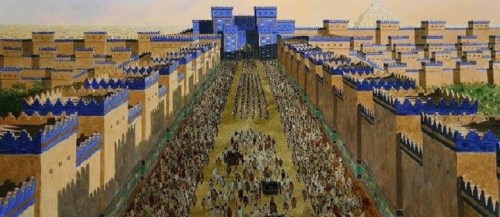
The Processional Way in Ancient Babylon for the New Years Akiti / Akitu (Zagmuk) Festival

The Processional Way of MARDUK and NABU in Ancient Babylon for the New Years Akiti / Akitu (Zagmuk) Festival

THE BOOK OF ZAGMUK (available in Babylonian Magick, Wizards of the Wastelands or the Ceremonial Color Edition) is the Official Mardukite-Anunnaki companion to the Babylonian New Year Festival, known as Akitu (Akiti) or Zagmuk, originally available exclusively to the modern Mardukite Research Organization and Mardukite Chamberlains.


Deluxe Color Edition

Deluxe Color Edition

THE BOOK OF ZAGMUK BY NABU (forthcoming as a pocket companion) is a specially prepared ceremonial text with selected ‘tablet collections’ that combine materials from the Mardukite Wizards of the Wastelands in conjunction with critical excerpts from Joshua Free’s NECRONOMICON ANUNNAKI BIBLE, essentially comprising the internal methods of the ‘Order of Nabu‘ to establish Mardukite ‘religious’ continuity in Babylon and MARDUK’s royal legitimacy at the height of the Babylonian pantheon using the Babylonian New Year Festival, Akitu (Akiti) or Zagmuk.

zagakitu

“The Babylonian observation of the annual (solar) year starts with the ‘Mardukite’ observation of ‘zagmuk’ – meaning ‘the beginning of the year’ or ‘new year’. This 12-day festival is fixed to arrange its height at the beginning of the month of Nissanu, the ‘Spring Equinox’ or March 21st, also coinciding with the beginning of the astrological wheel, when the sun enters Aries.” The Book of Zagmuk by Nabu

zagmuk

The festival is significant for its contributions toward solidifying both the religious and political paradigms of ‘Mardukite’ Babylon. The festival is also known by its Sumerian-derived Akkadian name – A.KI.TI or A.KI.TU – meaning ‘On Earth, Life’. This large public festival observance is a reconfirmation of the supremacy of MARDUK and the Babylonian Pantheon and is probably the single most important ancient ‘holiday’ for the tradition.

BabylonianMagickCSpbCVRcrop After the time of gods had come and gone, the priests and kings continued to observe the ceremonial customs using representative statuary to symbolized the ‘divine’ forms of Marduk and Nabu as they make a procession through the streets of Babylon and are placed in the temples to witness a dramatic reenactment of the Enuma Elis and other rites and rituals that commemorate the ‘Mardukite’ tradition (paradigm) and seal the position of the priests and king as the ‘chosen’ ambassadors and intermediaries between the ‘gods’ of heaven and the people of earth.


NEW WEBSITE !!! –> CyberVamps.com

NATIONAL MARDUKITE NEXGEN CONVOCATION
THE GATHERUM IS COMING
AUGUST 2017


Leave a comment

Filed under akkadian, ancient esoterica, ancient near east, babylonian, CyberVamps, magick & mysticism, mardukite, mesopotamian, modern occultism, news, plans & proposals, research development

Sumerians & Babylonians Revealed! – Mesopotamian Religion in the Ancient Near East

Secrets of the Anunnaki in Mesopotamian Religion

Secrets of the Anunnaki in Mesopotamian Religion

Privately released to the Mardukite Chamberlains five years ago, the critically acclaimed Liber-50 masterpiece known to the public as SUMERIAN RELIGION, endured innumerable printings, reaching the widest audience of all of our titles and now available in its Third Edition for its lowest price ever!

Within the two-volume ‘Mesopotamian Religion‘ series (including both SUMERIAN RELIGION and SUMERIAN TRADITION) the grand legacy of the most sacred origins of human history and civilization are revealed — laid out before you in the clearest most precise presentation of these mysteries ever published!


Mardukite Truth Seeker Press is planning to release new ‘Eco-Editions’ of certain titles over the next few years.

5th Anniversary Third Edition

5th Anniversary
Third Edition

‘Eco-Editions’ are formatted and designed for the best economical and ecological efficiency! The new 2015 Third Editions of SUMERIAN RELIGION and BOOK OF ELVEN-FAERIE are the first ‘Eco-Editions’ released.

Originally released privately underground in 2010 for the Mardukite Chamberlains as “Liber 50“, this amazing tome now stands alone — unique as it is practical — revealing the nature, origins and traditions of Anunnaki “gods” of Mesopotamia (the figures who lead the mythology of ancient Sumerians, Babylonians, Akkadians, Chaldeans, Assyrians, Hittites, etc.), which the public has previously only known through obscure communications: either insubstantial or overly-academic.

Uncover the mysteries that lay hidden in ancient Mesopotamia in SUMERIAN RELIGION, with a message so relevant today, it is no wonder it became the greatest kept secret of Babylon!


ALSO NEWLY RELEASED!

SumTrad2ndTHUMB SUMERIAN TRADITION

Secrets of the Anunnaki in Babylonian Mythology

Liber 51/52 — 2nd Edition (ECO)

Sumerian Tradition: Secrets of the Anunnaki in Babylonian Mythology — continues the legacy with amazing insights into the Anunnaki ‘alien gods’ credited with the establishment of human civilization as accounted for on ancient cuneiform tablets preserving Sumerian and Babylonian traditions.

Here is the much anticipated follow-up to Sumerian Religion: Secrets of the Anunnaki & The Origins of Babylon (Liber-50). Joshua Free, world renown authority on the Anunnaki, completes his “Mesopotamian Religion” series with this newly revised edition of the “Sumerian Religion II” (Liber-51/52) materials.

1 Comment

Filed under Uncategorized

Mesopotamian Magic, Rites and Rituals of Eridu, Sumerian Anunnaki in Babylonian System

mesopotamianmagicheadline

Through Marduk, the power of Eridu – incantation-prayer – was taught to the scribes of Nabu and the Mardukite Priests, who were taught to attract and compel the ‘gods’ in the name of Marduk, always incanting the word-formula of the highest order: Nabu invoked by way of the name of Marduk; Marduk invoked by way of the name of Enki, Our Father, who in turn would invoke by the name of Anu – and so was born the concept of magical hierarchies, an ideal that was convoluted and obscured when employed later (during the Middle Ages and such), particularly distorted by the Judeo-Christian paradigm as evident in many popular grimoires…
~ NABU, Joshua Free, The Book of Marduk by Nabu (2010)

Gates3rdEdfrontcropMINI This mardukite.com blog is officially excerpted from the Liber-51/52 materials recently released in the NEW mardukite.com exclusive edition of the GATES OF THE NECRONOMICON anthology edited by Joshua Free. These materials are also available as Mesopotamian Religion by Joshua Free or Sumerian Religion II.

Many version of Erudite magic may be found through the Mesopotamian ‘spiritual’ (or ‘magical’) cuneiform texts. The incantation tablets from the ‘Mardukite’ Babylonian Anunnaki tradition, specifically those used and forged by scribe-priests of the Order of Nabu, are invoked from the ‘perspective’ (authority) of NABU – as was the tradition learned verbatim from MARDUK. In both scholarly and esoteric ‘Mardukite’ texts, the ‘Opening Ritual’ of Mardukite magic is derived from the source titled: “The Incantation of Eridu.”

cuneisdgsdg Perhaps the most fundamental ‘formula’ of the magical system in Babylonia, if there is one, goes back to the heart of the system born of the scribe-priests and the figures who brought this system about – NABU and the appropriation of his father, MARDUK as the chief director. This is the spiritual acknowledgment alluded to by the Incantation of Eridu, also known as the ‘Incantation of the Priest of Eridu’ (Eridu being the shrine-home of ENKI), or the ‘Incantation of the Deep‘, which simply refers to another name for the far-away abode of ENKI near the Persian Gulf.

Ceremonial activation of the ‘birthright’ of Anunnaki power sealed in Eridu (and then in Babylon) allows a practitioner to assume the representative form of the “Priest of Eridu,” a title first bestowed
upon MARDUK by ENKI, then passed onto NABU during the solidification and heights of the Babylonian era. The esoteric key in effect here is that the priest conducts the incantations (ceremony) as the embodiment of an intermediary ‘messenger’ deity – the original semantic of the word “invocation” – thereby directing the cosmic (world) order, in essence, first hand.

MesopotamianReligionFrontcrop In short – the magician approaches his deity as himself – a servant priest – and petitions to assume the godform, whereby he continues the ceremony as a divine representation of the god ‘invoked’. An almost identical principle appears within Semitic mysticism and the Judeo-Kabbalah – an excellent example being found in contemporary Catholicism, when the priest ‘assumes the Christ-form‘ to effectively perform a perceived alchemical transmutation on the sacramental bread and wine, conducted as a representative of Jesus on earth, in imitation (dramatic reenactment) of the ‘Last Supper’.

In the ‘Mardukite’ system observed in Babylon, the god being invoked is MARDUK. This is affirmed with the priest’s first utterance of : “It is not I, but Marduk, who speaks the incantation.” And from then on the system is sealed and readied for use by the Mardukite devotee. Consider the lines in this conjuration, adapted from the Mardukite “Conjuration of the Fire God:

It is not I, but Marduk, Slayer of Serpents, Who summons thee.
It is not I, but Enki, Father of Magicians, Who calls thee here now.

SumerianReligion2crop As described, the ritual34 operates as if from the perspective of NABU (speaking for MARDUK). Though variations exist across the opening lines of several Assyrian “exorcisms,” one key tablet example – translated by R.C. Thompson as his Tablet N for “Devils and Evil Spirits of Babylonia” (1903) – relates:

The Priest of E.A. [Enki] am I.
The priest of Damkina [Ninki] am I.
The messenger [Nabu] of Marduk am I.
My spell is the spell of E.A [Enki].
My incantation is the incantation of Marduk.
The ‘magic circle’ of EA [Enki] is in my hand.
The tamarask, in my hand, I hold.

From the modernized Mardukite version:

I am the Priest of Marduk, Son of Our Father, Enki.
I am the Priest of Eridu and the Magician of Babylon.

The Assyrian version continues humbly as follows:

EA [Enki], King of the Deep see me favorably.
I, the magician, am thy slave.
March thou on my right hand, assist me on my left;
Add thy pure spell to mine.
Add thy pure voice to mine.
O god that blesses me, Marduk,
Let me be blessed, wherever my path rests.
Thy power, shall god and man proclaim.
And I too, the magician, thy slave.

Gates3rdEdfrontcropMINI Returning to a an older version, transliterated by E.A. Budge for “Babylonian Life & History” (1883), we see a different method used toward petitioning the “younger pantheon” to the side of the priest.

I am the Priest of EA [Enki].
I am the Magician of Eridu.
Shammash [Samas] is before me.
Sin [Nanna] is behind me.
Nergal is at my right hand.
Ninurta is at my left hand.

And to this, the Mardukite version appends:

Anu, above me, King of Heaven.
Enki, below me, King of the Deep.
The power [blood] of Marduk is within me.
It is not I, but Marduk, who performs the incantation.

259202494_2439cd36a1_o2 The priest mystically sheds the ‘mortal spark, even if for a moment, to experience the transcendental magic clad in godhood. Rising on the planes of perceptual awareness – as a god, speaking on behalf of the chief of the pantheon – the priest-magician is now able to influence worldly affairs in the original and most direct magical means known on the planet – a direct interface with the gods as one of their own…

1 Comment

Filed under akkadian, ancient esoterica, ancient near east, assyrian, babylonian, excerpt, limited edition, magick & mysticism, mardukite, mesopotamian, modern occultism, new babylon, new release, plans & proposals, research development, special offer, sumerian, truth seeker press, youtube

BOOK OF GENERATIONS, Ancient Cuneiform Tablets of Anunnaki gods, Understanding ENKI & ENLIL

To the ADAMU they sought to bestow the face of the gods.
For the remainder of the period they heard the drum beat.
From the flesh of the god the spirit remained to the End of Days.
It was made known to the living gods by the sign marked,
Without which he be allowed to be forgotten, so the spirit remained.

–‘Book of Generations’, LIBER-N

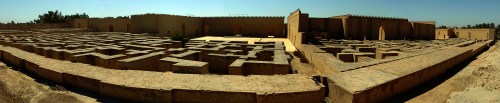
Babylonian ruins of babylon

The Book of Generations concerning the true and ancient story of the Creation of Man now lies open for all to read. According to the most ancient sources existing on the planet, the ANUNNAKI, particularly ENKI and MARDUK — with the assistance of a “birth-goddess” [hence the origins of the “One Mother”] — eased the toils of the IGIGI-Watchers by fashioning a race of slave workers for the fields and mines: humans.

NecroBible6ththumb [The complete cuneiform compilation entitled the ‘Book of Generations’ is found in the Year-1 (2009) Mardukite Research anthology, NECRONOMICON – THE ANUNNAKI BIBLE edited by Joshua Free. They are catalogued by the Mardukite Truth Seeker Press as the Tablet-G series, first appearing in Liber-N in 2009.]

Remnants of this lore has filtered out into the current controversies over races and bloodlines, but such tendencies remove the Seeker even farther from the truth. This religious magick has come to be taken for granted by many classes of supposed “New Agers” from naïve gothic teens to soul-sold masonic rock-stars. [Excerpting the ‘Preface’ to the Tablet-G series.]

Lore from these ancient tablets reveal a key point in the Creation of Man, that neither the ANUNNAKI, ENKI, MARDUK, ENLIL or even ANU is necessarily viewed in themselves by the actual ANUNNAKI and IGIGI beings as “God” or “gods” in the sense that contemporary historians have incorrectly interpreted global mythologies.

cuneisdgsdg Some-“thing” exists outside of the dimensions inhabited by these beings, and yet the ancient world collaborates on the belief that these specific intermediaries or emissaries are the ones responsible not only for the existence of humans but also a feud over our “care-taking” during the Deluge.

According to these most antiquated cuneiform tablet writings, it is ENLIL — who is revered as “Jehovah” in Enlilite territories (identified in contemporary biblical scriptures as the “Holy Lands”) — that is actually displeased with human creation from the start and also any salvation for the race through the ‘Deluge’.

Enki2 ENKI who appears as humanity’s “saving deity” this time and yet the ludicrous notion of Olympian Monotheism always attributes positive qualities to a singular “God” with the backwash byproducts give to a “Devil” figure. Consequently what was actually initiated as a disagreement among a “holy family” later funneled down to modern minds as “good vs. evil” in the name of religious dualism — such as we see among the later Mardukite-inspired Persian Zoroastrians.

Discover MORE about the amazing legacy described on cuneiform tablets from Mesopotamia. They are the only surviving comprehensible proof of a time since forgotten — one which has been heralded as the birthplace of the arts of modern human civilization, all of which gifted by the Sumerian ANUNNAKI who engineered the people and their reality since the inception of ‘human kind’.

1 Comment

Filed under akkadian, ancient esoterica, ancient near east, assyrian, babylonian, excerpt, magick & mysticism, mardukite, mesopotamian, modern occultism, new babylon, new release, research development, sumerian, truth seeker press

BABYLON, Gateway of the Gods: Energy Signatures, Mardukite Sigils, Anunnaki Signs & Glyphs

mesopotamianmagicheadline

The Anunnaki sealed within this system are seven. Among them is MARDUK, who sealed the others to Gates of Babylon. Before them all is the Earth Gate [Foundation of Heaven and Earth]. Beyond them all is the Ring [Gate] of Pass Not – wherein resides the Ancestral Chiefs of the Supernal Trinity – The Elder Gods: ANU, ENLIL & ENKI.

BabylonianMagickCSpbCVRcrop [This mardukite.com blog post is officially excerpted from the Tablet-X series of Mardukite Liber G originally prepared for the Necronomicon Anunnaki Bible edited by Joshua Free. These materials also appear reprinted in the ceremonial anthology: Babylonian Magick edited by Joshua Free.]

Anunnaki energetic forces (currents) are bound to the Seven Rays and the Seven Stars – each vibrating a tone or color of manifestation into existence. The powers of the Anunnaki – as connected to the planets and rays – have called the “zonei” or “zones” – comparable even to the Stations of the Spheres.

NecroBible6ththumb May the wise ones come forth to tap the powers of the Gateway of the Gods, that these currents may be realized on Earth once again, and may the Anunnaki return and command obedience. [But beware – the deception of fragmentation for the colors and flavors displayed before you are of a unifying Source.]

Beyond the Seven Zonei [Anunnaki] are the ‘three rays of unity’ that become fractured into ‘seven parts’ in our sensory range of existence. Beyond the Supernal Trinity is the One, the Eternal Source of All Being and Creation that is manifest in the will and form of every thought and thing.

Powers of the younger Elder Gods are sealed to the blood of their ancestors – as is yours, dear Gatekeeper – all from ANU, divided then between ENLIL and ENKI. The ancient texts explain that the Blood of Kingu and the Breath of the Elder Gods were combined for your existence and it is from these things alone that “magickal powers” can be manifest by beings that possesses them.

bookofmardukthumb By succession, NABU can lead you to MARDUK, who can petition you to ENKI; ENKI to ENLIL; and ENLIL to the powers of ANU, if desired. In the true pious tradition, energetic powers are “sent down.” You can distinguish the genetic source of a ‘current’ by its birthright – often connected to the sigil-glyph-insignias of command, mainly triangles, indicating the King of Heaven (ANU), the Lord of the Command (ENLIL) and the Lord of the Earth (ENKI).

Consider the sigil-seals of the two primary factions of Anunnaki that inhabit the ancient world. In the Babylonian tradition, currents of both “sides” are invoked toward the completion of the Earth System. Rivalry (between “polarity”) does not slow the course of natural systems because, as it is said, “the show must go on” and on a larger scale, the duality is not actually perceived to exist (such as in the older Sumerian tradition).As a symbol, the “hexagram” sigil is found where power is evoked from ceremonial grimoires, angelic mysteries, etc. Furthermore, the “merkaba” appears when communication and exchange of energy with forces beyond our sensory range of the material world occurs.

merkbwcrop The five-pointed star is a sign of the human race, and is sealed to the condensed material world and the sensual range of elements. The seven-pointed star is the sign of the Anunnaki. The eight-pointed star is universal of the “StarGate” itself. Between five and seven is the sign of the “Stairway” by which the two are linked, and this is the relevance of the six-pointed star – that which has been seen on emblems of orders and societies for centuries. It lies at the heart of the Solomonic grimoires, the Kabbalah and Merkaba of an energetic matrix-existence.

2 Comments

Filed under ancient esoterica, ancient near east, babylonian, excerpt, magick & mysticism, mardukite, mesopotamian, modern occultism, new babylon, plans & proposals, research development, sumerian, truth seeker press

Marduk, Anunnaki god of Babylon, Son of Enki, Father of Nabu in Mardukite Tradition

mesopotamianmagicheadline

MARDUK — “The blatant industrious and expansive power of Jupiter has been placed at the height of most ‘Sky God’ Olympian pantheons as Zeus or a similar figure. The name (Jupiter) comes from the Romans: Dys Pater, meaning Father-God. This energetic current commands outright worldly success as well as the magic of spirits: command of the hierarchies…

BabylonianMagickCSpbCVRcrop This portion of the mardukite.com blog post is extracted from the “Book of Marduk by Nabu” (Liber W) also available in the recent commemorative “Babylonian Magick” anthology by Joshua Free.

NABU SPEAKS: “The Elder Gods originally attributed this position to Enlil in Sumer. I personally heralded my father, Marduk, into Enlilship of the “younger pantheon” in Babylon. Our tradition there, and in Egypt, was wholly based on him being the centralized figure. You may invoke my father for his strength and power, as well as a petitioner to the Elder Gods. He is exalted as the Master of Magicians, carrying the mysteries of my grandfather, Enki, to Babylon, and bestowing the traditions upon me to relay.” (Liber W)

bookofmardukthumb “The original designation of Jupiter is 50, the number attributed first to Enlil and later to Marduk by the Babylonians, who first was given the number 10. The color of the current is purple, but also airy and fiery colors (yellow, orange, black). This energy is preferred by many leaders and law enforcing folk, lending to those who are pure to receive it, the power to command the material world.” (Liber W)

“Marduk was proclaimed King of the Gods, replacing Enlil, and the other gods were required to pledge allegiance to him and to come to reside in Babylon where their activities could be easily supervised. This usurpation of Enlilship was accompanied by an extensive Babylonian effort to forge the ancient texts. The most important texts were rewritten and altered so as to make Marduk appear as the Lord of the Heavens, the Creator…”
Zecharia Sitchin, The Twelfth Planet (1976)

MesopotamianReligionFrontcrop The name Marduk is actually a modernization taken from the Semitic “meri-dug” [Merodach]. The oldest version of a similar spelling AMAR.UTU [a.mar-utu.ki = “light of the sun on earth”] often translated by contemporaries as “solar calf” or “son of the sun” give some background to Marduk’s esteem. (Liber 50)

[The remainder of this mardukite.com blog post is extracted from a New Babylon Rising article derived from Liber 50 – now available in the new edition of Mesopotamian Religion by Joshua Free.]

zar
Being the foremost son of Enki, he gained power quickly. The Semitic name “Maerdechai” that came from the Chaldeo-Babylonian [silik-mul.u-khi] name meaning “Marduk is God.” The more common MAR.DUG means “son
of the pure mound,” and is thought to be connected to the pyramids in not only Mesopotamia, but in Egypt, where he raised himself as the leader of a third party (interpretation) of gods – the Egyptian Pantheon – as “Amon-Ra,” [and possibly also Horus] again identifying himself with the “solar” current.

cuneisdgsdg Marduk’s decision to raise himself to a monotheistic-like “God” status created new political issues for the Anunnaki on Earth – creating a reason for there to be tensions between the two lineages (of Enki and Enlil) for supremacy on earth (and the right to install their own lineages and chosen humans as kings in their stead).

THE RACE OF MARDUK…

Naturally, the other Anunnaki were less than appreciative of Marduk’s desire to rule over them, although the Age of Aries, his sign, did come and go and he was not left to his own in Babylon (or in Egypt). This seems to have been a disciplinarian act by the other gods.

babel98769878 Assuming the most common interpretation, Marduk was to lose rights of kingship “in heaven” for the taking of a “human” wife instead of his betrothed half-sister Inanna Ishtar. His argument was that Sarpanit (his consort) was a descendent of Adapa [see the Necronomicon Anunnaki
Bible
], and thus of Anunnaki bloodline; that Ishtar was no more interested in the union than he was, and it had not affected her rise to power; and finally, if not “in heaven,” why not “on earth”? The resulting catastrophes in the Middle East are evidence enough that this betrothal did not occur peacefully.

A MARDUKITE LEGACY BORN

In Assyrian accounts, Marduk, as the great “father-god” Assur or Ashur [“Ashshur”], seems to emerge as if from nowhere, leading some scholars in the late 1800’s and early 1900’s to consider the idea of Marduk being a fictitious figure imagined into being for purely political reasons.

Sarpanit [also Sarapan or Zarpanitu] is mentioned often in Babylonian prayer but does not appear in any of the significant mythic tablet cycles. She achieves an elevated status by her relationship with Marduk, and together, they are the parents of Nabu. At the spring equinox “A.KI.TI” festival she is the “spring-maiden” of fertility festivals in Babylon…

REDISCOVER THE BABYLONIAN ANUNNAKI LEGACY TODAY WITH THE WORK OF THE MARDUKITE CHAMBERLAINS!

1 Comment

Filed under akkadian, ancient esoterica, ancient near east, assyrian, babylonian, excerpt, magick & mysticism, mardukite, mesopotamian, new babylon, plans & proposals, research development, sumerian, truth seeker press, youtube

Mesopotamian Magic, Maqlu Cuneiform Tablets, Babylonian Dark Rites of Anti-Witchcraft

mesopotamianmagicheadline

“Climb the ladder of lights and appeal to the gods for their protection and for the destruction of the enemy and all evil-doers, wicked witches and warlocks of the world…”
–Necronomicon Anunnaki Bible

How often we have heard of the “Dark Arts” born of a ‘polarized’ and often ‘dualistic’ view of the universe – and the forces that occupy it. For every ‘white witch’ there is a ‘black spell’ and to every system of Order, there is a Chaos factor; for no fragmented experience of reality can ever actually find “balance”, but the pendulum swing – the tidal ebb and flow of universal currents will always seek it.

maqluthumb This mardukite.com blog post is extracted officially from Mardukite Liber M, available as either MAQLU MAGIC or NECRONOMICON SPELLBOOK II, in addition to the Year-3 anthologies either MESOPOTAMIAN MAGIC or NECRONOMICON WORKBOOK and the mega-anthology NECRONOMICON GNOSIS.

…So, too is movement possible in the physical world – or at least one’s perception of the ‘3-D’ reality experienced. As such, with the once united ‘crystal’ being cracked into the varied refractions of human experience, language and culture, a ‘dualistic’ world emerged in consciousness; right before the very eyes of ancient Mesopotamians – at the heart and cradle of human civilization.

WHAT IS THE MAQLU CUNEIFORM TABLET SERIES?

Before approaching the more ‘colorful’ elements of the tradition – those that could most appropriately be given classifications as ‘Dark Arts’, ‘Sumerian Sorcery’, ‘Babylonian Witchcraft’, ‘magickal warfare’ or ‘wizards duels’ – it is important that the context for which such exists, a background screen onto which to express the story of the MAQLU in its projected spectrum of rainbow lights and kaleidoscope glory.

MesopotamianThumb The name MAQLU can be interpreted differently as with most things – such variegated perceptions are not even restricted to foreign languages for even a shared one is not free of semantic issues in its own vocabulary. Most typically, MAQLU is translated to mean “the Burnings” by ‘Sumeriologists’ and such. This is a good ‘base’ for our context, as we do indeed find the origins of a community bonded for ‘burning evil in effigy’.

The Simonian work, in regards to a Babylonian Necronomicon practice, interprets the tablets as ‘Rites of Burnt Offering’ or else a ‘Book of Burnings’ for literary purposes. As with most of the work ‘restored’ by the Mardukite Chamberlains, a surface interpretation is never accepted and a ‘deeper mystery’ can often be uncovered in the very ‘literal’ meanings behind these very old words that do not appear to have had the same ‘metaphorical’ meaning that modern language users often take for granted – for the Mardukites have interpreted the MAQLU more appropriately – and not without its other diverse cultural parallels – as Burning Man [maq-lu].

cuneisdgsdg Though it seems that the MAQLU operation was once a much more simple, internalized, meditative and solitary application used by early priests and magicians in Mesopotamia, it later developed more dramatically as a public Fire Festival in Sumer and Babylonia, involving the entire population of the community who gathered together in a ‘combined’ and ‘harmonic’ effort of intention to ‘drive out’ or ‘dispel’ the “evil” and “evil-doers” of the land.

As “ridiculous” as this might sound to the naïve skeptic or right-wing fundamentalist, it can and should be noted that more recent public scientific studies all over the globe have now shown the effective abilities of consciousness moving energies when large groups, or better, the majority of the population is focused on a single emotional event.

These types of ‘quantum’ effects appear to have very real ramifications for the population of the planet and the greater cosmos as a whole in this entangled universe whether or not people are aware of this phenomenon taking place in their environment and even internal ‘spirito-mental’ being (which are self-honestly All-as-One).

necrognosisTHUM In the instance of the MAQLU, the Burning Man is the representation of the ‘evildoers’ of the world – those who ‘plagued’ humanity with their wickedness and thereby upsetting the ‘world order’ of the gods, in addition to the gods themselves. Upsetting such a balance was usually felt in the community as ‘illness’ and ‘pestilence’, ‘disease’ and ‘famine’. Such could prove devastating to still developing human civilizations, and as such they were considered ‘evil’, the most wicked of ‘demons’ and anything that might lead to them – mostly uncleanliness and misappropriated living – were considered taboo (the original non-moral tribal sins) and for good reason.

Eating from an unclean plate was taboo (a sin) because it could lead to the spread of disease. Ancient humans were far from primitive in their understanding of the natural world and their relationship with
it. Before the wrongful use of authority in classical times, the taboos and sins were not given from dogma, but from medicinal necessity.

Representative images are often used in ‘idol magic’ or ‘sympathetic magic’, but not as a result of worship – as some mythographers have repeatedly put forth – but to actually embody the ‘energetic current’ that is universally entangled to ‘focal object’ and its form.

WICKER MAN OF THE DRUIDS

cunei The representation of a ‘demon’, like the ‘plague-god’ Namtaru, was not to worship the deity with homage or to glorify the ‘daemonology’ of the Babylonian priests. Such statuary was typically constructed only to be ‘ceremonially’ annihilated or buried as a ‘ward’ against what the statue (deity) was representative of. In making such an object, the magicians show their understanding of the ‘entanglement’ of the universe in its mystical oneness and the interconnection of all things.

Certainly not primitive.

It is almost impossible to bring up the topic of the Burning Man without conjuring to mind a much more geographical and time-recent example made popular in the images of motion pictures and familiar Roman-inspired writings of the Celtic Druids – and that is the Wicker Man, also called ‘Burning Man’ by some neopagans.

Far removed in time and space we see evidence for the same rite being conducted and for similar reasons – the preservation of the early agricultural civilizations that were ‘guided’ by Sky God traditions – called the Anunnaki on Mesopotamian tablets or the Tuatha de Dannan (Tuatha d’Anu) in European Celtic and Druidic sources.

1001015_318340804969022_2026839541_n “Fire” is a very common element to the early ‘magical’ and ‘shamanic’ systems, and its mastery in correlation to the development of modern humans is certainly indisputable. Any connection to the Fire Festivals of Europe is going to be difficult for one to understand without having been familiarized to the rigorous research found in other Mardukite materials that gives Mesopotamia as the birthplace of the Druidic Tradition.

Sir Francis Frazer (Golden Bough) mentions both a ‘solar’ alignment and ‘purification’ style to these types of operations. The later European Wicker Giants appear to be more ‘agricultural’ in nature then the MAQLU version that targets actual ‘practitioners’ of the ‘Dark Arts’ that negatively affect the well-being of the greater population, the community at large and by extension the “moral balance” perceived of ‘universal forces’.

The ancient Sumerians and Babylonians were no less dependent on the ‘agricultural’ fertility then the Celts – far from it. Thriving of a human numbers in the lands of Mesopotamia were so heavily dependent on the skilled use of arid land and the redirection of water from the Tigris and Euphrates rivers in a skillful way since lost to the Arabs and other occupiers of the land since.

babel98769878 In Europe, we find the appearance of the Burning Man during the fertile and seed-sowing and nurturing ‘spring’ seasons, particularly the Equinox (Easter) observation, Beltane (a notorious ‘Fire Festival’) and finally Midsummer. The annual survival of the agricultural Celts was wholly dependent on the success of this season above all others.

IN CONCLUSION…

One of which does correlate with Europe is an esoteric observation of Beltane – opposite it, Samhain (modern-day Halloween) is also significant. The Sumerio-Babylonian AKITU festival is concurrent with the Spring Equinox. So, regardless of where we turn, there is a unifying (universal) picture forming to define the ceremonial observation of the Burnings.

Leave a comment

Filed under akkadian, ancient esoterica, ancient near east, assyrian, babylonian, excerpt, magick & mysticism, mardukite, mesopotamian, modern occultism, new babylon, plans & proposals, research development, sumerian, truth seeker press

ANU – Sumerian gods, Mesopotamian Religion, Babylonian Pantheon Kingship in Heaven

claytabletsheader

The Sumerian tradition made popular in the last century revealed that the Anunnaki pantheon depicted an archetypal “Olympian” pantheon of deities that were originally assigned to twelve positions in the cosmos, later yielding the lore that would give us our “zodiac.”

MesopotamianReligionFrontcrop This mardukite.com blog post is excerpted from the Liber-50 material first appearing in Sumerian Religion by Joshua Free, in addition to the Sumerian Religion anthology Mesopotamian Religion and the Year-2 anthology Gates of the Necronomicon, materials also appearing in the Year-1+2 mega-anthology Necronomicon Anunnaki Legacy (Silver Edition).

Prior to the Ammonite fascination with the local Sun, best observed among the Egyptians and other solar-cults, it was the more “distant” stars that were deemed the “rulers of fate” and “keepers of the
sacred cycles” that kept the organized universe in order.

The “Ancient Ones” from Sumerian prehistory (Abzu, Tiamat, Lahamu, etc.) are given mention in the literature but are viewed as more insubstantial or metaphysical essences of creation, barely able to be personified as traditional deities. We have shown in correlative chapters how such forces could be seen as the primordial essence of the All-Source being first made manifest, but the Sumerians viewed these essences as originally being made substantial in their own personal “All-Father,” a figure-head for their
hierarchical pantheon.

nec The position of Anu in the Sumerian pantheon is as an undisputed “father in heaven,” who acts as the supreme “progenitor” or “father of the gods” from his place as the “king of the local universe.” The “House of Anu” (the traditional “heaven” or “abode of the gods”) is sometimes written as UR.ANU or “Uranus” (from the Greek “Ouranos”) and his most sacred place of “worship” on earth was in Uruk at the temple of E.ANNA – also translated to mean “House of Anu.” The number of his rank is sixty – the number of cosmic perfection.

Mesopotamian traditions came to view Anu in a similar manner as the abstract Babylonian expression of Ilu, where he became the “Lofty One” or “Supreme God Most High” in the pantheon, a remote, distant and indiscriminate All-Father much more representative of the “Heavenly Father” that Jesus alluded to in the New Testament then that of the Old Testament God of the Hebrew. The solidity of his personification becomes increasingly faint in descending traditions, and though within his power, he rarely intervenes or makes an appearance to the “earth” world of gods and men. His main function in the pantheon is as the “Father” of the gods, who are then mainly left to deal with material universe on their own accord.

cuneisdgsdg Few of the incantation tablets (or “prayers”) invoke the powers of Anu directly. The heavenly force is perceived as too vast to be channeled directly by the successors and to degrade it to anything more accessible would be to compromise the nature of what is represented.

In the Semitic traditions the role of Kingship in Heaven is equated to the full extent of power that keeps the universe in motion, contained in an “unspeakable” and “unknowable” name (termed the “Tetragrammaton” in the modern Hebrew-based mysticism).

It is more common for the Sumerian magician or priest to evoke a subsidiary deity from the pantheon (lineage) to invoke the names known to them rather than pursue methods of Egypto-Hermetic cryptomancy to divine and compel spirits against their will using “true-names.” In the Chaldeo-Babylonian tradition, the names of Enki and Marduk are evoked to speak the names (and later deriving traditions often used them to replace obscure and “secret” names altogether).

“True indeed there was a supreme name which possessed the power of commanding the gods and extracting from them a perfect obedience, but that name remained the inviolable secret of Hea [EA – Enki]. In exceptionally grave cases he [the enchanter] besought Hea, through the mediator Silikmulukhi [Marduk], to pronounce the solemn word in order to re-establish order in the world and restrain [temper] the powers of the abyss. But the enchanter did not know that name, and could not in consequence introduce it into his formulae… he could not obtain or make use of it, he only requested the god who knew it to employ it, without endeavoring to penetrate the terrible secret himself.”
–M. Lenormant, Chaldean Magic & Sorcery, 1874

1 Comment

Filed under akkadian, ancient esoterica, ancient near east, assyrian, babylonian, excerpt, magick & mysticism, mardukite, mesopotamian, modern occultism, new babylon, new release, plans & proposals, prophecies & predictions, research development, sumerian, truth seeker press, youtube