Tag Archives: mardukite babylonians

Mesopotamian Wars Cover-Up: Ancient Anunnaki Sparked Illuminati World Order says Cuneiform Tablets

1184961_500931069976221_1664449295_n

“As above, so below; On earth, as it is in heaven.”(1)

Mesopotamian society remains scholarly recognized as the “cradle of civilization” for good reason. While many prehistoric and antediluvian remains are found prior to the invention of cuneiform script writing, it is the Sumerians who cultivated “World Order” for the first time in the history of modern humans, forever changing consciousness on the planet in accordance with it.

According to ancient Sumerian and Babylonian religious and spiritual texts, this “World Order” came from ‘above’ and was the decree of the ‘gods’ – the Anunnaki – a specifically unique group of beings appearing early on the scene of modern human evolution (even credited with accelerating the same). Simultaneously, the Anunnaki teach and install new ‘governing systems’ into their “World Order” – something that transformed the ancient world from the loosely tribal former standard of semi-nomadic hunter-gathering into the urbanization that has been the mindset of humanity ever since.
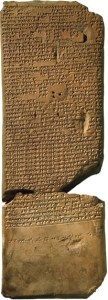
cuneisdgsdg an-bala ki-bala an-ba ki an-ba(2)
‘He who crosses the heavens, crosses the earth;
He who apportions the heavens, has apportioned the earth.’
(3)

Language in this verse remained cryptic and elusive to modern cuneiform transcribers in spite of its simplicity. The “reality” cues encompass all that exists in the Universe – both the heavens ‘an‘ and the earth ‘ki‘. When used separately these words indicate what is above and beneath us in the manifestation that we experience as reality. Likewise they could even be interpreted to represent all that is present, both seen or “physical” (ki) and unseen or “divine” (an). In fact the Sumerian word for all that there is in existence (or “Universe”) is actually the compound segment ‘an-ki‘.

SUMERIAN VOCABULARY
an – heavens, sky / god, star, planets(4)
bala – cross [-over], rotate(4)
ki – earth(4)
ba – allot, divide, appropriate(4)

NecroBible6ththumb Cuneiform tablets reveal that the Anunnaki measured, appropriated and formed their “order” of things in the Universe, responsibility became divided between what is “above” versus what is “below.” Incidentally, they even drew lots.

The Elder Gods of the Anunnaki came together.
With lots they decided the fate of the world.
ANU – the “Father of the Heavens” – would remain in heaven.
ENLIL – the “Royal Heir” – was given the command of the airs.
EA [ENKI] was given control of the “Waters of Life” on earth.(5)

For thousands of years, mystics have sought to relay the simple message that there is an energetic interconnectedness to all things – heaven and earth; seen and unseen. It is the observation and direct experience of this wholeness-factor that actually gives the mystic, magician, seer or sorcerer what appear to be “supernatural” knowledge and abilities, when nothing could be further from the truth – it is all quite “natural.”(6)


(1) Joshua Free’s translation provided for the “Sumerian Wisdom II” project, a forthcoming sequel to Sumerian Wisdom & Anunnaki Prophecies: The Book of Sajaha the Seer (edited by Joshua Free) for Mardukite Truth Seeker Press. Cuneiform tablet entries chosen for the edition represent a clear preservation of Sumerian language proverbs written by scribes during the Old Babylonian period.
(2) Original transliteration of the “Sumerian Proverbs” collection excavated from Nippur by the University Museum of the University of Pennsylvania. Supplemental notes suggest a corrective reading: an-e-bala ki-bala an-ba ki (an)-ba.
(3) Translation by Edmund Gordon from the “Sumerian Proverbs” museum monograph. The meaning “eludes” the original editor and Gordon simply states that the “allusion seems to be one of the gods.”
(4) Sumerian vocabulary derived from the Mardukite handbook: Secrets of Sumerian Language edited by Joshua Free.
(5) Excerpted from tablet collections found in the Necronomicon Anunnaki Bible edited by Joshua Free. Earlier pre-Babylonian (Sumerian) cuneiform ‘genesis’-tablets often begin with the lines: When after AN carried away the heavens. When after ENLIL carried away the earth.
(6) The same type of ‘Divine’ sanction became the foundation of the Catholic Church with the statement “what you decree on earth will be held in heaven,” etc. Other world religions have adopted similar statutes to self-validate their beliefs.

1 Comment

Filed under akkadian, ancient esoterica, ancient near east, assyrian, babylonian, excerpt, mardukite, mesopotamian, new babylon, new release, news, plans & proposals, prophecies & predictions, research development, sumerian, truth seeker press

Cuneiform Tablets Revealed! Sumerian Proverb Warns: Be Careful What You Think

claytabletsheader

“What the mind believes, the spirit reinforces.”(1)

When describing experiences of reality and the manifestations of the physical world, transhumanist Robert Anton Wilson once wrote that “whatever the thinker thinks, the prover proves.” For thousands of years mystics have urged us that our “energy flows where attention goes,” that “belief imparts reality,” and we certainly cannot dismiss how the mind directly affects how we process our day-to-day experiences. Our lives become energetically intertwined into where we put our focus and what we value most. We are what we think we are and life becomes what we make of it – for better or worse.

cuneisdgsdg da-ga nam-ku-zu d-Lamma a bi-ib-gar (2)
(When) reason was perserverant, the guardian-genius reinforced it.‘ (3)

The original transliteration of this proverb invokes the ‘d-Lammasu‘ of Mesopotamian tradition – the prototype of the now familiar “guardian angel.” Later examinations of similar tablet series revealed the word ‘an-Kal‘ in its stead, implying “what is most highly valued.” In either case, when the mind makes solid some bit of reasoning, the observation and personal experience of reality collapses to this belief. Such a paradigm or “mind-set” becomes the static program that interprets all of the sensations and data flowing in from a seemingly separate world external to us. What we envision, we can also create and manifest in reality. When we do this, the “God-part” or “higher genius” of our being becomes awakened and active to ‘reinforce’ our will.(6)

SUMERIAN VOCABULARY
da-ga – perseverance(?), to be ubiquitous (4)
nam-ku-zu – cleverness, wisdom, reason (4)
d-/dingir – ‘prefix determinative’ / god, star, planet, spirit (5)
Lamma – ‘guardian spirit’, ‘higher genius’ / Lammasu spirit
(an-)Kal – to be valued, rare or precious (5)
bi-ib-gar – literally: “placed its strength (or ‘arm’) upon it” (4)
ib-da-na – lay down with, to be mated with (4)

SumerianReligion2ndfrntcrop Alternative interpretations emerged from newer transliterations provided by Thorkild Jacobsen in his notes for the 1959 edition of “Sumerian Proverbs.” His translation of da-ga comes from the root ‘dag‘ – “to move about here or there” or “to be ubiquitous.” He goes on to translate ‘dag-a‘ as a person who is “roaming, vagrant or homeless” and when combined with his translation of ‘ib-da-na‘, the proverb is restated as: “A wise man makes the homeless welcome, and they are able to lie down.” In this light, given what is known in our ‘Sumerian Vocabulary‘, the proverb could also read: “a resourceful traveler values rest” or “the wise wanderer’s spirit finds rest.”


(1) Translation by Joshua Free for the “Sumerian Wisdom II” materials, a forthcoming sequel to Sumerian Wisdom & Anunnaki Prophecies: The Book of Sajaha the Seer edited by Joshua Free for the Mardukite Truth Seeker Press. Select tablets for this edition seek to preserve and study Sumerian language proverbs in cuneiform script during the Old Babylonian period.
(2) Original transliteration from the Nippur “Sumerian Proverbs” collection excavated by the University Museum of the University of Pennsylvania. The updated version (1959) with supplemental notes by Thorkild Jacobsen offers the replacement line: da-ga nam-ku-zu an-Kal ib-da-na.
(3) Translation by Edmund Gordon from the “Sumerian Proverbs” museum monograph. A corrected translation appears in lieu of the updated replacement line: “The perserverant person values reason (and thereby) can rest.”
(4) Sumerian vocabulary supplemental from the ‘Sumerian Glossary and Concordance’ for the Edmund Gordon “Sumerian Proverbs” museum monograph.
(5) Sumerian vocabulary derived from the Mardukite handbook: Secrets of Sumerian Language edited by Joshua Free.
(6) Edmund Gordon notes his interpretation of the original transliteration as: ”God helps them that help themselves” or what “man proposes, God disposes.”

For MORE information on “Reality Engineering” visit the NexGen Systemological Society today!

1 Comment

Filed under ancient esoterica, ancient near east, babylonian, excerpt, mardukite, mesopotamian, new babylon, new release, news, nexgen, plans & proposals, prophecies & predictions, research development, sumerian, systemology, truth seeker press

Mesopotamian, Sumerian & Babylonian Cuneiform: Wisdom Tablets, “Destiny” as Origins of Astrology

claytabletsheader

3. “When disaster is self-made, no man can interfere.” (1)

Mesopotamian religious and spiritual traditions carry a uniquely dynamic vision of ‘divinity’ and ‘spirit’. As explained in Secrets of Sumerian Language,” the cuneiform ‘cross’ sign ‘dingir‘ (Akk., ilu ) that prefixes divine names of the Anunnaki pantheon also applies to ‘celestial’ or ‘heavenly’ bodies – “planets” and “stars” symbolic and representative of the Anunnaki pantheon thought to hold precedence over mundane affairs. The belief literally stood that all physical worldly manifestations and outcomes on earth (in the material world) possessed an ‘unseen’ influence of “perturbation” by ‘divine’ and ‘otherworldly’ energetic currents (from the ‘spiritual’ or metaphysical world). Initial correspondents of these currents between individual Anunnaki and their associated planets. Additional systematization of these concepts led the Babylonian inception of astrological traditions still observed today.

cuneisdgsdg nig-ku-lam-ma dingir-ra-na-ka su—tu-tu nu-ub-zu (2)
‘The destruction is from his own (personal) god; he knows no savior.’ (3)

Literal translation of dingir-ra(-na-ka) indicates that the aforementioned disaster comes from “one’s own personal god.” While ancient Sumerian and Babylonian spirituality did incorporate personal tribal or familial (ancestral) ‘deities’ and “guardian spirits,” such are generally related to lesser spirits: the sedu (spirits) and lamassu (guardians) that make greater appearances in the religion and magical traditions of the (post-Sumerian) Babylonian (Akkadian and Assyrian) Mardukites. Modern interpreters of this line read it literally and translate the sentiment as: when a man loses his favor with his personal deity then he has no one to appeal for him to the higher powers. (6)

sumlangthumb In Secrets of Sumerian Language, the distinct philosophical difference in Mesopotamia between ‘fate’ and ‘destiny’ is described based on its cuneiform usage. A person’s life has a ‘destination’ or ‘destiny’ that is fixed “in the heavens” by the gods or ‘stars’ in “zones of influence.” In comparison, a person’s ‘fate’ refers to subconsciously chosen environmental conditions that comprise a life-path that is not necessarily “fixed” while they are on their way to a destination that is fixed. In other words, it is the ‘route’ one travels on their way to a final ‘destiny’. Whether decreed by one’s own ‘personal god’ or ‘personal star’ or even erupting from one’s own “god-self,” this cuneiform line seems to indicate a ‘thing’ that is unavoidable or cannot be prevented by the person themselves or another human: such a thing on earth has been decreed in the heavens. (3)

SUMERIAN VOCABULARY
[nig-] – ‘abstract’ / a thing (7)
ku-lam-ma – destruction (4); a thing forgotten (8)
dingir – ‘prefix determinative’ / god, star, planet, spirit (5)
su—tu-tu nu-ub-zu – it cannot be prevented; or ‘avoided’ (9)

MesopotamianReligionFrontcrop Original analysis of the original Sumerian Proverb tablet series occurred using an elementary understanding of cuneiform script and Mesopotamian languages. Thorkild Jacobsen replaced Gordon’s original translation of su—tu-tu as “savior,” noting the Akkadian equivalent (‘ekimu‘) implies to “rob, steal or take away” (and not “to save”), meaning that the disaster/destruction that has been brought on into one’s life cannot be “touched” or “interfered” with and is thus “inevitable.” This more advanced rendering reveals a much deeper understanding of the ideal that what a person is due, they are due and a person receiving the harsh lessons of their life is unable to be assisted or coddled through it by any other power – they must simply experience, endure and, hopefully, survive the course with lessons learned. Quite simply, no one can interfere and safeguard against a person hellbent on making their own mistakes. (3)(9)


(1) Translation of Sumerian Proverb tablet by Joshua Free for Sumerian Wisdom II (tentative title) materials, the forthcoming sequel to Sumerian Wisdom & Anunnaki Prophecies: The Book of Sajaha the Seer edited by Joshua Free. These tablets attempt to preserve Sumerian language proverbs in cuneiform script during the Old Babylonian period.

(2) Derived from the original “Sumerian Proverbs” collection found in Nippur by the University Museum of the University of Pennsylvania. Some transliterations omit the ‘-na-ka‘.

(3) Original translation provided in the “Sumerian Proverbs” museum monograph by Edmund Gordon. The translation and interpretation has since been updated by Thorkild Jacobsen in the 1959 edition notes to the monograph: “–the disaster is of his own making (lit., ‘is of his personal god’), it brooks no interference.” His interpretation warns that “against self-imposed burdens, self-willed destruction, others can do very little.”

(4) Vocabulary supplement derived from the ‘Sumerian Glossary and Concordance’ for the Gordon “Sumerian Proverbs” museum monograph.

(5) Vocabulary inclusion of student translation is derived from the Mardukite handbook: Secrets of Sumerian Language edited by Joshua Free.

(6) Edmund Gordon explains his interpretation: “When a man’s personal god is against him, he has no one to intercede on his behalf before the assembly of the gods.”

(7) The Sumerian cuneiform prefixing sign ‘nig‘ – found at the start of lines throughout this particular series of ‘proverb’ tablets – indicates an attached statement regarding a ‘thing’ as an “abstraction” (concept) rather than always to be treated as a literal “thing” (object).

(8) An alternate translation to nig-ku-lam-ma is offered in the collected notes and revised additions of the 1959 edition by Edmund Gordon as: “a thing which has been forgotten.”

(9) Alternatively suggested by Joshua Free as “no one can prevent” or “no one can avoid” from the literal Akkadian ekimu – “none may ‘steal’ away.”

1 Comment

Filed under akkadian, ancient esoterica, ancient near east, assyrian, babylonian, excerpt, mardukite, mesopotamian, new babylon, new release, news, plans & proposals, research development, special offer, sumerian, truth seeker press

A New Mesopotamia Born from Iraq: Babylon Rises Again! | Middle East News

Lamassu.Nabu_2

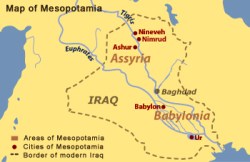
Thousands of years of political discord, dragon-fights between dynastic and royal bloodlines, new waves of Judeo-Christianity and Islam overshadow the previously observed traditions of the Anunnaki… A cradle of civilization, birthplace of systems and arts of humanity… Religion. Language. Politics. Mesopotamia – Land Between the Rivers – as it was once known from its Greek name; Iraq today, but what of tomorrow?

magansmall After years of the Piscean Age ruled by non-Babylonian Arabs and the near extinction of the Yezidi tribes, who will lay claims to the boundaries of Mesopotamia in a post-modern — post-Iraq — future ever changed by wars for oil, scarred by military from several nations, the rule of Saddam Hussein, and now the Islamic State? Where will the new political boundaries lie when the Middle East disbands and there becomes a New Mesopotamia between the Tigris and Euphrates? And who will be seated in New Babylon when the coming age arrives?

“The exact political boundaries of Babylonia are not generally agreed upon – no more today among scholars and nationalists then by those who physically fought for them in periods of antiquity. For as long as humans have been involved, the are has been plagued in constant conflict…”
— Joshua Free, Liber-51/52

…Mesopotamian territory often included areas outside the pathway of the two rivers, which even themselves changed positions over time with the alteration and then absence of human intervention via the aqueduct canal systems (and other natural occurrences).

MesopotamianReligionFrontcrop By today’s standards the “Middle East” or “Ancient Near East” includes the geographical locations occupied as Iran, Iraq, Saudi Arabia, Yemen, Oman, Lebanon, Israel, Syria and the United Arab Emirates.

Mesopotamian kingdoms also included (at some time or another) occupations in modern-day Turkey, Armenia, Afghanistan, Pakistan, Egypt and Sudan. The term “Middle East” is a modern Euro-centric semantic replacing the academic usage of the ‘Near East’ (as opposed to the ‘Far East’ or “oriental”).

With few exceptions, the Middle East and its ancient Anunnaki legacy is the origin of most major world religions in history including Zoroastrianism (Mazdaism), Mithraism, Canaanite, Yezidism (Yazdanism), the Baha’i Faith, Manichaeism (Mandaeism), Islam (Muslim), Judaism and Christianity!

mesopotamia_map The overt evolution of the Sumerians into a Babylonian Empire is not altogether surprising – on the surface. However, the seeker should keep in perspective just how quickly all of this developed from seemingly nothing. It is true that societal living was originally organized around state religion, but prior to this it was culminated not by the social relationships shared between people, but by their living relationship with the earth.

Where first we have loosely organized nomadic hunter-gatherers that are forced to wander about or dwell in caves, essentially rolling the dice of chance for their survival, very little time passes before the sweeping transition in Mesopotamia toward planned agricultural farming and pasturing shepherds.

cuneisdgsdg Credited with many ‘firsts’ in the development of human history, it is the incorporation and evolution of cuneiform ‘writing’ that the Sumerians can be esteemed for – something which was undoubtedly entirely necessary for the civic growth of the human world.

In fact, it is only with writing that we have any concept at all of the history of humanity; everything prior to this inception, is rightfully considered ‘prehistoric’, at least by ‘modern’ standards.

According to ancient cuneiform tablets, the decision to cultivate civilization in the Middle East was not of men, but of a genetically distinct race known as the Anunnaki – those that appeared to ‘come down from the sky’ and were later called the gods of the original ‘pantheon’ of deities on earth…

3 Comments

Filed under akkadian, ancient near east, assyrian, babylonian, excerpt, mardukite, mesopotamian, new babylon, new release, news, nexgen, plans & proposals, prophecies & predictions, research development, sumerian, truth seeker press, youtube

NEW BABYLON RISING – Books of Pheryllt, Mesopotamian Mathematics & The Anunnaki – Winter 2014 eZine

NBRheaderSMALLnotuse

GREETINGS & SALUTATIONS FELLOW TRUTH SEEKER!

Welcome to our tenth online eZine/issue of “New Babylon Rising: Anunnaki, Alien Gods & Spiritual Traditions“, developed by Mardukite Truth Seeker Press in a NexGen futurist effort of public inform in dedication to ancient literary records — primarily those cuneiform — and the preservation of the Anunnaki legacy including the human evolution of its societal systems and traditions inspired across global space and time. The feature articles of this issue emphasis numbers and mathematics as it applied to Sumerians and Babylonians, the newly released debut title in the series Books of Pheryllt, and a very special offering: a concise, easy-to-read, A-to-Z quick-study guide to the Anunnaki!

Enki2 The collective efforts of the Mardukite Research Organization reveal these antiquated mysteries for ALL; our archive of books developed explicitly to shine a new light to understand the most critical subjects for the Next Generation: where we come from, what we are, where we are and where we’re going “..in this ocean of chaos”!

In addition to those otherwise cultural specific elements (Mesopotamian and Celtic), the work publichsed by the Mardukite Truth Seeker Press offers a wide range of NexGen education including — the origins and development of human belief systems — particularly what wisdom and knowledge may be drawn from ancient “divine” encounters contributing to establishment of the illusive artificially generated social “systems” among the population, NexGen evolution of transhumanism, and, of course, fragmented languages, religions, and the global distribution and corruption of “esoteric” or otherwise “occult” knowledge regarding the true superior spiritual (internal) potential of the human condition, its external manifestation in engineering the reality we experience everyday and the progression of the “immortal” spirit beyond this realization…

Indeed, we are in dangerous territory…
And this time…
THERE BE DRAGONS!


FEATURED NEW RELEASE:

PHERYLLT_banner

The Druids believed in books more ancient than the flood. They styled them the ‘Books of Pheryllt’ and the writings of Hu.
– Ignatius Donnelly, Atlantis

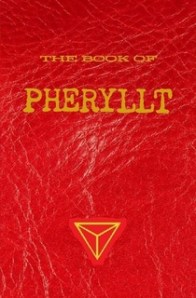
PHERYLLT_cover_thumb_lg PHERYLLT:
A Modern Guide to the First Systematizers of the Ancient Celts & The Pre-Druidic Religion

edited by Joshua Free

Where the Druids are concerned, hundreds of years of diverse academic and philosophical debate await the Seeker on their look back. It is now even more controversial to speak of the Pheryllt in neodruid circles… For two decades a modern movement of neodruids influenced by modern Pheryllt Druidism have become bystanders amidst the unbreakable schism… BUT, for now — The Legend is Real…

WOULD YOU LIKE TO KNOW MORE ???

:: BOOK OF PHERYLLT – Controversial New Age Writer Brings Druids Legend of Welsh Bards to Life
27, November 2014 — druidschool.wordpress.com

:: Uncovering the Pheryllt: First Systematizers of the Celts & Welsh Celtic Druidism with Joshua Free
28, November 2014 — druidschool.wordpress.com


FEATURED ARTICLES: MESOPOTAMIAN MATHEMATICS

claytabletsheader

:: Mesopotamian Mathematics: How to Measure Reality? (Necronomicon Numerology)
21, November 2014 — necrogate.com
“As significantly as sigil-scripts, colors and mystical alphabets have played their parts in ritualized magical drama, spiritual incantations and other ceremonial applications, so, too, are numbers viewed as mystical signs in the realm of form, representative of endless wisdom and correspondences…”

:: Babylonian Astrology & Age of Aquarius: How the Sumerians Measured the Heavens
23, November 2014 — mardukite.com
“The ancient Sumerians understood the connection between cycles, time and mathematics. In addition to the pragmatic use of the wheel or circle, they also developed the initial calculations of the circle to be 360 degrees. Their use of base-60 ‘sexagesimal’ math in the systematic measurement of time has carried with humanity to this day…”


SPECIAL FEATURE: THE ANUNNAKI — A-to-Z

anunnakisumerianreligionheader

Mastering Mardukite Mesopotamian Mythology
A Brief Anunnaki A-to-Z Directory (Study Guide)
edited by Joshua Free for Liber-52

Part 1: The Anunnaki – ADAD to AYA
Part 2: The Anunnaki – BAU to ENLIL
Part 3: The Anunnaki – ERESHKIGAL to NABU
Part 4: The Anunnaki – NAMTAR to NINHURSAG
Part 5: The Anunnaki – NINKI to TIAMAT

2 Comments

Filed under ancient esoterica, ancient near east, babylonian, excerpt, magick & mysticism, mardukite, mesopotamian, modern occultism, new babylon, new release, nexgen, plans & proposals, research development, special offer, sumerian, systemology, truth seeker press

Mesopotamian Mythology The Easy Way — Sumerian Anunnaki (Study Guide) Part 5

10624862_510504005749215_4262210687146683942_n2

MASTERING MESOPOTAMIAN MYTHOLOGY
A Brief Anunnaki A-to-Z Directory (Study Guide) – PART FIVE
edited by Joshua Free for Liber-52

[See necrogate.com for PART FOUR]

NINKI {35} [“Lady of the Earth”] — The official spouse (consort) of ENKI, also known as DAMKINA [“Lady Who Came to Earth”]. NINKI is the daughter of ALALU (the ‘heavenly’ king prior to ANU) and the the mother of MARDUK.

NINLIL {45} “Lady of Air-Space” — The official spouse (consort) of ENLIL, also known with the epithet SUD (“nurse”). The background to the relation- ship between ENLIL and NINLIL is not commonly found in the typical cuneiform tablet cycles. Naturally, the lore is not Mardukite or Babylonian in origin and does not appear in the tablet catalogue or commentary of (modern) Mardukite Core anthologies. The cycle is sometimes referred to as “Enlil’s Banishment to the Underworld.”

NINSHUBUR [“Lady of the East”] — The personal assistant (Mercury), second-in-command to the goddess INANNA (ISHTAR). She does not take a consort and there is an alluded love-relationship between her and INANNA (ISHTAR).

MesopotamianReligionFrontcrop NINURTA {4/(50)} “Lord of the South Wind” — The official heir-son of ENLIL, born of ENLIL and NINMAH, espoused to BAU. NINURTA represents the current of Saturn in the Mardukite paradigm, representative both of “hidden power” and “hidden secrets” (an idiom for the dark power and secrets behind the origins and legacy of Babylon). In the Enlilite Sumerian worldview, NINURTA (called NINIB in Babylonan) is the Enlil-in-waiting, a position usurped by MARDUK proper for the Age of Aries. As Enlilship is typically symbolized by ‘dragonslaying‘ — the same motif present in the elevation of MARDUK in Babylon rivaling the dragon-queen TIAMAT can be seen in the older Sumerian cycles where the prowess of NINURTA is shown in his ability to fight the mighty dragon KUR. His colors are black and violet and his essence is corresponded to the metal lead.

NISABA — The Sumerian agricultural goddess of writing and scribes; replaced by the god NABU in the Mardukite Babylonian Anunnaki tradition.

SAMAS / SHAMMASH {20} — The official solar deity of the Enlilite Sumerian Anunnaki pantheon, brother to INANNA (ISHTAR), born of NANNA and NINGAL. The sun represents the brilliance and radiant energy of life on earth; the light that allows organic life to grow and even the manner of which ‘time’ [and ‘lifespan’] is divided. Expansive powerful energy of the solar current is invoked in magical ceremonies for general success and well-being. The fiery nature of the ‘star’ is called upon to ‘incinerate iniquities’ and reveal the nature of darkness and lies, meaning: the revelation of truth. Mistaken (by modern scholars) as monotheistic ‘sun worship’, solar veneration is really the celebration of life. As an archetypal representative of the ‘starry’ ‘heavens’, the sun signifies the physical presence and watchful eye of the ‘All-God’, invoked in matters of law to bring righteous judgment to critical worldly situations. SAMAS is sacred to Sunday, the colors gold and yellow and in the essence of gold.

magansmall SARPANIT {(5)/(45)} — The part-earthling (seventh generation of ADAPA, by ENKI) chosen royal spouse (consort) of MARDUK; princess-queen patron goddess (ISHTAR) of Babylon and mother to NABU. In alternative versions of the lore, her name ERU (or ERUA) designates her as the ‘mother-goddess’ of the ‘Children of MARDUK’ (later associated with the light-folk or elves of Europe).

TIAMAT [“Life-Giving Mother”] — The ‘primeval dragon’ in Babylonian archaic epics, often equated with the Sumerian KUR. Later esoteric traditions and texts associate ‘her’ with Yaldabaoth (Ialdabaoth) in Gnostic Hermeticism, or Khornozon (Choronzon) in Enochian Hermeticism. She is equated with the ‘waters’ or the ‘Deep’ in post-Sumerian Semitic scripture (Hebrew: tehom) – the all-encompassing “Sea” that is parted to reveal the first ‘division’ (fragmentation) of “Life” in the Universe. She is paired anthropomorphically with ABZU (the Abyss) as the prehistoric ‘ancestors’ of the Anunnaki race. Her primary literary presence as TIAMAT (or T(I)AMTU) is in the Enuma Elis (Babylonian) ‘Epic of Creation’. In later times, the name is used for the wife of ADAMU (Adam), being the equivalent to the Semitic “Eve” character.

1 Comment

Filed under ancient esoterica, ancient near east, babylonian, excerpt, mardukite, mesopotamian, new babylon, research development, special offer, sumerian, truth seeker press

Sumerian and Babylonian Mythology — Ancient Anunnaki A-to-Z (Study Guide) Part 3

1477350_385082334958050_1914015250_n2

Mastering Mardukite Mesopotamian Mythology
A Brief Anunnaki A-to-Z Directory (Study Guide) – PART THREE
edited by Joshua Free for Liber-52

[See necrogate.com for PART TWO]

ERESHKIGAL – [“Mistress of the Great Below”] The Queen of the Great Lands in the Sumerian tradition, sister of INANNA-ISHTAR, granddaughter of ENLIL and spouse to NERGAL.

MesopotamianReligionFrontcrop GANZIR — The gatekeeper to the underworld ‘Kingdom of Shadows.’ The ‘Gate of Ganzir’ is often confused with the ‘Gate to the Abyss’ or the ‘Gate to the Outside’, but instead it is a portal into the Anunnaki-controlled Underworld, the ‘Shadowlands’ or twilight world within the domain of ERESHKIGAL, who rules this ‘land of the dead’. Quoting a modern grimoire of Babylonian occultism, the “necromantic art, by which is it desirous to speak with the phantom of someone dead, and perhaps dwelling in the ABSU [Abyss], and thereby a servant of ERESHKIGAL… it is no less than the opening of the Gate of Ganzir.”

GIBIL [“He Who Has Fire”] — The companion of the flame, a descendent of ENKI who uses fire to conduct alchemy and other feats of “fire power.”

GIRRA — The “servant”, “power” or “fire” of the ‘great god’; the Sumerian fire-god or essence or force of a fire-god named GIBIL.

INANNA {15} [“Lady of Heaven”] — The Sumerian goddess of “passion”, both ‘love’ and ‘war’, and patron of URUK, begot by NANNA and NINGAL; originally betrothed to MARDUK, she then changes her consort choice to DUMUZI. Her prowess and determination secured her a place in all ancient pantheons; being the “Goddess of One-Thousand Names,” titled ISHTAR in Babylon. INANNA (ISHTAR) is the spirit of Venus, whose day is Friday and with an essence found in copper. Her colors are green and white, significant to her domain of fertility and growth. She offers her magicians the skills in love and visions of beauty.

NECRONOMICON - THE ANUNNAKI BIBLE (Sixth Edition)

NECRONOMICON – THE ANUNNAKI BIBLE (Sixth Edition)

MARDUK {10/(50)} [“Son of God”] The supreme champion of the IGIGI during pre-Sumerian times of the Anunnaki; heir-son of ENKI, he becomes the patron of Babylon and the ‘Mardukite‘ tradition reigning for the Age of Aries in Mesopotamia. All tablet cycles making reference to MARDUK are purely Babylonian or from a direct later source – as he does not appear in any significant pre-Babylonian cuneiform tablet cycles yet unearthed. When mentioned briefly as the son of ENKI, working in Eridu, he is named ASARLUHI, becoming the patron Anunnaki “deity” of magic or ‘Master of Magicians’ after having inherited the craft from his father. The blatant industrious and expansive power represented by MARDUK in his ascent up the pantheon (as observed in Babylon) is typified by the planet Jupiter (ENLIL, by Sumerian standards). His color is purple.

NABU {12} [“Prophet”] — The official post-Sumerian secretary of the Anunnaki, part-divine earth born heir-son of MARDUK and messenger-herald and spokesperson of the ‘Mardukite’ tradition, the national cult of Babylon devised by NABU who assisted his father in the redevelopment of the Anunnaki paradigm (as seen in the ‘Mardukite‘ religion of Babylon replacing the previously observed ‘Enlilite’ world order of the Sumerians). Creating the concept of ‘history’ and ‘propaganda’, NABU gives the ‘stylus’ to humanity (and launches a group of scribe-priests (specially taught writing and rhetoric) to catalog the natures, identities, history and decrees (decisions) of the Anunnaki Assembly (gods) and their relationship with each other and the human (“mortal”) world, thereby creating not only the first public ‘religion’, but the first ‘mythology’ (a religion rooted in literary and oral legacies of human relationships and encounters with the divine) and the systems that were able to later result (most of which are still functioning as part of ‘normal’ everyday life in contemporary society). NABU is the archetypal ‘High Priest’ (ENSAG) of the first religion (dedicated to MARDUK) and practiced by priests who preserve the craft of ENKI in Eridu with science and ‘magic’ of the gods to power and sustain the prosperous longevity of Babylon.

…to be continued.

3 Comments

Filed under akkadian, ancient esoterica, ancient near east, assyrian, babylonian, excerpt, mardukite, mesopotamian, new babylon, plans & proposals, research development, special offer, sumerian, systemology, truth seeker press

Mastering Mardukite Mesopotamian Mythology – Anunnaki Directory (Quick-Study), Part 1

530px-Faravahar-Gold.svg

Mastering Mardukite Mesopotamian Mythology
A Brief Anunnaki Directory (Quick-Study) – PART ONE
edited by Joshua Free for Liber-52

ADAD {10} The youngest son of ENLIL that becomes the national patron deity to the Hittites (called HADAD or TESHUB); possibly also recognized as BAAL HADAD in an Hittite version of the Supernal Trinity that is elevated to a chief god position in the same manner that MARDUK is raised in Babylon. As a storm god in the Anunnaki pantheon, ADAD is represented by thunder, lightning and torrents. According to the Hittite succession, hierarchical kingship passes from ALALU to ANU to KUMARBI (ENLIL) and the BA’AL HADAD (TESHUB). In the Enki’ite (Mardukite) Babylonian system he is named ISHKUR and granted the position of “Inspector of the Cosmos” by ENKI.

Gates3rdEdfrontcropMINI ALALU [“Father of the Gods”] — The figure maintaining ‘kingship’ in the ‘heavens’ prior to ANU. An ancient Hittite (Hurrian) tablet cycle titled ALALU & ANU or “Kingship in Heaven” describes the conflict between the two for the seat of ‘kingship’ in the ‘heavens’. According to the Tablet-K series in Liber N, reprinted in the Necronomicon Anunnaki Bible or Necronomicon Anunnaki Legacy (Silver Edition) explains: Formerly in the Ancient of Days, ALULU was reigning in heaven; and for nine sars did he rule the skies, but not well did he reign. Then in the ninth sar of his reign, ANU defeated ALULU. ALULU descended from heaven and ruled the dark-hued earth. ANU gave fight and defeated ALULU and kingship was lowered from heaven to earth by decree of ANU.

ANTU {55} [“Life of Heaven”] — The official half-sister (by a different mother) and spouse (consort) of ANU. ANTU and ANU beget ENLIL. In archaic pre-Sumerian lore, ANTU is espoused to the archaic AN.

cuneisdgsdg ANU {60} [“Heavenly One”] — In the Sumerian Anunnaki pantheon, ANU is the supreme “All-Father” of the pantheon; father to ENLIL by official spouse ANTU, and the father of ENKI & NINHURSAG (by other wives). Called AN in pre-Babylonian times and ANU by the Babylonians, a being whose family resides on, or emerged from the ‘place of crossings’ (Nibiru). Few of the incantation tablets (or ‘prayers’) invoke the powers of ANU directly, since the “heavenly force” was perceived as too vast to be channeled in its raw state – and to degrade it to anything more accessible would be to compromise the nature of what is being represented by this figure.

ANZU [“Knower of Heaven”] — An obscure bird-like beast/monster of an unclear nature. The ANZU or ZU usually refers to a “heavenly bird” or thunderbird that appears in an archaic tablet cycle stealing the ‘Tablets of Destiny” from ENLIL, disrupting the DUR-AN-KI (‘Bond-Heaven-Earth’) “stargate.” It is possible that this half-man, half-bird, sometimes called AZAG, was a genetically engineered storm-god or artificially intelligent messenger being of ENLIL that turned “evil.”

ARURU — The sister of ENLIL, alias NINTU, who is the Babylonian title for the ‘mother-goddess’ known in Sumerian as NINMAH or NINHURSAG. In the Babylonian ethnocentric epics, she assists MARDUK in creating the human race (or ‘Race of Marduk’), however, in the Enuma Elis, it is the “blood” of KINGU that is used. Other Sumerian versions say the “blood” or “essence” of some other ‘slain’ god is used for this.

AYA [“Dawn”] — The official spouse (consort) of SAMAS in Akkadian; named SHERIDA in Sumerian.

…to be continued.

2 Comments

Filed under akkadian, ancient esoterica, ancient near east, assyrian, babylonian, mardukite, mesopotamian, new babylon, research development, special offer, sumerian, truth seeker press

New Babylon Rising – Sumerian Anunnaki Legacy & Babylonian Gates of the Necronomicon: Autumn 2014 eZine

NBRheaderSMALLnotuse

GREETINGS FELLOW TRUTH SEEKER!

Hail and welcome to the ninth eZine online issue of “New Babylon Rising“, a futurist NexGen effort developed by Mardukite Truth Seeker Press for the public in dedication to preserving the ancient literary records of the Anunnaki legacy — primarily those cuneiform — and human societal systematization and tradition this legacy inspired across the globe.

1001015_318340804969022_2026839541_n Our collective efforts reveals these antiquated mysteries for ALL and shines new light on what is deemed the most critical subjects of our time: understanding where we come from, where we are and where we’re going; origins and development of human belief systems — particularly what wisdom and knowledge may be drawn from ancient “divine” encounters contributing to establishment of the illusive artificially generated social “systems” among the population, NexGen evolution of transhumanism, and, of course, fragmented languages, religions, and the global distribution and corruption of “esoteric” or otherwise “occult” knowledge regarding the true superior spiritual (internal) potential of the human condition, its external manifestation in engineering the reality we experience everyday and the progression of the “immortal” spirit beyond this realization…

Indeed, we have entered dangerous territory…

–MARDUKITE NEW RELEASE–

Gates3rdEdfrontcropMINI GATES OF THE NECRONOMICON
Third Edition

by Joshua Free

mardukite.com exclusive edition!
ONLY $22.95!
Contains the complete Year-2 Mardukite Core including the text from the MESOPOTAMIAN RELIGION and NECRONOMICON REVELATIONS in one amazing volume, revised and updated!


–MESOPOTAMIAN NEWS–

:: Ancient Yezidi Mesopotamian Culture – Crisis in Iraq


anunnakisumerianreligionheader

:: Iraq War Threatens Ancient Mardukite Yezidi / Yazidi Bloodline
11, August 2014 — mardukite.com
Yezidi (Yazidi), an unbroken unique gene of middle eastern people extending directly back to ancient pre-Semitic Sumerian Mardukites, practicing a tradition of modern Zoroastrian Yazdânism derived from the monoltry monotheism to Marduk of Babylon observed as Melek Ta’us or Shaitan (Shaytan), have been threatened with genocide in Iraq by the Islamic State (IS/ISIS)…

:: Mesopotamian Magic, Rites and Rituals of Eridu, Sumerian Anunnaki in Babylonian System
19, August 2014 — mardukite.com
Many version of Erudite magic may be found through the Mesopotamian ‘spiritual’ (or ‘magical’) cuneiform texts. The incantation tablets from the ‘Mardukite’ Babylonian Anunnaki tradition, specifically those used and forged by scribe-priests of the Order of Nabu, are invoked from the ‘perspective’ (authority) of NABU – as was the tradition learned verbatim from MARDUK. In both scholarly and esoteric ‘Mardukite’ texts, the ‘Opening Ritual’ of Mardukite magic is derived from the source titled: The Incantation of Eridu…

:: Babylonian King Hammurabi and Law Code of Marduk the Sumerian Anunnaki god of Babylon

23, August 2014 — mardukite.com
In the post-Sumerian “Mardukite” era of MESOPOTAMIA, the traditions and systems of the Anunnaki were sealed under MARDUK, heir of ENKI. During the shift to the Age of Aries – the sign of MARDUK, represented by the Ram – religion, spirituality and the global reality experience became fueled by ‘divine politics’. The famous ‘creation stories’ and ‘mystical definitions’ (that serve as the basis for future traditions and ‘societal reality systems’) were forged onto tablets of propaganda supporting the ‘Babylonian‘ paradigm by the priest-scribes of (‘led by’ or ‘dedicated to’) NABU, heir of MARDUK. Figures that appear central to the infrastructure of MARDUKITE BABYLONIAN systems are the younger generations of Anunnaki…

mesopotamianmagicheadline

:: SPECIAL NEWS – Mardukite Enemies & Necronomicon Hoaxes – Black List for Curses – Congratulations Someone Famous Hates You!

11, August 2014 — necrogate.com
“Gloom” (Los Angeles) — Some fucking fruitcake with a tarantula growing out of his head has launched an all out war with the NABU Joshua Free and the Mardukites. Lovecraftian wannabe simonian whatever deranged egypt something. An easy system to attack with. He’s also a drunk so very open. He’s a drunk that uses his meager booksmart “mentorship” to get girlfriends I guess. Sad when people need all that for a lay. Very psychically damaging to people…


:: Solar Eclipses, Sumerian Anunnaki, Babylonian Origins of Astrology and Celestial Magic

2, August 2014 — necrogate.com
Eclipses are a natural phenomenon that occurs whenever a celestial object, like the Moon, casts a shadow on another object, in our case, the Earth, as a result of an astrophysical alignment. It is curious that the ancient systems viewed eclipses as “harbingers of doom” (like comets) and yet others openly invite the energy into their religious rituals. The range of a total eclipse is a relatively narrow path and the phenomenon generally lasts for less than seven minutes. It might seem unlikely to some that these brief events themselves would have held the ancient people in significant states of fear. But lore suggests otherwise…

:: Yezidi Black Book of Melek Ta’us from Mardukite Necronomicon Anunnaki Bible

14, August 2014 — necrogate.com
Few occultists who remain in the Light are probably privy to lore of the ancient Yezidi sect. They follow a tradition dedicated to the “God of the Black Mountain” who gave to them wisdom in what is known as the oldest of the “Black Books”. While the Realm of Light has shied away from such – or believed they have attained more than a glimpse of it in their “Books of Shadows”, it is this Divine Encounter that has been omitted from traditional biblical tales for its connections and devotion to the Darkness…

:: NEW Gates of the Necronomicon Sumerian Anunnaki in Babylonian Magical System
17, August 2014 — necrogate.com
Discover the secrets of the most coveted tome of incredible grandeur and power drawn from the original archives of the Mardukite Research Organization… THE GATES OF THE NECRONOMICON. The official guide to the Sumerian Anunnaki in Mesopotamian Religion and the Babylonian Magical Tradition! MARDUKITE.COM EXCLUSIVE EDITION! The most critically acclaimed and bestselling materials from the Mardukite Research Organization now available in one volume…

:: Secrets of Ancient Power and Magic of Marduk the Anunnaki god of Babylon

21, August 2014 — necrogate.com
The Mardukite Epic of Creation — the Enuma Elis — illustrates a unique perspective, spiritually speaking: as already fragmented beings, the Anunna (or Anunnaki) knew of the true nature of reality and used it to their advantage politically (religiously) when dealing with humans…


Leave a comment

Filed under akkadian, ancient esoterica, ancient near east, assyrian, babylonian, limited edition, magick & mysticism, mardukite, mesopotamian, modern occultism, new babylon, new release, nexgen, plans & proposals, prophecies & predictions, research development, special offer, sumerian, truth seeker press, youtube

Mesopotamian Magic, Rites and Rituals of Eridu, Sumerian Anunnaki in Babylonian System

mesopotamianmagicheadline

Through Marduk, the power of Eridu – incantation-prayer – was taught to the scribes of Nabu and the Mardukite Priests, who were taught to attract and compel the ‘gods’ in the name of Marduk, always incanting the word-formula of the highest order: Nabu invoked by way of the name of Marduk; Marduk invoked by way of the name of Enki, Our Father, who in turn would invoke by the name of Anu – and so was born the concept of magical hierarchies, an ideal that was convoluted and obscured when employed later (during the Middle Ages and such), particularly distorted by the Judeo-Christian paradigm as evident in many popular grimoires…
~ NABU, Joshua Free, The Book of Marduk by Nabu (2010)

Gates3rdEdfrontcropMINI This mardukite.com blog is officially excerpted from the Liber-51/52 materials recently released in the NEW mardukite.com exclusive edition of the GATES OF THE NECRONOMICON anthology edited by Joshua Free. These materials are also available as Mesopotamian Religion by Joshua Free or Sumerian Religion II.

Many version of Erudite magic may be found through the Mesopotamian ‘spiritual’ (or ‘magical’) cuneiform texts. The incantation tablets from the ‘Mardukite’ Babylonian Anunnaki tradition, specifically those used and forged by scribe-priests of the Order of Nabu, are invoked from the ‘perspective’ (authority) of NABU – as was the tradition learned verbatim from MARDUK. In both scholarly and esoteric ‘Mardukite’ texts, the ‘Opening Ritual’ of Mardukite magic is derived from the source titled: “The Incantation of Eridu.”

cuneisdgsdg Perhaps the most fundamental ‘formula’ of the magical system in Babylonia, if there is one, goes back to the heart of the system born of the scribe-priests and the figures who brought this system about – NABU and the appropriation of his father, MARDUK as the chief director. This is the spiritual acknowledgment alluded to by the Incantation of Eridu, also known as the ‘Incantation of the Priest of Eridu’ (Eridu being the shrine-home of ENKI), or the ‘Incantation of the Deep‘, which simply refers to another name for the far-away abode of ENKI near the Persian Gulf.

Ceremonial activation of the ‘birthright’ of Anunnaki power sealed in Eridu (and then in Babylon) allows a practitioner to assume the representative form of the “Priest of Eridu,” a title first bestowed
upon MARDUK by ENKI, then passed onto NABU during the solidification and heights of the Babylonian era. The esoteric key in effect here is that the priest conducts the incantations (ceremony) as the embodiment of an intermediary ‘messenger’ deity – the original semantic of the word “invocation” – thereby directing the cosmic (world) order, in essence, first hand.

MesopotamianReligionFrontcrop In short – the magician approaches his deity as himself – a servant priest – and petitions to assume the godform, whereby he continues the ceremony as a divine representation of the god ‘invoked’. An almost identical principle appears within Semitic mysticism and the Judeo-Kabbalah – an excellent example being found in contemporary Catholicism, when the priest ‘assumes the Christ-form‘ to effectively perform a perceived alchemical transmutation on the sacramental bread and wine, conducted as a representative of Jesus on earth, in imitation (dramatic reenactment) of the ‘Last Supper’.

In the ‘Mardukite’ system observed in Babylon, the god being invoked is MARDUK. This is affirmed with the priest’s first utterance of : “It is not I, but Marduk, who speaks the incantation.” And from then on the system is sealed and readied for use by the Mardukite devotee. Consider the lines in this conjuration, adapted from the Mardukite “Conjuration of the Fire God:

It is not I, but Marduk, Slayer of Serpents, Who summons thee.
It is not I, but Enki, Father of Magicians, Who calls thee here now.

SumerianReligion2crop As described, the ritual34 operates as if from the perspective of NABU (speaking for MARDUK). Though variations exist across the opening lines of several Assyrian “exorcisms,” one key tablet example – translated by R.C. Thompson as his Tablet N for “Devils and Evil Spirits of Babylonia” (1903) – relates:

The Priest of E.A. [Enki] am I.
The priest of Damkina [Ninki] am I.
The messenger [Nabu] of Marduk am I.
My spell is the spell of E.A [Enki].
My incantation is the incantation of Marduk.
The ‘magic circle’ of EA [Enki] is in my hand.
The tamarask, in my hand, I hold.

From the modernized Mardukite version:

I am the Priest of Marduk, Son of Our Father, Enki.
I am the Priest of Eridu and the Magician of Babylon.

The Assyrian version continues humbly as follows:

EA [Enki], King of the Deep see me favorably.
I, the magician, am thy slave.
March thou on my right hand, assist me on my left;
Add thy pure spell to mine.
Add thy pure voice to mine.
O god that blesses me, Marduk,
Let me be blessed, wherever my path rests.
Thy power, shall god and man proclaim.
And I too, the magician, thy slave.

Gates3rdEdfrontcropMINI Returning to a an older version, transliterated by E.A. Budge for “Babylonian Life & History” (1883), we see a different method used toward petitioning the “younger pantheon” to the side of the priest.

I am the Priest of EA [Enki].
I am the Magician of Eridu.
Shammash [Samas] is before me.
Sin [Nanna] is behind me.
Nergal is at my right hand.
Ninurta is at my left hand.

And to this, the Mardukite version appends:

Anu, above me, King of Heaven.
Enki, below me, King of the Deep.
The power [blood] of Marduk is within me.
It is not I, but Marduk, who performs the incantation.

259202494_2439cd36a1_o2 The priest mystically sheds the ‘mortal spark, even if for a moment, to experience the transcendental magic clad in godhood. Rising on the planes of perceptual awareness – as a god, speaking on behalf of the chief of the pantheon – the priest-magician is now able to influence worldly affairs in the original and most direct magical means known on the planet – a direct interface with the gods as one of their own…

1 Comment

Filed under akkadian, ancient esoterica, ancient near east, assyrian, babylonian, excerpt, limited edition, magick & mysticism, mardukite, mesopotamian, modern occultism, new babylon, new release, plans & proposals, research development, special offer, sumerian, truth seeker press, youtube