Tag Archives: akkadian tablets

Mesopotamian, Sumerian & Babylonian Cuneiform: Wisdom Tablets, “Destiny” as Origins of Astrology

claytabletsheader

3. “When disaster is self-made, no man can interfere.” (1)

Mesopotamian religious and spiritual traditions carry a uniquely dynamic vision of ‘divinity’ and ‘spirit’. As explained in Secrets of Sumerian Language,” the cuneiform ‘cross’ sign ‘dingir‘ (Akk., ilu ) that prefixes divine names of the Anunnaki pantheon also applies to ‘celestial’ or ‘heavenly’ bodies – “planets” and “stars” symbolic and representative of the Anunnaki pantheon thought to hold precedence over mundane affairs. The belief literally stood that all physical worldly manifestations and outcomes on earth (in the material world) possessed an ‘unseen’ influence of “perturbation” by ‘divine’ and ‘otherworldly’ energetic currents (from the ‘spiritual’ or metaphysical world). Initial correspondents of these currents between individual Anunnaki and their associated planets. Additional systematization of these concepts led the Babylonian inception of astrological traditions still observed today.
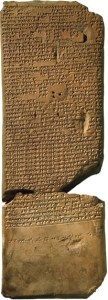
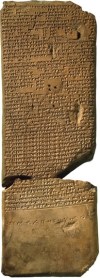
cuneisdgsdg nig-ku-lam-ma dingir-ra-na-ka su—tu-tu nu-ub-zu (2)
‘The destruction is from his own (personal) god; he knows no savior.’ (3)

Literal translation of dingir-ra(-na-ka) indicates that the aforementioned disaster comes from “one’s own personal god.” While ancient Sumerian and Babylonian spirituality did incorporate personal tribal or familial (ancestral) ‘deities’ and “guardian spirits,” such are generally related to lesser spirits: the sedu (spirits) and lamassu (guardians) that make greater appearances in the religion and magical traditions of the (post-Sumerian) Babylonian (Akkadian and Assyrian) Mardukites. Modern interpreters of this line read it literally and translate the sentiment as: when a man loses his favor with his personal deity then he has no one to appeal for him to the higher powers. (6)

sumlangthumb In Secrets of Sumerian Language, the distinct philosophical difference in Mesopotamia between ‘fate’ and ‘destiny’ is described based on its cuneiform usage. A person’s life has a ‘destination’ or ‘destiny’ that is fixed “in the heavens” by the gods or ‘stars’ in “zones of influence.” In comparison, a person’s ‘fate’ refers to subconsciously chosen environmental conditions that comprise a life-path that is not necessarily “fixed” while they are on their way to a destination that is fixed. In other words, it is the ‘route’ one travels on their way to a final ‘destiny’. Whether decreed by one’s own ‘personal god’ or ‘personal star’ or even erupting from one’s own “god-self,” this cuneiform line seems to indicate a ‘thing’ that is unavoidable or cannot be prevented by the person themselves or another human: such a thing on earth has been decreed in the heavens. (3)

SUMERIAN VOCABULARY
[nig-] – ‘abstract’ / a thing (7)
ku-lam-ma – destruction (4); a thing forgotten (8)
dingir – ‘prefix determinative’ / god, star, planet, spirit (5)
su—tu-tu nu-ub-zu – it cannot be prevented; or ‘avoided’ (9)
MesopotamianReligionFrontcrop Original analysis of the original Sumerian Proverb tablet series occurred using an elementary understanding of cuneiform script and Mesopotamian languages. Thorkild Jacobsen replaced Gordon’s original translation of su—tu-tu as “savior,” noting the Akkadian equivalent (‘ekimu‘) implies to “rob, steal or take away” (and not “to save”), meaning that the disaster/destruction that has been brought on into one’s life cannot be “touched” or “interfered” with and is thus “inevitable.” This more advanced rendering reveals a much deeper understanding of the ideal that what a person is due, they are due and a person receiving the harsh lessons of their life is unable to be assisted or coddled through it by any other power – they must simply experience, endure and, hopefully, survive the course with lessons learned. Quite simply, no one can interfere and safeguard against a person hellbent on making their own mistakes. (3)(9)


(1) Translation of Sumerian Proverb tablet by Joshua Free for Sumerian Wisdom II (tentative title) materials, the forthcoming sequel to Sumerian Wisdom & Anunnaki Prophecies: The Book of Sajaha the Seer edited by Joshua Free. These tablets attempt to preserve Sumerian language proverbs in cuneiform script during the Old Babylonian period.

(2) Derived from the original “Sumerian Proverbs” collection found in Nippur by the University Museum of the University of Pennsylvania. Some transliterations omit the ‘-na-ka‘.

(3) Original translation provided in the “Sumerian Proverbs” museum monograph by Edmund Gordon. The translation and interpretation has since been updated by Thorkild Jacobsen in the 1959 edition notes to the monograph: “–the disaster is of his own making (lit., ‘is of his personal god’), it brooks no interference.” His interpretation warns that “against self-imposed burdens, self-willed destruction, others can do very little.”

(4) Vocabulary supplement derived from the ‘Sumerian Glossary and Concordance’ for the Gordon “Sumerian Proverbs” museum monograph.

(5) Vocabulary inclusion of student translation is derived from the Mardukite handbook: Secrets of Sumerian Language edited by Joshua Free.

(6) Edmund Gordon explains his interpretation: “When a man’s personal god is against him, he has no one to intercede on his behalf before the assembly of the gods.”

(7) The Sumerian cuneiform prefixing sign ‘nig‘ – found at the start of lines throughout this particular series of ‘proverb’ tablets – indicates an attached statement regarding a ‘thing’ as an “abstraction” (concept) rather than always to be treated as a literal “thing” (object).

(8) An alternate translation to nig-ku-lam-ma is offered in the collected notes and revised additions of the 1959 edition by Edmund Gordon as: “a thing which has been forgotten.”

(9) Alternatively suggested by Joshua Free as “no one can prevent” or “no one can avoid” from the literal Akkadian ekimu – “none may ‘steal’ away.”

1 Comment

Filed under akkadian, ancient esoterica, ancient near east, assyrian, babylonian, excerpt, mardukite, mesopotamian, new babylon, new release, news, plans & proposals, research development, special offer, sumerian, truth seeker press

Sumerian Wisdom & Babylonian Cuneiform Tablets: Wisdom on Civil Disobedience, Submission & Defiance

2. “What is given in submission is a catalyst for defiance.” (1)

The ‘Near East’ of the ancient world, now called the ‘Middle East’ today, has never found an equilibrium of political or military peace. Imaginary borders and boundaries, not to mention total conquest of the Babylonian Empire, meant a king could be a true conqueror of the ‘known world’ and legitimately the most powerful of figures in its midst.

cuneisdgsdg nig-gu-gar-ra nig-gaba-gar-ra (2)
That which is given in submission becomes a medium of defiance.‘ (3)

When the annals of Mesopotamian history are examined, a seeker discovers a broad legacy of constantly shifting sands of power, dynastic reign and the geographical realm of an empire’s capital city all play a part in military management of these ancient forces that fought for control of the Tigris and Euphrates river valley (Mesopotamia), the resources it contained (abundant when tapped properly), the recognition of and authority over a sweeping population (the largest urban centers of the ancient world) and the state-religions governing the whole system (that have gone on to shape even the programming of the modern world).

sumlangthumb The actual cuneiform verse can be translated in two different ways. Both are meant to convey the same sentiment. Early transliteration scholars recognized that ‘gu-gar‘ and ‘gaba-gar‘ refer to ‘things’ of submission (gu-gar) and defiance (gaba-su-gar), which makes the statement we have above possible. However, if the ‘figure of speech’ is to be taken literally, then the ‘thing’ given is a “neck” (gu) beneath (“submission”) your opponents foot – or else, “sticking your neck out” – and this ‘thing’ becomes a ‘thing’ (placed) against the opponents chest, a sign of “defiance.” (7)
SUMERIAN VOCABULARY
[nig-] – a thing / ‘abstract’ (4)(7)
gu-gar – to submit / give submission (4)
gu – neck (5)
gaba-su-gar – of defiance / to defy (4)
gaba – chest / breast (4)

sajahafronthumb The cuneiform author suggests ‘taking one for the team’, giving motivational due to one who executes gainful sacrifice for a better future outcome – or, at least, the possibility of one. Considered in the spirit of ‘civil disobedience’ as suggested by classic writer, Henry David Thoreau, the advice may be for the ‘common folk’ rather than warlords and kings, and suggests that one keeps their head down in order to ‘fight another day’. (6)


(1) Translation of Sumerian Proverb tablet by Joshua Free for “Sumerian Wisdom II” materials, forthcoming sequel to Sumerian Wisdom & Anunnaki Prophecies: The Book of Sajaha the Seer edited by Joshua Free. These tablets attempt to preserve Sumerian language proverbs in cuneiform script during the Old Babylonian period.
(2) Derived from the original “Sumerian Proverbs” collection found in Nippur by the University Museum of the University of Pennsylvania.
(3) Original translation provided in the “Sumerian Proverbs” museum monograph by Edmund Gordon.
(4) Vocabulary supplement derived from the ‘Sumerian Glossary and Concordance’ for the Gordon “Sumerian Proverbs” museum monograph.
(5) Vocabulary inclusion of student translation is derived from the Mardukite handbook: Secrets of Sumerian Language edited by Joshua Free.
(6) As explained by Edmund Gordon, regarding ‘passive resistance’ alluded to in this tablet: “…the enemy will eventually be overthrown by means of whatever has been surrendered to him.”
(7) The Sumerian cuneiform prefixing sign ‘nig‘ – found at the start of lines throughout this particular series of ‘proverb’ tablets – indicates an attached statement regarding a ‘thing’ as an “abstraction” (concept) rather than always to be treated as a literal “thing” (object).

1 Comment

Filed under akkadian, ancient esoterica, ancient near east, babylonian, excerpt, mardukite, mesopotamian, new babylon, new release, news, nexgen, plans & proposals, research development, sumerian, truth seeker press

Sumerian Proverbs & Babylonian Wisdom: Ancient Cuneiform Tablets Reveal Emphasis on “Truth”

claytabletsheader

“Whoever partners with Truth, creates Life.” (1)

At the forefront of the ‘Sumerian Proverbs’ [Liber-P] Old Babylonian (Akkadian) cuneiform tablet series is a homage to the universal and ineffable spirit of Truth – that enigmatic force – a driving pursuit at the core of all language arts at the cradle of modern human civilization sciences…

cuneisdgsdg nig-ge-na-ta a-ba in-da-di nam-ti i-u-tu (2)

‘Whoever has walked with truth generates life.’ (3)

Communicating this philosophy to modern minds in English language is difficult. The sentiment carried is greater than to simply say: ‘whoever is true’ or ‘whoever is with truth’. It also does not say ‘whoever is filled with truth’. Whether we adopt the -da/-ta (together with) or -ta[b] (partnered with) interpretation, the implication is that ‘whoever’ is deeply ingrained or ‘bound’ to Truth; it is next to them, it is their companion, or else they have taken it as a friend, forsaking all others that might break that bond.

sumlangthumb I favor this preferred meaning over the original interpretation of having ‘walked with truth’ (impermanent past-tense). I understand the original author/translator meaning to imply the ‘walking with a companion’, but the interpretation seems vague if not misrepresenting the actual Sumerian Lexicon being evoked.

SUMERIAN VOCABULARY

[nig]-ge-na – truth (4)

-da/-ta – beside, in vicinity of, together with (5)

-ta[b] – friends, companion, partner (5)

a-ba – who? / whoever (5)

nam-ti – fate/nam; life/ti (5)

u-tu – to bear ‘children’, give birth to (5)

MesopotamianReligionFrontcrop Given that the word for ‘generating’ or ‘creating’ life given here is the same word meant to imply literal ‘birth-giving’, the romantic interpretation of this proverb is that ‘whoever partners with Truth as a lover’ will ‘give birth to Life’ – they will ‘radiate’ or ‘generate’ a prosperous life. The subject is not simply ‘building’ or ‘constructing’ the life out of preexisting materials but is literally ‘giving birth to’ their existence, life or reality as a result of their union with Truth – living in harmony with observed cosmic forces and thereby manifesting the desired life and result. (6)


(1) Translation of Sumerian Proverb tablet by Joshua Free for “Sumerian Wisdom II” [Liber P] materials, forthcoming sequel to Sumerian Wisdom & Anunnaki Prophecies: The Book of Sajaha the Seer edited by Joshua Free, with translation assistance by Khem Juergen. These tablets attempt to preserve Sumerian language proverbs in Old Babylonian (Akkadian) cuneiform script.

(2) Derived from the original “Sumerian Proverbs” collection found in Nippur by the University of Pennsylvania, combined with lines 1-2 of the “GGG” tablet text (catalogue number U.17207-58) excavated from Ur and transliterated for the 1959 edition.

-GGG-

1. nig-ge-na-ta a-ba in-da-[DI]

2. nam-ti ia-u-t[u].

(3) Original translation provided in the “Sumerian Proverbs” museum monograph by Edmund Gordon.

(4) Vocabulary supplement derived from the ‘Sumerian Glossary and Concordance’ for the Gordon “Sumerian Proverbs” museum monograph.

(5) Vocabulary inclusion of student translation is derived from the Mardukite handbook: Secrets of Sumerian Language edited by Joshua Free.

(6) As explained by Edmund Gordon: “…a man who lives in accord with the universally recognized ‘cosmic and immutable truths’ will be able to obtain for himself all the good things in life.”

1 Comment

Filed under akkadian, ancient esoterica, ancient near east, babylonian, excerpt, mardukite, mesopotamian, new babylon, new release, news, nexgen, plans & proposals, prophecies & predictions, research development, sumerian

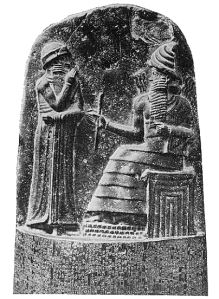
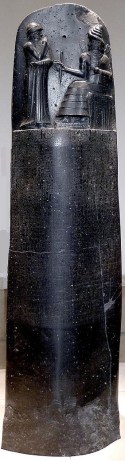
Babylonian King Hammurabi and Law Code of Marduk the Sumerian Anunnaki god of Babylon

Whereas Sargon seems to have relied upon his power and his terror tactics to keep people under control, Hammurabi presents himself almost like a modern politician in that he wants to be loved; he wants the people to like him; he’s going to set up laws that will protect them, not laws that will terrify them or force them into submission.
~ Amanda Podany, Cali State Polytech, Pomona, CA

Gates3rdEdfrontcropMINI [This mardukite.com blog is officially extracted from Liber-51/52, available as the standalone title SUMERIAN RELIGION II, in the Liber-50/51/52 anthology MESOPOTAMIAN RELIGION or the new exclusive economical Mardukite Year-2 anthology GATES OF THE NECRONOMICON edited by Joshua Free.]

In the post-SumerianMardukite” era of MESOPOTAMIA, the traditions and systems of the Anunnaki were sealed under MARDUK, heir of ENKI. During the shift to the Age of Aries – the sign of MARDUK, represented by the Ram – religion, spirituality and the global reality experience became fueled by ‘divine politics’.

MesopotamianReligionFrontcrop The famous ‘creation stories’ and ‘mystical definitions’ (that serve as the basis for future traditions and ‘societal reality systems’) were forged onto tablets of propaganda supporting the ‘Babylonian‘ paradigm by the priestscribes of (‘led by’ or ‘dedicated to’) NABU, heir of MARDUK. Figures that appear central to the infrastructure of MARDUKITE BABYLONIAN systems are the younger generations of Anunnaki.

The BABYLONIAN tradition is a direct evolution of the earlier Sumerian legacy – it is the progression of a particular Anunnaki family in MESOPOTAMIA and not simply the assimilation or recreation bring applied to a similar pantheon elsewhere (as we see in cases of later developed ‘classical mythoi’, which simply regurgitate to us the ancient themes with new names. After the vision put forth by Sargon, King Hammurabi (c. 1790 B.C. by the short chronology) is the next most famous and contributory ruler toward a Mardukite Babylon in MESOPOTAMIA.

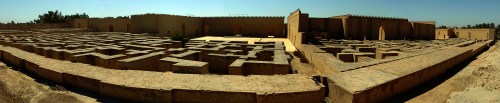
SumerianReligion2crop In homage of MARDUK‘s own legacy put forth in the ENUMA ELIS (‘Epic of Creation‘), King Hammurabi reconstructed the ziggurat temple-shrine earth-home of the Anunnaki god MARDUK, the Esagila – built in even more ancient times to establish a Mardukite ‘World Order’ prematurely during MESOPOTAMIA‘s evolution – an effort brought down as an archetype of the ‘Tower of Babel’ ziggurat by the Enlilite Sumerians.

Related Blog: Enuma Elis: Secrets of Ancient Power and Magic of Marduk the Anunnaki god of Babylon

The region of Babylon experienced human occupation since at least the Third Millennium B.C. (since at least the period of Sargon of Akkad c. 23rd century B.C.). That being said, the independent BABYLONIAN city-state of the “Mardukite” legacy we know today is launched primarily through the efforts of the Amorite Dynasty; specifically Hammurabi, who goes on to replace the former Enlilite Sumerian tradition with a complete MARDUKITE BABYLONIAN re-write.

hammurabi21233 Sumerian language is denationalized and scribes record all literature in the “new” Akkadian-Old Babylonian that accounts for the majority of pre-Assyrian cuneiform tablets found and translated today. The BABYLONIAN cuneiform tablet literary revolution by the priest-scribes of NABU made way for the means to establish a firmly rooted evolution of the Anunnaki tradition emphasizing MARDUK as the supreme ‘King of the Gods‘ and completely replacing the previously accepted SUMERIAN paradigm.

King Hammurabi is considered the greatest empire engineer since Sargon of Akkad. Efforts conducted over the forty-three year period of his reign allowed a centralized ‘world government’ of BABYLON to form that not only served the people on an emotional, cultural and religio-spiritual level, but also reaching energetic and monetary heights in global wealth, power and influence.

P1050763_Louvre_code_Hammurabi_face_rwk Ruling in honor of MARDUK allowed King Hammurabi to bring BABYLON to fruition with cultural and spiritual heights not visited again for at least one-thousand years when over a millennium later, the Neo-Babylonian era of Nebuchadnezzar II. Of the many conventions introduced to human civilization from BABYLON, the Hammurabic legal system is one of the most significant to note – made popular in consciousness as the “eye for an eye” methodology known as the CODE OF HAMMURABI. Although tyrannical and draconian penalties are the most frequently cited examples of the ‘Code’, the details of 282 laws established the citizen rights, property rights, social rights and even feminine equality rights in addition to the creation of a “class” system.

The CODE OF HAMMURABI, by its own account, does not originate from the mind of King Hammurabi himself, who considered himself merely a catalyst for the reign and power of something ‘greater’ than himself: that of the patron deity, MARDUK. The ‘Code’ or Law of Hammurabi, is in fact what the modern MARDUKITE CHAMBERLAINS movement dubbed the Book of the Law of Marduk.

2 Comments

Filed under akkadian, ancient esoterica, ancient near east, assyrian, babylonian, excerpt, magick & mysticism, mardukite, mesopotamian, modern occultism, new babylon, new release, plans & proposals, research development, sumerian, truth seeker press, youtube

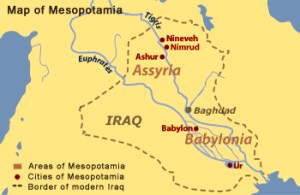
Mesopotamian News | Crisis in Middle East, Iraq War Threatens Ancient Mardukite Yezidi / Yazidi Bloodline

Yezidi (Yazidi), an unbroken unique gene of middle eastern people extending directly back to ancient pre-Semitic Sumerian Mardukites, practicing a tradition of modern Zoroastrian Yazdânism derived from the monoltry monotheism to Marduk of Babylon observed as Melek Ta’us or Shaitan (Shaytan), have been threatened with genocide in Iraq by the Islamic State (IS/ISIS).

mesopotamia_map

The Mardukite Research Organization (Mardukite Chamberlains) naturally lends a sympathetic ear to these current events in our modern world-at-large. Details concerning this can be found in the Mardukite Year-1 anthology: NECRONOMICON – THE ANUNNAKI BIBLE containing the raw underground materials shaping the existence of man’s beliefs and practices for thousands of years; right from the heart of Sumer, Babylon and Egypt! Studies include the Mardukite inception within tablets from Akkadian, Assyrian, Chaldean, Yezidi and Zoroastrian traditions also!

NECRONOMICON - THE ANUNNAKI BIBLE (Sixth Edition)

NECRONOMICON – THE ANUNNAKI BIBLE (Sixth Edition)

This enlarged Sixth Edition includes the complete Maqlu Text recently translated for the separate volume “Maqlu Magic” or “Necronomicon Spellbook II” in addition to several other unique updates from previous editions! NECRONOMICON – THE ANUNNAKI BIBLE is the most complete collection of Sumerian and Babylonian accounts of prehistoric and ancient human history and civilization in one book, composing in itself a ‘bible’ and actually proving to be the predecessor and basis of all global scripture-based religious traditions thereafter.

Few occultists who remain in the Light are probably privy to lore of the ancient Yezidi sect. They follow a tradition dedicated to the “God of the Black Mountain” who gave to them wisdom in what is known as the oldest of the “Black Books”. While the Realm of Light has shied away from such – or believed they have attained more than a glimpse of it in their “Books of Shadows”, it is this Divine Encounter that has been omitted from traditional biblical tales for its connections and devotion to the Darkness.
Necronomicon: The Anunnaki Bible


CONCERNING THE MODERN YEZIDI / YAZIDI (from wiki):

“Some followers of other monotheistic religions mistakenly equate the Peacock Angel with their own unredeemed evil spirit Satan, which has incited centuries of persecution of the Yazidi as “devil worshipers.” Persecution of Yazidis has continued in their home communities within the borders of modern Iraq, under both Saddam Hussein and fundamentalist Sunni Muslim revolutionaries. In August 2014 the Yazidi were targeted by Islamic State, or ISIS, in its campaign to “purify” Iraq and neighboring countries of non-Islamic influences. Soon after ISIS started their crackdown on Yazidis, the United States Air Force unleashed bombs on ISIS positions and also dropped relief packages to stranded Yazidis.” (wiki)


FROM THE NECRONOMICON – ANUNNAKI BIBLE BY JOSHUA FREE:

The Yezidi are a distinct genetic Mesopotamian sect that still resides in Northern Iraq and can trace its blood and traditions to the ancient ANUNNAKI quite easily. It is a unique form of Mardukite Monotheism presented under the guise of a messenger named Melek Ta’us (very similar to the manifestation of MARDUK as Mithras and Mazda – as One – in the Zoroastrian schema. This same current of energy is also
manifest in Maitreya for Buddhists.

530px-Faravahar-Gold.svg In accordance with the Yezidic Tradition, there is an All-Father or YAZDAN who created the Seven ANUNNAKI (“emissaries” or “angels”) including Azazel (or Azazil – generally equated with Erra/Nergal or Samas/Shammash/Utu). The word “Azif” and the actual book, “Al Azif”, is a Yezidic tome detailing the lore, or literally “howls” of the Djinns (or jinn).

NECRONOMICON - THE ANUNNAKI BIBLE (Sixth Edition)

NECRONOMICON – THE ANUNNAKI BIBLE (Sixth Edition)

Some scholars of the Necronomicon-Cycle will note that one of the popular Arabic translations for the title of the work is, in fact, Al Azif. The reason for this being that there were no other ancient examples of such a tome known to exist in that region – and to our gain, the lore compliments the existing ANUNNAKI based Mardukite NECRONOMICON even further. The association with the “buzzing of insects” could be meant to mean both the “swarm” and the “sound,” furthering the connection of the Outer Ones with “UFO” extraterrestrial beings…

One specific quality of the Yezidi culture is: the Yezidis claim to share Adamic (from “Adam”) descent but not of Eve. Their lore also prompts that the remaining global population outside of their sect is also outside of this “special” lineage. And to them, they were given “Revelation” (“Al-Jilwah” – contained in the NECRONOMICON ANUNNAKI BIBLE) from their Divine Encounters with a being who the later rising Judeo-Christians denoted as Satan – in the Yezidi language spelled Shaitan or Shaytan (and perhaps others within the Mardukite tradition might better liken to ENKI). It might be said that based on the purest use of the term, the Yezidi represent the oldest “Satanists” on the planet – if such were even possible in pre-Semitic times

Discover even more about the Yezidi, their doctrines and rites, including Zoroastrianism and its evolution from the ancient Mesopotamian Anunnaki stream as explored in the World of the Mardukites — order your copy of the NEW 6th edition NECRONOMICON ANUNNAKI BIBLE today! Nearly 600 oversized pages now available in this exclusive mardukite.com edition for only $29.95, the most valued offer ever made available from the Mardukite Truth Seeker Press in commemoration of the Quinquennial Anniversary of the Mardukite Research Organization (Mardukite Chamberlains).

2 Comments

Filed under akkadian, ancient esoterica, ancient near east, assyrian, babylonian, excerpt, magick & mysticism, mardukite, mesopotamian, modern occultism, new babylon, new release, nexgen, plans & proposals, prophecies & predictions, research development, sumerian, truth seeker press, youtube

Mesopotamian Magic, Maqlu Cuneiform Tablets, Babylonian Dark Rites of Anti-Witchcraft

mesopotamianmagicheadline

“Climb the ladder of lights and appeal to the gods for their protection and for the destruction of the enemy and all evil-doers, wicked witches and warlocks of the world…”
–Necronomicon Anunnaki Bible

How often we have heard of the “Dark Arts” born of a ‘polarized’ and often ‘dualistic’ view of the universe – and the forces that occupy it. For every ‘white witch’ there is a ‘black spell’ and to every system of Order, there is a Chaos factor; for no fragmented experience of reality can ever actually find “balance”, but the pendulum swing – the tidal ebb and flow of universal currents will always seek it.

maqluthumb This mardukite.com blog post is extracted officially from Mardukite Liber M, available as either MAQLU MAGIC or NECRONOMICON SPELLBOOK II, in addition to the Year-3 anthologies either MESOPOTAMIAN MAGIC or NECRONOMICON WORKBOOK and the mega-anthology NECRONOMICON GNOSIS.

…So, too is movement possible in the physical world – or at least one’s perception of the ‘3-D’ reality experienced. As such, with the once united ‘crystal’ being cracked into the varied refractions of human experience, language and culture, a ‘dualistic’ world emerged in consciousness; right before the very eyes of ancient Mesopotamians – at the heart and cradle of human civilization.

WHAT IS THE MAQLU CUNEIFORM TABLET SERIES?

Before approaching the more ‘colorful’ elements of the tradition – those that could most appropriately be given classifications as ‘Dark Arts’, ‘Sumerian Sorcery’, ‘Babylonian Witchcraft’, ‘magickal warfare’ or ‘wizards duels’ – it is important that the context for which such exists, a background screen onto which to express the story of the MAQLU in its projected spectrum of rainbow lights and kaleidoscope glory.

MesopotamianThumb The name MAQLU can be interpreted differently as with most things – such variegated perceptions are not even restricted to foreign languages for even a shared one is not free of semantic issues in its own vocabulary. Most typically, MAQLU is translated to mean “the Burnings” by ‘Sumeriologists’ and such. This is a good ‘base’ for our context, as we do indeed find the origins of a community bonded for ‘burning evil in effigy’.

The Simonian work, in regards to a Babylonian Necronomicon practice, interprets the tablets as ‘Rites of Burnt Offering’ or else a ‘Book of Burnings’ for literary purposes. As with most of the work ‘restored’ by the Mardukite Chamberlains, a surface interpretation is never accepted and a ‘deeper mystery’ can often be uncovered in the very ‘literal’ meanings behind these very old words that do not appear to have had the same ‘metaphorical’ meaning that modern language users often take for granted – for the Mardukites have interpreted the MAQLU more appropriately – and not without its other diverse cultural parallels – as Burning Man [maq-lu].

cuneisdgsdg Though it seems that the MAQLU operation was once a much more simple, internalized, meditative and solitary application used by early priests and magicians in Mesopotamia, it later developed more dramatically as a public Fire Festival in Sumer and Babylonia, involving the entire population of the community who gathered together in a ‘combined’ and ‘harmonic’ effort of intention to ‘drive out’ or ‘dispel’ the “evil” and “evil-doers” of the land.

As “ridiculous” as this might sound to the naïve skeptic or right-wing fundamentalist, it can and should be noted that more recent public scientific studies all over the globe have now shown the effective abilities of consciousness moving energies when large groups, or better, the majority of the population is focused on a single emotional event.

These types of ‘quantum’ effects appear to have very real ramifications for the population of the planet and the greater cosmos as a whole in this entangled universe whether or not people are aware of this phenomenon taking place in their environment and even internal ‘spirito-mental’ being (which are self-honestly All-as-One).

necrognosisTHUM In the instance of the MAQLU, the Burning Man is the representation of the ‘evildoers’ of the world – those who ‘plagued’ humanity with their wickedness and thereby upsetting the ‘world order’ of the gods, in addition to the gods themselves. Upsetting such a balance was usually felt in the community as ‘illness’ and ‘pestilence’, ‘disease’ and ‘famine’. Such could prove devastating to still developing human civilizations, and as such they were considered ‘evil’, the most wicked of ‘demons’ and anything that might lead to them – mostly uncleanliness and misappropriated living – were considered taboo (the original non-moral tribal sins) and for good reason.

Eating from an unclean plate was taboo (a sin) because it could lead to the spread of disease. Ancient humans were far from primitive in their understanding of the natural world and their relationship with
it. Before the wrongful use of authority in classical times, the taboos and sins were not given from dogma, but from medicinal necessity.

Representative images are often used in ‘idol magic’ or ‘sympathetic magic’, but not as a result of worship – as some mythographers have repeatedly put forth – but to actually embody the ‘energetic current’ that is universally entangled to ‘focal object’ and its form.

WICKER MAN OF THE DRUIDS

cunei The representation of a ‘demon’, like the ‘plague-god’ Namtaru, was not to worship the deity with homage or to glorify the ‘daemonology’ of the Babylonian priests. Such statuary was typically constructed only to be ‘ceremonially’ annihilated or buried as a ‘ward’ against what the statue (deity) was representative of. In making such an object, the magicians show their understanding of the ‘entanglement’ of the universe in its mystical oneness and the interconnection of all things.

Certainly not primitive.

It is almost impossible to bring up the topic of the Burning Man without conjuring to mind a much more geographical and time-recent example made popular in the images of motion pictures and familiar Roman-inspired writings of the Celtic Druids – and that is the Wicker Man, also called ‘Burning Man’ by some neopagans.

Far removed in time and space we see evidence for the same rite being conducted and for similar reasons – the preservation of the early agricultural civilizations that were ‘guided’ by Sky God traditions – called the Anunnaki on Mesopotamian tablets or the Tuatha de Dannan (Tuatha d’Anu) in European Celtic and Druidic sources.

1001015_318340804969022_2026839541_n “Fire” is a very common element to the early ‘magical’ and ‘shamanic’ systems, and its mastery in correlation to the development of modern humans is certainly indisputable. Any connection to the Fire Festivals of Europe is going to be difficult for one to understand without having been familiarized to the rigorous research found in other Mardukite materials that gives Mesopotamia as the birthplace of the Druidic Tradition.

Sir Francis Frazer (Golden Bough) mentions both a ‘solar’ alignment and ‘purification’ style to these types of operations. The later European Wicker Giants appear to be more ‘agricultural’ in nature then the MAQLU version that targets actual ‘practitioners’ of the ‘Dark Arts’ that negatively affect the well-being of the greater population, the community at large and by extension the “moral balance” perceived of ‘universal forces’.

The ancient Sumerians and Babylonians were no less dependent on the ‘agricultural’ fertility then the Celts – far from it. Thriving of a human numbers in the lands of Mesopotamia were so heavily dependent on the skilled use of arid land and the redirection of water from the Tigris and Euphrates rivers in a skillful way since lost to the Arabs and other occupiers of the land since.

babel98769878 In Europe, we find the appearance of the Burning Man during the fertile and seed-sowing and nurturing ‘spring’ seasons, particularly the Equinox (Easter) observation, Beltane (a notorious ‘Fire Festival’) and finally Midsummer. The annual survival of the agricultural Celts was wholly dependent on the success of this season above all others.

IN CONCLUSION…

One of which does correlate with Europe is an esoteric observation of Beltane – opposite it, Samhain (modern-day Halloween) is also significant. The Sumerio-Babylonian AKITU festival is concurrent with the Spring Equinox. So, regardless of where we turn, there is a unifying (universal) picture forming to define the ceremonial observation of the Burnings.

Leave a comment

Filed under akkadian, ancient esoterica, ancient near east, assyrian, babylonian, excerpt, magick & mysticism, mardukite, mesopotamian, modern occultism, new babylon, plans & proposals, research development, sumerian, truth seeker press

Modern Assyriology: Exploring the Ancient Near East – Understanding the Babylonian Paradigm

Iraqi Freedom

While many folk are familiar with and taught traditional knowledge and lore of the “classic era” of the Romans and Greeks, with occasional ventures into pop-culture mythologies of Egyptians, it seems that little or no attention is given to the source of all this: the Mesopotamian region and the Middle East…

MesopotamianReligionFrontcrop [This mardukite.com blog post is officially excerpted from the essay “Toward a New Babylonian Vision” by Joshua Free, first appearing in 2009 Ruby Edition of Liber L and reappearing as one of the introductory prefaces for the Mardukite Research Organization core sourcebook anthology: Necronomicon – The Anunnaki Bible, now in its sixth edition!]

…But, What is even more counter-productive for the Western world, politics with current world leaders and sects from those regions clouds the ability of the ego to accept anything from them. And what’s more, being that the traditions are pre-Christian in origin and agricultural or “earth-oriented,” they are subject to the same negative stereotypes that contemporary folk associate with any and all things considered “heathen” or “pagan” and really without just-cause.

Babylon2 It is important to understand that the study of this lore and observation of diverse traditions are not restricted to a particular region or culture, they simply seem to originate from a specific source, as did human civilization as a whole. With the spread of the human race followed the spread of the tradition which seemed to take on new forms and colors as it passed from generation to generation across the expanse of the planet.

Life-giving powers and their symbolic representations also appear to have been influenced by time and geography. While the sanctity of the “Sacred Fire” and the flame become apparent in the traditions and systems of the west and north, the people who originated the traditions more closely to the planetary equator more closely identify with the Waters of Life, most closely identified with ENKI (or PTAH in the Egyptian Tradition).

MesopotamianThumb The name Mesopotamia literally means: between or midway of two rivers, referring to the Euphrates and the Tigris, but the sacredness of water does not end here, as we can see that all the originating cultures that we can still identify or connect the source tradition to (non-nomadic) emerged or cultivated around key waterways: the Indus River Valley, the Nile, the Danube (Rhune/Rhine) and
even the Amazon.

The Sumerians called the Euphrates, BUR.AN.UN and it was also known as “Perath” or PU.RA.TU. The 1,800 mile long river begins to rise in late March, just about the time of the Spring Equinox, recognized as the start of the annual Zodiacal Wheel and also the famous A.KI.TI New Year Festival. The Tigris, known as I.DI.IK.LAT and ID.IG.NA (and called the “Serpent River” by some Arab sects) is somewhat shorter at only 1,150 miles and begins to rise at the opposite half of the year, usually coinciding with the Autumn Equinox.

cuneisdgsdg According to historical geologists, the flow of the Euphrates has actually moved westward with age and there is actually more land in Babylonia at present than during ancient times given the shrinking of the Persian Gulf (by 72 feet per year). The fertile alluvial soil in southern Babylonia created a distinct environment by contrast to the northern regions of Mesopotamia. Even the Babylonian region was divided between southern SUMER and northern AKKAD (Agade).

Each of the city-states was originally ruled by its own “Patesi” until eventually the battle for supremacy resulted in a unification of the two lands (as similarly occurred later in Egypt) under a single “King of Sumer and Akkad”, eventually known as the LUGAL or “Great Man”. The esteem of this position also included a mention in the “Book of Kings” [Tablet K] and local government was watched over by priest-kings who adhered to a “Book of the Law” [Tablet L] of which the Code of Hammurabi was largely based on…

1 Comment

Filed under akkadian, ancient esoterica, ancient near east, assyrian, babylonian, excerpt, magick & mysticism, mardukite, mesopotamian, new babylon, new release, nexgen, plans & proposals, research development, sumerian, truth seeker press, youtube

Mardukite Zagmuk — Babylonian Akitu Akiti Spring Equinox New Year Festival

zagmuk

The Babylonian observation of the annual (solar) year starts with the ‘Mardukite’ observation of ‘zagmuk’ – meaning ‘the beginning of the year’ or ‘new year’. This 12-day festival is fixed to arrange its height at the beginning of the month of Nissanu, the ‘Spring Equinox’ or March 21st, also coinciding with the beginning of the astrological wheel, when the sun enters Aries.

BoZceremonialthumb [This mardukite.com blog officially excerpted from Liber Z, available as the full-color ceremonial The Book of Zagmuk edition or within the Mardukite Magick anthology, based on the article first appearing in New Babylon Rising.]

The ZAGMUK festival is significant for its contributions toward solidifying both the religious and political paradigms of Mardukite Babylon. The festival is also known by its Sumerian-derived Akkadian name – A.KI.TI (or A.KI.TU) – meaning ‘On Earth, Life.‘ This large public festival observance is a reconfirmation of the supremacy of MARDUK and the Babylonian Pantheon and is the single most important ancient ‘holiday’ for the tradition.

zagakitu

After the time of gods had come and gone, the priests and kings continued to observe the ceremonial customs using representative statuary to symbolized the ‘divine’ forms of MARDUK and NABU as they make a procession through the streets of Babylon and are placed in the temples to witness a dramatic reenactment of the Enuma Elis and other rites and rituals that commemorate the ‘Mardukite’ tradition (paradigm) and seal the position of the priests and king as the ‘chosen’ ambassadors and intermediaries between the ‘gods’ of heaven and the people of earth.

mardukitemgkthumbb Although the materials have been put forth prior in the Mardukite cycle, this ceremonial edition of The Book of Zagmuk (compiled from these other sources) is provided for the benefit of the modern movement and for posterity – specifically the preservation of this tradition; which is paramount to the continued efforts of the Mardukite Chamberlains (Mardukite Research Organization).

Most scholars recognize only ‘agricultural’ and not necessarily the ‘political’ and ‘mystical’ purpose of the observation, which begins twelve days before crops begin to be planted, apparently the fourth day of the month named Nissanu. Others suggest that the month itself began with the festival, or that the observation was astronomical, matching the exact time the sun enters Aries, which would differ from year to year given precession. Traditional astrology does not take this into account and is plotted based on the ‘snapshot’ taken of the heavens during the Age of Aries.

newbabylonissue3coverthumb Each of the twelve festival days begins at dawn. The ‘high priest’ of the Temple of Marduk – The ESAGILA or ‘House of Marduk‘ – goes and prepares the temple and ceremonial areas prior to dawn, then makes a ‘general invocation’ to Marduk at dawn, before the image of the god in his shrine…

The Book of Zagmuk by Nabu is a specially prepared ceremonial text and selected ‘tablet collections’ that combine materials from the 2011 handbook “Mardukite Wizards of the Wastelands” in conjunction with critical excerpts from Joshua Free’s ‘Necronomicon Anunnaki Bible‘ and essentially comprising the internal methods of the ‘Order of Nabu-Tutu’ to establish Mardukitereligious‘ continuity and the royal legitimacy of MARDUK at the apex of the Babylonian Pantheon using the Babylonian New Year Festival, Akitu (Akiti) or Zagmuk, reviving the same process used by ancient priests of the Sumerian Anunnaki in Mesopotamia!

1 Comment

Filed under akkadian, ancient esoterica, ancient near east, assyrian, babylonian, excerpt, magick & mysticism, mardukite, mesopotamian, modern occultism, new babylon, new release, nexgen, plans & proposals, research development, sumerian, truth seeker press, youtube

Sumerians, Sargon, Akkadian Babylonians & Ancient Mesopotamian Kings with Joshua Free

SumerianReligion2cropSince Marduk created me to be king and
Nabu has culled his people to my realm
– as the love I have for my own life,
so do I feel toward the building
and reign of their cities.

~ Nebuchadnezzar II
Mardukite Tablet-L Series,
Necronomicon Anunnaki Bible (trans.)

[This mardukite.com blog officially excerpted from the recent Mardukite Truth Seeker Press release by Joshua Free: Sumerian Religion II: Secrets of the Anunnaki & Babylonian Mythology.]

Babylon2 The Akkadian Dynasty of Sargon began in northern Mesopotamia – in the land of Akkad. Although their territory and influence was of only tribal significance during the early rise of the Sumerians proper, but when Sargon of Akkad used his military to unify the “two lands” of Mesopotamia, he established the first post-Sumerian unified kingdom empire in the world – indeed, for the first time, the lands of Akkad and Sumer were governed from a single capital: Sargon’s city of Agade (the city of Akkad in the land of Akkad, like Babylon in Babylonia or New York, New York), a city named for the word “unity” in Akkadian language.

AKKADIAN — as a culture and language — evolves alongside, but separate, from the southern Sumerians. It is fortunate, however, that they were participants in the same archetypal Anunnaki tradition.

SumerianReligion2crop The Akkadian people established a unique proto-Semitic culture and language distinctly, but shared the Sumerian dedication to the Anunnakipantheon” in addition to using cuneiform ‘wedge-styled’ writing – or at least a refinement of the same – to represent their own language – the Akkadian language – which replaced the Sumerian emegir mother-tongue, then made way for the continuation of other Semitic languages, like Hebrew, Canaanite, Phoenician, Arabic and Aramaic.

An assimilation of many pre-Babylonian (Sumerian) ‘programs’ and Enlilite ‘operations’ allowed for the refinement into post-Sumerian or “Mardukite” ideologies during the energetic change and power-shift as human civilization enters an astrological Age of Aries in c. 2160 B.C.

cunei The post-Sumerian Babylonian-Akkadian literary tradition shifts its emphasis from Enlilite World Order to MARDUK and the Mardukite Legacy and replaces the old paradigm altogether. The identities of the Supernal Trinity (ANU, ENLIL and ENKI) in addition to the Anunnaki pantheon and already established elements remain, but the emphasis is now on the ‘younger generation’ of Anunnaki represented in BABYLON.

ANU – the distant “Father” in heaven who birthed/commanded the Anunnaki gods visiting earth.

ENLIL – the local “Father” in the sky who cultivated the original establishment of Anunnaki gods of earth.

ENKI – the patron “Father” on earth who maintains the Anunnaki systems and programs of existence.

SumerianReligion2crop In the much anticipated follow-up to “Sumerian Religion: Secrets of the Anunnaki & The Origins of Babylon” (Liber 50), Joshua Free, a world renown authority on the Anunnaki, completes his presentation of this topic as the modern world has never before had access to, developed from the revolutionary work conducted by the next generation of Seekers actively using a revival Anunnaki tradition drawn from the ancient cuneiform tablets of the Sumerians and Babylonians in the present day.

“Sumerian Religion II: Secrets of the Anunnaki in Babylonian Mythology” is not merely another dry academic rendering of obscure history; Sumerian Religion II will continue your progressive journey into the heart of Mesopotamian Mysteries that is just as relevant and critical today as it was thousands of years ago! Sumerian Religion II is the perfect practical companion to the study and practice of any and all systems as it displays the prehistoric origins of human traditions and the development of civilization on the planet, a fundamental truth that everyone can benefit from…

2 Comments

Filed under akkadian, ancient esoterica, ancient near east, assyrian, babylonian, excerpt, mardukite, mesopotamian, new babylon, new release, research development, sumerian, truth seeker press

New Babylon Rising eZine (February 2014) Mesopotamian Mardukites, Systemology, Druid Spirituality

NBRheaderSMALLnotuse

WELCOME to the second 2014 issue of the New Babylon Rising online eZine, dedicated to the preservation of the most ancient mysteries of human potential and divine encounters, religious traditions and spiritual techniques, all combined to form the most revolutionary NexGen library archive of materials available to contemporary society using literary technologies, founded publicly by Joshua Free as the Mardukite Research Organization on the Summer Solstice of 2008 — an effort that continues to this day and has touched the lives of thousands around the planet!

babel98769878 Most famous for their ‘online‘ presence, the Mardukite Chamberlains currently occupy the largest single demographic of the Anunnaki revival-reconstruction and practical tradition. In addition to the work connected specifically to Mesopotamia, the legacy of the ancient Mardukites has been shown to have evolved globally across geography and time to influence the cultural systems of nearly all indigenous folk throughout the course of human history!

:: NEW RELEASES ::

Chroniclesfrontcrop The Gatekeepers Guide to the Materials
& Chamberlains Chronicles:
A Modern Mardukite Memoir,

New Babylon Rising: Guardians of the Gates
(2008-2013 NexGen Legacy Scrapbook Edition)

edited by Joshua Free
with contributions from the Mardukite Chamberlains
.

:: ALSO RECENTLY RELEASED ::
Sumerian Religion II by Joshua Free
Sumerian Wisdom & Anunnaki Prophecies by Joshua Free

claytabletsheader

:: Sumerian Wisdom, Anunnaki Prophecies, Cuneiform Tablets, Book of Sajaha the Seer
January 11, 2004 — necrogate.com
SAJAHA – Sudden underground emergence and attention to The Book of Sajaha in 1991 reminded us of our own modern construction of an ancient wisdom tablet series — Book of Marduk by Nabu — which was entirely the development of the internal ‘Mardukite Chamberlains’ in 2009 and 2010, styled in the likeness of a ‘Prayerbook’ as might have been kept by the priests and kings of the Babylonian (Mardukite) tradition…

:: Simonomicon Stargate Secrets & Sumerian Sorcery with Nabu Joshua Free
January 27, 2014 — necrogate.com
SIMON’S NECRONOMICON – Mardukite founder, Joshua Free, speaks from twenty years practical experience in matters of the Necronomicon when he finally ended his silence, called out from the dark corners of the underground ‘New Age’ movement of the next generation to educate regarding the topic of the “Simonian” recension of the Necronomicon specifically, that infamous edition that earned so much notoriety since its public arrival in the late 1970′s…

:: Guide to the Mardukite Materials, How to do it by the book! with Joshua Free
February 1, 2014 — necrogate.com
STARGATE GUARDIANS – The materials of the Mardukites and Systemology represent a new foundation of thought for the next generation, a progressive Stairway to Heaven and the actualization of the self that has been embedded — hidden — within the very basis of existence and the most ancient wisdom teachings on the planet Earth…

Druidryfrontcroptitlong
Be sure to check out ‘Merlyns School of Druidry & Magick’, dedicated to self-initiation into the druidic tradition based on the writings of Joshua Free.

:: Druidic Teachings & Philosophy, Foundations of Druidism with Joshua Free
January 22, 2014 — druidschool.wordpress.com
DRUIDSCHOOL – Unfortunately there has been a lack of decent materials for the aspiring modern Druids. Most of the books available are rehashes of their questionable history. Fewer resources will relate to the reader something pragmatic and practical for our times – again, unfortunate. However, the Mardukite Truth Seeker Press has recently released the revised and expanded edition of the complete course curriculum in Druidry…

:: Druidry in Ancient LaTene Celtic Culture with Joshua Free
January 31, 2014 — druidschool.wordpress.com
DRUIDIC TRADITION – Though it would seem nearly impossible to study the “Druids” without tapping into the “Celtic” stream, some scholars commonly confuse the two terms as interchangeable. It is true that the Druids of our known history developed a tradition in the Celtic lands (or “Keltia”) but they were a separate people from the wild tribal shamanic folk who were later unified under the banner of Druidism…

:: Antiquarian Druid Iolo Morganwg & The Welsh Druidic Legacy with Joshua Free
February 6, 2014 — druidschool.wordpress.com
BARDDAS – It is interesting that many modern druid orders thrash the BARDDAS while simultaneously adopting many of its teachings, even if inadvertently. The Sign of Awen frequently used to distinguish Druidry as well as the lore of the Druid’s Cabala (and it’s terminology) mainly originate with the “Barddas.” The Coelbren of the Bards, the Alban calendar and hundreds of triad teachings are also translated from this work for contemporary use…

systemologistsctorheader

:: Language of Symbols as Perception & Knowledge, Systemology with Joshua Free
January 13, 2014 — systemlogics.wordpress.com
REALITY ENGINEERING – The secrets of existence have been preserved throughout the ages as veiled ‘esoteric symbolism’ embedded beneath the surface of the Realm: the underground, confined to Mystery Schools, and intellectually categorized as “occult” to the uninitiated…

:: Mastering the Game of Life & NexGen Systemology with Joshua Free
February 4, 2014 — systemlogics.wordpress.com
THE RIGHT WAY – Our beliefs and thoughts direct our behaviors and actions. In turn, the outcomes of our behaviors and actions actually reinforce the beliefs and thoughts themselves. This recurssive cycle is not always recognized by everyday people when they self-direct their awareness and thereby expectations onto the world around them…

Leave a comment

Filed under akkadian, ancient esoterica, ancient near east, assyrian, babylonian, magick & mysticism, mardukite, mesopotamian, modern occultism, new babylon, new release, nexgen, plans & proposals, prophecies & predictions, research development, sumerian, systemology, truth seeker press