Tag Archives: babylonian pantheon

A New Mesopotamia Born from Iraq: Babylon Rises Again! | Middle East News

Lamassu.Nabu_2

Thousands of years of political discord, dragon-fights between dynastic and royal bloodlines, new waves of Judeo-Christianity and Islam overshadow the previously observed traditions of the Anunnaki… A cradle of civilization, birthplace of systems and arts of humanity… Religion. Language. Politics. Mesopotamia – Land Between the Rivers – as it was once known from its Greek name; Iraq today, but what of tomorrow?
magansmall After years of the Piscean Age ruled by non-Babylonian Arabs and the near extinction of the Yezidi tribes, who will lay claims to the boundaries of Mesopotamia in a post-modern — post-Iraq — future ever changed by wars for oil, scarred by military from several nations, the rule of Saddam Hussein, and now the Islamic State? Where will the new political boundaries lie when the Middle East disbands and there becomes a New Mesopotamia between the Tigris and Euphrates? And who will be seated in New Babylon when the coming age arrives?

“The exact political boundaries of Babylonia are not generally agreed upon – no more today among scholars and nationalists then by those who physically fought for them in periods of antiquity. For as long as humans have been involved, the are has been plagued in constant conflict…”
— Joshua Free, Liber-51/52

…Mesopotamian territory often included areas outside the pathway of the two rivers, which even themselves changed positions over time with the alteration and then absence of human intervention via the aqueduct canal systems (and other natural occurrences).
MesopotamianReligionFrontcrop By today’s standards the “Middle East” or “Ancient Near East” includes the geographical locations occupied as Iran, Iraq, Saudi Arabia, Yemen, Oman, Lebanon, Israel, Syria and the United Arab Emirates.

Mesopotamian kingdoms also included (at some time or another) occupations in modern-day Turkey, Armenia, Afghanistan, Pakistan, Egypt and Sudan. The term “Middle East” is a modern Euro-centric semantic replacing the academic usage of the ‘Near East’ (as opposed to the ‘Far East’ or “oriental”).

With few exceptions, the Middle East and its ancient Anunnaki legacy is the origin of most major world religions in history including Zoroastrianism (Mazdaism), Mithraism, Canaanite, Yezidism (Yazdanism), the Baha’i Faith, Manichaeism (Mandaeism), Islam (Muslim), Judaism and Christianity!
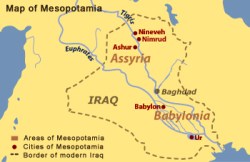
mesopotamia_map The overt evolution of the Sumerians into a Babylonian Empire is not altogether surprising – on the surface. However, the seeker should keep in perspective just how quickly all of this developed from seemingly nothing. It is true that societal living was originally organized around state religion, but prior to this it was culminated not by the social relationships shared between people, but by their living relationship with the earth.

Where first we have loosely organized nomadic hunter-gatherers that are forced to wander about or dwell in caves, essentially rolling the dice of chance for their survival, very little time passes before the sweeping transition in Mesopotamia toward planned agricultural farming and pasturing shepherds.
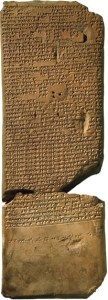
cuneisdgsdg Credited with many ‘firsts’ in the development of human history, it is the incorporation and evolution of cuneiform ‘writing’ that the Sumerians can be esteemed for – something which was undoubtedly entirely necessary for the civic growth of the human world.

In fact, it is only with writing that we have any concept at all of the history of humanity; everything prior to this inception, is rightfully considered ‘prehistoric’, at least by ‘modern’ standards.

According to ancient cuneiform tablets, the decision to cultivate civilization in the Middle East was not of men, but of a genetically distinct race known as the Anunnaki – those that appeared to ‘come down from the sky’ and were later called the gods of the original ‘pantheon’ of deities on earth…
3 Comments

Filed under akkadian, ancient near east, assyrian, babylonian, excerpt, mardukite, mesopotamian, new babylon, new release, news, nexgen, plans & proposals, prophecies & predictions, research development, sumerian, truth seeker press, youtube

Mesopotamian Mythology The Easy Way — Sumerian Anunnaki (Study Guide) Part 5

10624862_510504005749215_4262210687146683942_n2

MASTERING MESOPOTAMIAN MYTHOLOGY
A Brief Anunnaki A-to-Z Directory (Study Guide) – PART FIVE
edited by Joshua Free for Liber-52

[See necrogate.com for PART FOUR]

NINKI {35} [“Lady of the Earth”] — The official spouse (consort) of ENKI, also known as DAMKINA [“Lady Who Came to Earth”]. NINKI is the daughter of ALALU (the ‘heavenly’ king prior to ANU) and the the mother of MARDUK.

NINLIL {45} “Lady of Air-Space” — The official spouse (consort) of ENLIL, also known with the epithet SUD (“nurse”). The background to the relation- ship between ENLIL and NINLIL is not commonly found in the typical cuneiform tablet cycles. Naturally, the lore is not Mardukite or Babylonian in origin and does not appear in the tablet catalogue or commentary of (modern) Mardukite Core anthologies. The cycle is sometimes referred to as “Enlil’s Banishment to the Underworld.”

NINSHUBUR [“Lady of the East”] — The personal assistant (Mercury), second-in-command to the goddess INANNA (ISHTAR). She does not take a consort and there is an alluded love-relationship between her and INANNA (ISHTAR).

MesopotamianReligionFrontcrop NINURTA {4/(50)} “Lord of the South Wind” — The official heir-son of ENLIL, born of ENLIL and NINMAH, espoused to BAU. NINURTA represents the current of Saturn in the Mardukite paradigm, representative both of “hidden power” and “hidden secrets” (an idiom for the dark power and secrets behind the origins and legacy of Babylon). In the Enlilite Sumerian worldview, NINURTA (called NINIB in Babylonan) is the Enlil-in-waiting, a position usurped by MARDUK proper for the Age of Aries. As Enlilship is typically symbolized by ‘dragonslaying‘ — the same motif present in the elevation of MARDUK in Babylon rivaling the dragon-queen TIAMAT can be seen in the older Sumerian cycles where the prowess of NINURTA is shown in his ability to fight the mighty dragon KUR. His colors are black and violet and his essence is corresponded to the metal lead.

NISABA — The Sumerian agricultural goddess of writing and scribes; replaced by the god NABU in the Mardukite Babylonian Anunnaki tradition.

SAMAS / SHAMMASH {20} — The official solar deity of the Enlilite Sumerian Anunnaki pantheon, brother to INANNA (ISHTAR), born of NANNA and NINGAL. The sun represents the brilliance and radiant energy of life on earth; the light that allows organic life to grow and even the manner of which ‘time’ [and ‘lifespan’] is divided. Expansive powerful energy of the solar current is invoked in magical ceremonies for general success and well-being. The fiery nature of the ‘star’ is called upon to ‘incinerate iniquities’ and reveal the nature of darkness and lies, meaning: the revelation of truth. Mistaken (by modern scholars) as monotheistic ‘sun worship’, solar veneration is really the celebration of life. As an archetypal representative of the ‘starry’ ‘heavens’, the sun signifies the physical presence and watchful eye of the ‘All-God’, invoked in matters of law to bring righteous judgment to critical worldly situations. SAMAS is sacred to Sunday, the colors gold and yellow and in the essence of gold.

magansmall SARPANIT {(5)/(45)} — The part-earthling (seventh generation of ADAPA, by ENKI) chosen royal spouse (consort) of MARDUK; princess-queen patron goddess (ISHTAR) of Babylon and mother to NABU. In alternative versions of the lore, her name ERU (or ERUA) designates her as the ‘mother-goddess’ of the ‘Children of MARDUK’ (later associated with the light-folk or elves of Europe).

TIAMAT [“Life-Giving Mother”] — The ‘primeval dragon’ in Babylonian archaic epics, often equated with the Sumerian KUR. Later esoteric traditions and texts associate ‘her’ with Yaldabaoth (Ialdabaoth) in Gnostic Hermeticism, or Khornozon (Choronzon) in Enochian Hermeticism. She is equated with the ‘waters’ or the ‘Deep’ in post-Sumerian Semitic scripture (Hebrew: tehom) – the all-encompassing “Sea” that is parted to reveal the first ‘division’ (fragmentation) of “Life” in the Universe. She is paired anthropomorphically with ABZU (the Abyss) as the prehistoric ‘ancestors’ of the Anunnaki race. Her primary literary presence as TIAMAT (or T(I)AMTU) is in the Enuma Elis (Babylonian) ‘Epic of Creation’. In later times, the name is used for the wife of ADAMU (Adam), being the equivalent to the Semitic “Eve” character.

1 Comment

Filed under ancient esoterica, ancient near east, babylonian, excerpt, mardukite, mesopotamian, new babylon, research development, special offer, sumerian, truth seeker press

Sumerian and Babylonian Mythology — Ancient Anunnaki A-to-Z (Study Guide) Part 3

1477350_385082334958050_1914015250_n2

Mastering Mardukite Mesopotamian Mythology
A Brief Anunnaki A-to-Z Directory (Study Guide) – PART THREE
edited by Joshua Free for Liber-52

[See necrogate.com for PART TWO]

ERESHKIGAL – [“Mistress of the Great Below”] The Queen of the Great Lands in the Sumerian tradition, sister of INANNA-ISHTAR, granddaughter of ENLIL and spouse to NERGAL.

MesopotamianReligionFrontcrop GANZIR — The gatekeeper to the underworld ‘Kingdom of Shadows.’ The ‘Gate of Ganzir’ is often confused with the ‘Gate to the Abyss’ or the ‘Gate to the Outside’, but instead it is a portal into the Anunnaki-controlled Underworld, the ‘Shadowlands’ or twilight world within the domain of ERESHKIGAL, who rules this ‘land of the dead’. Quoting a modern grimoire of Babylonian occultism, the “necromantic art, by which is it desirous to speak with the phantom of someone dead, and perhaps dwelling in the ABSU [Abyss], and thereby a servant of ERESHKIGAL… it is no less than the opening of the Gate of Ganzir.”

GIBIL [“He Who Has Fire”] — The companion of the flame, a descendent of ENKI who uses fire to conduct alchemy and other feats of “fire power.”

GIRRA — The “servant”, “power” or “fire” of the ‘great god’; the Sumerian fire-god or essence or force of a fire-god named GIBIL.

INANNA {15} [“Lady of Heaven”] — The Sumerian goddess of “passion”, both ‘love’ and ‘war’, and patron of URUK, begot by NANNA and NINGAL; originally betrothed to MARDUK, she then changes her consort choice to DUMUZI. Her prowess and determination secured her a place in all ancient pantheons; being the “Goddess of One-Thousand Names,” titled ISHTAR in Babylon. INANNA (ISHTAR) is the spirit of Venus, whose day is Friday and with an essence found in copper. Her colors are green and white, significant to her domain of fertility and growth. She offers her magicians the skills in love and visions of beauty.

NECRONOMICON - THE ANUNNAKI BIBLE (Sixth Edition)

NECRONOMICON – THE ANUNNAKI BIBLE (Sixth Edition)

MARDUK {10/(50)} [“Son of God”] The supreme champion of the IGIGI during pre-Sumerian times of the Anunnaki; heir-son of ENKI, he becomes the patron of Babylon and the ‘Mardukite‘ tradition reigning for the Age of Aries in Mesopotamia. All tablet cycles making reference to MARDUK are purely Babylonian or from a direct later source – as he does not appear in any significant pre-Babylonian cuneiform tablet cycles yet unearthed. When mentioned briefly as the son of ENKI, working in Eridu, he is named ASARLUHI, becoming the patron Anunnaki “deity” of magic or ‘Master of Magicians’ after having inherited the craft from his father. The blatant industrious and expansive power represented by MARDUK in his ascent up the pantheon (as observed in Babylon) is typified by the planet Jupiter (ENLIL, by Sumerian standards). His color is purple.

NABU {12} [“Prophet”] — The official post-Sumerian secretary of the Anunnaki, part-divine earth born heir-son of MARDUK and messenger-herald and spokesperson of the ‘Mardukite’ tradition, the national cult of Babylon devised by NABU who assisted his father in the redevelopment of the Anunnaki paradigm (as seen in the ‘Mardukite‘ religion of Babylon replacing the previously observed ‘Enlilite’ world order of the Sumerians). Creating the concept of ‘history’ and ‘propaganda’, NABU gives the ‘stylus’ to humanity (and launches a group of scribe-priests (specially taught writing and rhetoric) to catalog the natures, identities, history and decrees (decisions) of the Anunnaki Assembly (gods) and their relationship with each other and the human (“mortal”) world, thereby creating not only the first public ‘religion’, but the first ‘mythology’ (a religion rooted in literary and oral legacies of human relationships and encounters with the divine) and the systems that were able to later result (most of which are still functioning as part of ‘normal’ everyday life in contemporary society). NABU is the archetypal ‘High Priest’ (ENSAG) of the first religion (dedicated to MARDUK) and practiced by priests who preserve the craft of ENKI in Eridu with science and ‘magic’ of the gods to power and sustain the prosperous longevity of Babylon.

…to be continued.

3 Comments

Filed under akkadian, ancient esoterica, ancient near east, assyrian, babylonian, excerpt, mardukite, mesopotamian, new babylon, plans & proposals, research development, special offer, sumerian, systemology, truth seeker press

Mastering Mardukite Mesopotamian Mythology – Anunnaki Directory (Quick-Study), Part 1

530px-Faravahar-Gold.svg

Mastering Mardukite Mesopotamian Mythology
A Brief Anunnaki Directory (Quick-Study) – PART ONE
edited by Joshua Free for Liber-52

ADAD {10} The youngest son of ENLIL that becomes the national patron deity to the Hittites (called HADAD or TESHUB); possibly also recognized as BAAL HADAD in an Hittite version of the Supernal Trinity that is elevated to a chief god position in the same manner that MARDUK is raised in Babylon. As a storm god in the Anunnaki pantheon, ADAD is represented by thunder, lightning and torrents. According to the Hittite succession, hierarchical kingship passes from ALALU to ANU to KUMARBI (ENLIL) and the BA’AL HADAD (TESHUB). In the Enki’ite (Mardukite) Babylonian system he is named ISHKUR and granted the position of “Inspector of the Cosmos” by ENKI.

Gates3rdEdfrontcropMINI ALALU [“Father of the Gods”] — The figure maintaining ‘kingship’ in the ‘heavens’ prior to ANU. An ancient Hittite (Hurrian) tablet cycle titled ALALU & ANU or “Kingship in Heaven” describes the conflict between the two for the seat of ‘kingship’ in the ‘heavens’. According to the Tablet-K series in Liber N, reprinted in the Necronomicon Anunnaki Bible or Necronomicon Anunnaki Legacy (Silver Edition) explains: Formerly in the Ancient of Days, ALULU was reigning in heaven; and for nine sars did he rule the skies, but not well did he reign. Then in the ninth sar of his reign, ANU defeated ALULU. ALULU descended from heaven and ruled the dark-hued earth. ANU gave fight and defeated ALULU and kingship was lowered from heaven to earth by decree of ANU.

ANTU {55} [“Life of Heaven”] — The official half-sister (by a different mother) and spouse (consort) of ANU. ANTU and ANU beget ENLIL. In archaic pre-Sumerian lore, ANTU is espoused to the archaic AN.

cuneisdgsdg ANU {60} [“Heavenly One”] — In the Sumerian Anunnaki pantheon, ANU is the supreme “All-Father” of the pantheon; father to ENLIL by official spouse ANTU, and the father of ENKI & NINHURSAG (by other wives). Called AN in pre-Babylonian times and ANU by the Babylonians, a being whose family resides on, or emerged from the ‘place of crossings’ (Nibiru). Few of the incantation tablets (or ‘prayers’) invoke the powers of ANU directly, since the “heavenly force” was perceived as too vast to be channeled in its raw state – and to degrade it to anything more accessible would be to compromise the nature of what is being represented by this figure.

ANZU [“Knower of Heaven”] — An obscure bird-like beast/monster of an unclear nature. The ANZU or ZU usually refers to a “heavenly bird” or thunderbird that appears in an archaic tablet cycle stealing the ‘Tablets of Destiny” from ENLIL, disrupting the DUR-AN-KI (‘Bond-Heaven-Earth’) “stargate.” It is possible that this half-man, half-bird, sometimes called AZAG, was a genetically engineered storm-god or artificially intelligent messenger being of ENLIL that turned “evil.”

ARURU — The sister of ENLIL, alias NINTU, who is the Babylonian title for the ‘mother-goddess’ known in Sumerian as NINMAH or NINHURSAG. In the Babylonian ethnocentric epics, she assists MARDUK in creating the human race (or ‘Race of Marduk’), however, in the Enuma Elis, it is the “blood” of KINGU that is used. Other Sumerian versions say the “blood” or “essence” of some other ‘slain’ god is used for this.

AYA [“Dawn”] — The official spouse (consort) of SAMAS in Akkadian; named SHERIDA in Sumerian.

…to be continued.

2 Comments

Filed under akkadian, ancient esoterica, ancient near east, assyrian, babylonian, mardukite, mesopotamian, new babylon, research development, special offer, sumerian, truth seeker press

Mesopotamian Magic, Rites and Rituals of Eridu, Sumerian Anunnaki in Babylonian System

mesopotamianmagicheadline

Through Marduk, the power of Eridu – incantation-prayer – was taught to the scribes of Nabu and the Mardukite Priests, who were taught to attract and compel the ‘gods’ in the name of Marduk, always incanting the word-formula of the highest order: Nabu invoked by way of the name of Marduk; Marduk invoked by way of the name of Enki, Our Father, who in turn would invoke by the name of Anu – and so was born the concept of magical hierarchies, an ideal that was convoluted and obscured when employed later (during the Middle Ages and such), particularly distorted by the Judeo-Christian paradigm as evident in many popular grimoires…
~ NABU, Joshua Free, The Book of Marduk by Nabu (2010)

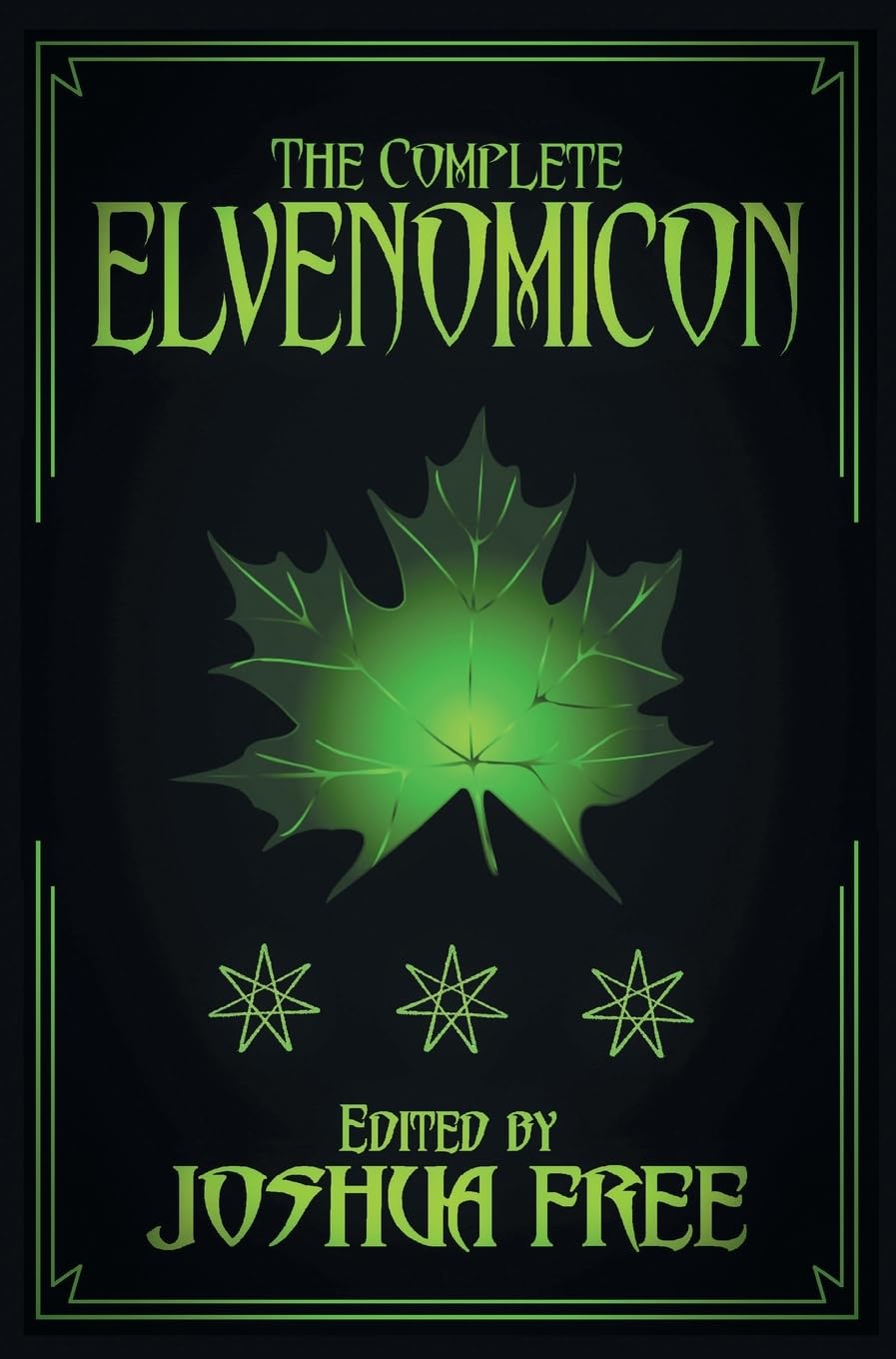
Gates3rdEdfrontcropMINI This mardukite.com blog is officially excerpted from the Liber-51/52 materials recently released in the NEW mardukite.com exclusive edition of the GATES OF THE NECRONOMICON anthology edited by Joshua Free. These materials are also available as Mesopotamian Religion by Joshua Free or Sumerian Religion II.

Many version of Erudite magic may be found through the Mesopotamian ‘spiritual’ (or ‘magical’) cuneiform texts. The incantation tablets from the ‘Mardukite’ Babylonian Anunnaki tradition, specifically those used and forged by scribe-priests of the Order of Nabu, are invoked from the ‘perspective’ (authority) of NABU – as was the tradition learned verbatim from MARDUK. In both scholarly and esoteric ‘Mardukite’ texts, the ‘Opening Ritual’ of Mardukite magic is derived from the source titled: “The Incantation of Eridu.”

cuneisdgsdg Perhaps the most fundamental ‘formula’ of the magical system in Babylonia, if there is one, goes back to the heart of the system born of the scribe-priests and the figures who brought this system about – NABU and the appropriation of his father, MARDUK as the chief director. This is the spiritual acknowledgment alluded to by the Incantation of Eridu, also known as the ‘Incantation of the Priest of Eridu’ (Eridu being the shrine-home of ENKI), or the ‘Incantation of the Deep‘, which simply refers to another name for the far-away abode of ENKI near the Persian Gulf.

Ceremonial activation of the ‘birthright’ of Anunnaki power sealed in Eridu (and then in Babylon) allows a practitioner to assume the representative form of the “Priest of Eridu,” a title first bestowed
upon MARDUK by ENKI, then passed onto NABU during the solidification and heights of the Babylonian era. The esoteric key in effect here is that the priest conducts the incantations (ceremony) as the embodiment of an intermediary ‘messenger’ deity – the original semantic of the word “invocation” – thereby directing the cosmic (world) order, in essence, first hand.

MesopotamianReligionFrontcrop In short – the magician approaches his deity as himself – a servant priest – and petitions to assume the godform, whereby he continues the ceremony as a divine representation of the god ‘invoked’. An almost identical principle appears within Semitic mysticism and the Judeo-Kabbalah – an excellent example being found in contemporary Catholicism, when the priest ‘assumes the Christ-form‘ to effectively perform a perceived alchemical transmutation on the sacramental bread and wine, conducted as a representative of Jesus on earth, in imitation (dramatic reenactment) of the ‘Last Supper’.

In the ‘Mardukite’ system observed in Babylon, the god being invoked is MARDUK. This is affirmed with the priest’s first utterance of : “It is not I, but Marduk, who speaks the incantation.” And from then on the system is sealed and readied for use by the Mardukite devotee. Consider the lines in this conjuration, adapted from the Mardukite “Conjuration of the Fire God:

It is not I, but Marduk, Slayer of Serpents, Who summons thee.
It is not I, but Enki, Father of Magicians, Who calls thee here now.

SumerianReligion2crop As described, the ritual34 operates as if from the perspective of NABU (speaking for MARDUK). Though variations exist across the opening lines of several Assyrian “exorcisms,” one key tablet example – translated by R.C. Thompson as his Tablet N for “Devils and Evil Spirits of Babylonia” (1903) – relates:

The Priest of E.A. [Enki] am I.
The priest of Damkina [Ninki] am I.
The messenger [Nabu] of Marduk am I.
My spell is the spell of E.A [Enki].
My incantation is the incantation of Marduk.
The ‘magic circle’ of EA [Enki] is in my hand.
The tamarask, in my hand, I hold.

From the modernized Mardukite version:

I am the Priest of Marduk, Son of Our Father, Enki.
I am the Priest of Eridu and the Magician of Babylon.

The Assyrian version continues humbly as follows:

EA [Enki], King of the Deep see me favorably.
I, the magician, am thy slave.
March thou on my right hand, assist me on my left;
Add thy pure spell to mine.
Add thy pure voice to mine.
O god that blesses me, Marduk,
Let me be blessed, wherever my path rests.
Thy power, shall god and man proclaim.
And I too, the magician, thy slave.

Gates3rdEdfrontcropMINI Returning to a an older version, transliterated by E.A. Budge for “Babylonian Life & History” (1883), we see a different method used toward petitioning the “younger pantheon” to the side of the priest.

I am the Priest of EA [Enki].
I am the Magician of Eridu.
Shammash [Samas] is before me.
Sin [Nanna] is behind me.
Nergal is at my right hand.
Ninurta is at my left hand.

And to this, the Mardukite version appends:

Anu, above me, King of Heaven.
Enki, below me, King of the Deep.
The power [blood] of Marduk is within me.
It is not I, but Marduk, who performs the incantation.

259202494_2439cd36a1_o2 The priest mystically sheds the ‘mortal spark, even if for a moment, to experience the transcendental magic clad in godhood. Rising on the planes of perceptual awareness – as a god, speaking on behalf of the chief of the pantheon – the priest-magician is now able to influence worldly affairs in the original and most direct magical means known on the planet – a direct interface with the gods as one of their own…

1 Comment

Filed under akkadian, ancient esoterica, ancient near east, assyrian, babylonian, excerpt, limited edition, magick & mysticism, mardukite, mesopotamian, modern occultism, new babylon, new release, plans & proposals, research development, special offer, sumerian, truth seeker press, youtube

New Babylon Rising – Mesopotamian Anunnaki Gods & The Mardukite Necronomicon, Lughnassadh Issue 2014

NBRheaderSMALLnotuse

GREETINGS SEEKER!

Welcome to the the eighth online eZine installment of “New Babylon Rising“, a continuous effort provided to the public by the Mardukite Truth Seeker Press, dedicated to the preservation of ancient literary records — primarily those cuneiform — and the human traditions they inspired on the planet. Together we unveil these antiquated mysteries and shine a new crystalline light on the most critical subjects of our time and in understanding where we came from, where we are and where we are going: the origins and development of human beliefs, internal potentials and external manifestations, especially those ancient “divine” encounters, establishment of artificial social “systems” among the population, the future evolution of transhumanism and, of course, fragmented languages, religions, and the dispersion and corruptions in esoteric or occult knowledge regarding superior spiritual knowledge that engineers the reality we experience everyday and the progression of immortal spirits beyond this realization.

We have entered dangerous territory, indeed…

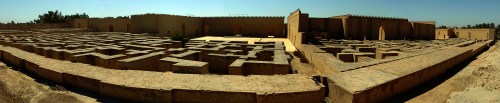
Babylonian ruins of babylon

BABYLON, Gateway of the Gods: Energy Signatures, Mardukite Sigils, Anunnaki Signs & Glyphs
mardukite.com — 3, July 2014
The Anunnaki sealed within this system are seven. Among them is MARDUK, who sealed the others to Gates of Babylon. Before them all is the Earth Gate [Foundation of Heaven and Earth]. Beyond them all is the Ring [Gate] of Pass Not – wherein resides the Ancestral Chiefs of the Supernal Trinity – The Elder Gods: ANU, ENLIL & ENKI…

ENKI – Babylonian Lord of the Earth, Sumerian God EA and Gnostic Demiurge
mardukite.com — 10, July 2014
The spirito-mystical trinity that composes the ancient pantheon is concluded with Enki, brother of Enlil. Most genealogies, particularly emphasized by post-Sumerian civilizations, will conclude that Enki and Enlil are, in actuality, half-brothers. Both are divine sons of Anu, the “Sky-Father,” but as heir to “Kingship of Heaven,” En-lil is reported as the son of Antu (the “official” consort of Anu), while Enki is descended from Nammu [which is often equated to Tiamat in Babylonian lore and perhaps the justification of the descent of Marduk from Tiamat in some versions]…

BOOK OF GENERATIONS, Ancient Cuneiform Tablets of Anunnaki gods, Understanding ENKI & ENLIL
mardukite.com — 20, July 2014
The Book of Generations concerning the true and ancient story of the Creation of Man now lies open for all to read. According to the most ancient sources existing on the planet, the ANUNNAKI, particularly ENKI and MARDUK — with the assistance of a “birth-goddess” [hence the origins of the “One Mother”] — eased the toils of the IGIGI-Watchers by fashioning a race of slave workers for the fields and mines: humans…

mesopotamianmagicheadline

Dark Paths & Outer Gateways, Lights & Shadows of the Necronomicon Tradition with Joshua Free
necrogate.com — 6, July 2014
Those who work with these mysteries grow beyond the mere “mortal” understanding of good and evil – as without such self-honesty, the exploration of the Great Mysteries and the Great Deception become at once impossible…

NECRONOMICON ANUNNAKI BIBLE – SIXTH EDITION — mardukite.com exclusive Anniversary Edition!
necrogate.com — 18, July 2014
A tome of incredible grandeur drawn from the original archives of the Mardukite Reseach Organization (Mardukite Chamberlains)… NEARLY 600 PAGES — SIX EDITIONS — THOUSANDS IN PRINT… The Necronomicon
of Mesopotamia… Sumerians… Star-Gates of Babylon… The Anunnaki… Ancient Alien Gods… HERE is the definitive work in its much anticipated 5th Anniversary revised and expanded 6th edition!

Babylonian Book of Dead Names: Mardukite Anunnaki Necronomicon edited by Joshua Free
necrogate.com — 23, July 2014
THE BABYLONIAN NECRONOMICON – Here is the Book of the Chronicles of Ancestors [Dead Names] who descended “from the Heavens to the Earth,” created the race of mankind and the race of MARDUK, and led the races of men against the race of MARDUK, stemming from political conflicts among multiple generations of the ANUNNAKI…

Leave a comment

Filed under akkadian, ancient esoterica, ancient near east, assyrian, babylonian, excerpt, limited edition, magick & mysticism, mardukite, mesopotamian, modern occultism, new babylon, new release, nexgen, plans & proposals, prophecies & predictions, research development, sumerian, truth seeker press

BABYLON, Gateway of the Gods: Energy Signatures, Mardukite Sigils, Anunnaki Signs & Glyphs

mesopotamianmagicheadline

The Anunnaki sealed within this system are seven. Among them is MARDUK, who sealed the others to Gates of Babylon. Before them all is the Earth Gate [Foundation of Heaven and Earth]. Beyond them all is the Ring [Gate] of Pass Not – wherein resides the Ancestral Chiefs of the Supernal Trinity – The Elder Gods: ANU, ENLIL & ENKI.

BabylonianMagickCSpbCVRcrop [This mardukite.com blog post is officially excerpted from the Tablet-X series of Mardukite Liber G originally prepared for the Necronomicon Anunnaki Bible edited by Joshua Free. These materials also appear reprinted in the ceremonial anthology: Babylonian Magick edited by Joshua Free.]

Anunnaki energetic forces (currents) are bound to the Seven Rays and the Seven Stars – each vibrating a tone or color of manifestation into existence. The powers of the Anunnaki – as connected to the planets and rays – have called the “zonei” or “zones” – comparable even to the Stations of the Spheres.

NecroBible6ththumb May the wise ones come forth to tap the powers of the Gateway of the Gods, that these currents may be realized on Earth once again, and may the Anunnaki return and command obedience. [But beware – the deception of fragmentation for the colors and flavors displayed before you are of a unifying Source.]

Beyond the Seven Zonei [Anunnaki] are the ‘three rays of unity’ that become fractured into ‘seven parts’ in our sensory range of existence. Beyond the Supernal Trinity is the One, the Eternal Source of All Being and Creation that is manifest in the will and form of every thought and thing.

Powers of the younger Elder Gods are sealed to the blood of their ancestors – as is yours, dear Gatekeeper – all from ANU, divided then between ENLIL and ENKI. The ancient texts explain that the Blood of Kingu and the Breath of the Elder Gods were combined for your existence and it is from these things alone that “magickal powers” can be manifest by beings that possesses them.

bookofmardukthumb By succession, NABU can lead you to MARDUK, who can petition you to ENKI; ENKI to ENLIL; and ENLIL to the powers of ANU, if desired. In the true pious tradition, energetic powers are “sent down.” You can distinguish the genetic source of a ‘current’ by its birthright – often connected to the sigil-glyph-insignias of command, mainly triangles, indicating the King of Heaven (ANU), the Lord of the Command (ENLIL) and the Lord of the Earth (ENKI).

Consider the sigil-seals of the two primary factions of Anunnaki that inhabit the ancient world. In the Babylonian tradition, currents of both “sides” are invoked toward the completion of the Earth System. Rivalry (between “polarity”) does not slow the course of natural systems because, as it is said, “the show must go on” and on a larger scale, the duality is not actually perceived to exist (such as in the older Sumerian tradition).As a symbol, the “hexagram” sigil is found where power is evoked from ceremonial grimoires, angelic mysteries, etc. Furthermore, the “merkaba” appears when communication and exchange of energy with forces beyond our sensory range of the material world occurs.

merkbwcrop The five-pointed star is a sign of the human race, and is sealed to the condensed material world and the sensual range of elements. The seven-pointed star is the sign of the Anunnaki. The eight-pointed star is universal of the “StarGate” itself. Between five and seven is the sign of the “Stairway” by which the two are linked, and this is the relevance of the six-pointed star – that which has been seen on emblems of orders and societies for centuries. It lies at the heart of the Solomonic grimoires, the Kabbalah and Merkaba of an energetic matrix-existence.

2 Comments

Filed under ancient esoterica, ancient near east, babylonian, excerpt, magick & mysticism, mardukite, mesopotamian, modern occultism, new babylon, plans & proposals, research development, sumerian, truth seeker press

Marduk, Anunnaki god of Babylon, Son of Enki, Father of Nabu in Mardukite Tradition

mesopotamianmagicheadline

MARDUK — “The blatant industrious and expansive power of Jupiter has been placed at the height of most ‘Sky God’ Olympian pantheons as Zeus or a similar figure. The name (Jupiter) comes from the Romans: Dys Pater, meaning Father-God. This energetic current commands outright worldly success as well as the magic of spirits: command of the hierarchies…

BabylonianMagickCSpbCVRcrop This portion of the mardukite.com blog post is extracted from the “Book of Marduk by Nabu” (Liber W) also available in the recent commemorative “Babylonian Magick” anthology by Joshua Free.

NABU SPEAKS: “The Elder Gods originally attributed this position to Enlil in Sumer. I personally heralded my father, Marduk, into Enlilship of the “younger pantheon” in Babylon. Our tradition there, and in Egypt, was wholly based on him being the centralized figure. You may invoke my father for his strength and power, as well as a petitioner to the Elder Gods. He is exalted as the Master of Magicians, carrying the mysteries of my grandfather, Enki, to Babylon, and bestowing the traditions upon me to relay.” (Liber W)

bookofmardukthumb “The original designation of Jupiter is 50, the number attributed first to Enlil and later to Marduk by the Babylonians, who first was given the number 10. The color of the current is purple, but also airy and fiery colors (yellow, orange, black). This energy is preferred by many leaders and law enforcing folk, lending to those who are pure to receive it, the power to command the material world.” (Liber W)

“Marduk was proclaimed King of the Gods, replacing Enlil, and the other gods were required to pledge allegiance to him and to come to reside in Babylon where their activities could be easily supervised. This usurpation of Enlilship was accompanied by an extensive Babylonian effort to forge the ancient texts. The most important texts were rewritten and altered so as to make Marduk appear as the Lord of the Heavens, the Creator…”
Zecharia Sitchin, The Twelfth Planet (1976)

MesopotamianReligionFrontcrop The name Marduk is actually a modernization taken from the Semitic “meri-dug” [Merodach]. The oldest version of a similar spelling AMAR.UTU [a.mar-utu.ki = “light of the sun on earth”] often translated by contemporaries as “solar calf” or “son of the sun” give some background to Marduk’s esteem. (Liber 50)

[The remainder of this mardukite.com blog post is extracted from a New Babylon Rising article derived from Liber 50 – now available in the new edition of Mesopotamian Religion by Joshua Free.]

zar
Being the foremost son of Enki, he gained power quickly. The Semitic name “Maerdechai” that came from the Chaldeo-Babylonian [silik-mul.u-khi] name meaning “Marduk is God.” The more common MAR.DUG means “son
of the pure mound,” and is thought to be connected to the pyramids in not only Mesopotamia, but in Egypt, where he raised himself as the leader of a third party (interpretation) of gods – the Egyptian Pantheon – as “Amon-Ra,” [and possibly also Horus] again identifying himself with the “solar” current.

cuneisdgsdg Marduk’s decision to raise himself to a monotheistic-like “God” status created new political issues for the Anunnaki on Earth – creating a reason for there to be tensions between the two lineages (of Enki and Enlil) for supremacy on earth (and the right to install their own lineages and chosen humans as kings in their stead).

THE RACE OF MARDUK…

Naturally, the other Anunnaki were less than appreciative of Marduk’s desire to rule over them, although the Age of Aries, his sign, did come and go and he was not left to his own in Babylon (or in Egypt). This seems to have been a disciplinarian act by the other gods.

babel98769878 Assuming the most common interpretation, Marduk was to lose rights of kingship “in heaven” for the taking of a “human” wife instead of his betrothed half-sister Inanna Ishtar. His argument was that Sarpanit (his consort) was a descendent of Adapa [see the Necronomicon Anunnaki
Bible
], and thus of Anunnaki bloodline; that Ishtar was no more interested in the union than he was, and it had not affected her rise to power; and finally, if not “in heaven,” why not “on earth”? The resulting catastrophes in the Middle East are evidence enough that this betrothal did not occur peacefully.

A MARDUKITE LEGACY BORN

In Assyrian accounts, Marduk, as the great “father-god” Assur or Ashur [“Ashshur”], seems to emerge as if from nowhere, leading some scholars in the late 1800’s and early 1900’s to consider the idea of Marduk being a fictitious figure imagined into being for purely political reasons.

Sarpanit [also Sarapan or Zarpanitu] is mentioned often in Babylonian prayer but does not appear in any of the significant mythic tablet cycles. She achieves an elevated status by her relationship with Marduk, and together, they are the parents of Nabu. At the spring equinox “A.KI.TI” festival she is the “spring-maiden” of fertility festivals in Babylon…

REDISCOVER THE BABYLONIAN ANUNNAKI LEGACY TODAY WITH THE WORK OF THE MARDUKITE CHAMBERLAINS!

1 Comment

Filed under akkadian, ancient esoterica, ancient near east, assyrian, babylonian, excerpt, magick & mysticism, mardukite, mesopotamian, new babylon, plans & proposals, research development, sumerian, truth seeker press, youtube

ANU – Sumerian gods, Mesopotamian Religion, Babylonian Pantheon Kingship in Heaven

claytabletsheader

The Sumerian tradition made popular in the last century revealed that the Anunnaki pantheon depicted an archetypal “Olympian” pantheon of deities that were originally assigned to twelve positions in the cosmos, later yielding the lore that would give us our “zodiac.”

MesopotamianReligionFrontcrop This mardukite.com blog post is excerpted from the Liber-50 material first appearing in Sumerian Religion by Joshua Free, in addition to the Sumerian Religion anthology Mesopotamian Religion and the Year-2 anthology Gates of the Necronomicon, materials also appearing in the Year-1+2 mega-anthology Necronomicon Anunnaki Legacy (Silver Edition).

Prior to the Ammonite fascination with the local Sun, best observed among the Egyptians and other solar-cults, it was the more “distant” stars that were deemed the “rulers of fate” and “keepers of the
sacred cycles” that kept the organized universe in order.

The “Ancient Ones” from Sumerian prehistory (Abzu, Tiamat, Lahamu, etc.) are given mention in the literature but are viewed as more insubstantial or metaphysical essences of creation, barely able to be personified as traditional deities. We have shown in correlative chapters how such forces could be seen as the primordial essence of the All-Source being first made manifest, but the Sumerians viewed these essences as originally being made substantial in their own personal “All-Father,” a figure-head for their
hierarchical pantheon.

nec The position of Anu in the Sumerian pantheon is as an undisputed “father in heaven,” who acts as the supreme “progenitor” or “father of the gods” from his place as the “king of the local universe.” The “House of Anu” (the traditional “heaven” or “abode of the gods”) is sometimes written as UR.ANU or “Uranus” (from the Greek “Ouranos”) and his most sacred place of “worship” on earth was in Uruk at the temple of E.ANNA – also translated to mean “House of Anu.” The number of his rank is sixty – the number of cosmic perfection.

Mesopotamian traditions came to view Anu in a similar manner as the abstract Babylonian expression of Ilu, where he became the “Lofty One” or “Supreme God Most High” in the pantheon, a remote, distant and indiscriminate All-Father much more representative of the “Heavenly Father” that Jesus alluded to in the New Testament then that of the Old Testament God of the Hebrew. The solidity of his personification becomes increasingly faint in descending traditions, and though within his power, he rarely intervenes or makes an appearance to the “earth” world of gods and men. His main function in the pantheon is as the “Father” of the gods, who are then mainly left to deal with material universe on their own accord.

cuneisdgsdg Few of the incantation tablets (or “prayers”) invoke the powers of Anu directly. The heavenly force is perceived as too vast to be channeled directly by the successors and to degrade it to anything more accessible would be to compromise the nature of what is represented.

In the Semitic traditions the role of Kingship in Heaven is equated to the full extent of power that keeps the universe in motion, contained in an “unspeakable” and “unknowable” name (termed the “Tetragrammaton” in the modern Hebrew-based mysticism).

It is more common for the Sumerian magician or priest to evoke a subsidiary deity from the pantheon (lineage) to invoke the names known to them rather than pursue methods of Egypto-Hermetic cryptomancy to divine and compel spirits against their will using “true-names.” In the Chaldeo-Babylonian tradition, the names of Enki and Marduk are evoked to speak the names (and later deriving traditions often used them to replace obscure and “secret” names altogether).

“True indeed there was a supreme name which possessed the power of commanding the gods and extracting from them a perfect obedience, but that name remained the inviolable secret of Hea [EA – Enki]. In exceptionally grave cases he [the enchanter] besought Hea, through the mediator Silikmulukhi [Marduk], to pronounce the solemn word in order to re-establish order in the world and restrain [temper] the powers of the abyss. But the enchanter did not know that name, and could not in consequence introduce it into his formulae… he could not obtain or make use of it, he only requested the god who knew it to employ it, without endeavoring to penetrate the terrible secret himself.”
–M. Lenormant, Chaldean Magic & Sorcery, 1874

1 Comment

Filed under akkadian, ancient esoterica, ancient near east, assyrian, babylonian, excerpt, magick & mysticism, mardukite, mesopotamian, modern occultism, new babylon, new release, plans & proposals, prophecies & predictions, research development, sumerian, truth seeker press, youtube

New Babylon – New World, Mardukites Honor the Anunnaki Legacy of Modern Nabu Joshua Free

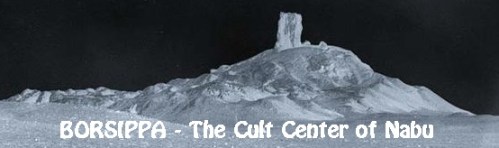
Borsippa2b2

“Look at things from the point of view of the Sun.”
– A. Crowley

The Modern NABU and the Mardukite movement as a whole, is indeed the continuation of the efforts made in Egypt and Babylon by Ancient NABU – and attempting to fix what went wrong. What we still seek today is actually the same goal that MARDUK himself sought to accomplish in Babylon – the return of all religious worship to the true Source, the All, that which exists outside the Realm of any perceived “gods” of antiquity, as realized in complete self-honesty.

nabuspeaksthumb [This mardukite.com blog post is extracted from the foreword by Sortileges, the Mardukite Chamberlains Arch-Bishop of the Canadian Diocese, as it appeared in the original Liber-12 disclosure: NABU SPEAKS: AUTOBIOGRAPHY OF AN ALIEN MESSENGER (by Joshua Free).]

This main tenet of this goal alone is quite different than other modern approaches and otherwise “occult” organizations, which really only play the game of politics with their spirituality, and are so arrogantly “right” that they fail to see reality. Mardukites, on the other hand, aren’t concerned with what’s “right” or “good” by human standards – words that have actually caused more pain and death on earth than you might think. We are self-honest spirits caring for the future of the living race, the Children of Light. Simply put – we are replacing the program of the ancient human being that Ancient NABU had set with a brand new, self-honest, one for the “true” New Age.

lapis lazuli cloak 1 In my opinion, especially to newcomers to the Mardukite literature, the only self-honest way to begin questioning (or understanding) who (or what) NABU is, requires simply to analyze the following passage from Tablet A.

NABU,
Royal Son of MARDUK and SARPANIT,
Firstborn heir to MARDUK,
Given the secrets of Writing and Wisdom.
He is the messenger [Mercurios] of MARDUK
And organizer of the Mardukite Tribe,
Counselor to… the prophets of Marduk,
Brother to SATU, whom the Egyptian named SETH,
NABU is the vizier of MARDUK on Earth.
As heir to MARDUK, the ANUNNAKI gave him,
The numerical designation of 12.

cuneisdgsdg After becoming more involved with the Mardukites it seemed, at least to me, that it better described Joshua Free, the Modern NABU, the hybrid messenger, far more than the abstract archetypes and “godforms” that came to be interpreted from these ancient mysteries. For me, it is all quite self-explanatory. That NABU is an alien messenger or a human freak is actually of little consequence in the end, because it is not the messenger, but the message that is important.

…And yet.

My own experience and resulting opinion is that NABU is the only modern “occult leader” who has not become eaten by his ego – and this should be quite evident to anyone who has ever worked with him for the last few years he has been public. He has demonstrated how politics in the Mardukite movement was, is and will always be kept to a strict minimum, and only when it arises as a self-honest necessity in bringing the work to society that these matters are dealt with at all. This is very different from other modern “New Age” or “esoteric” movements that I have had contact with – where only self-delusion and ego-masturbation prevailed.

MesopotamianReligionFrontcrop Concerning myself, all I will say is that the teachings, writings and friendship of NABU have allowed me to not only have a completely new outlook on life, but also a very real self-honest new experience of the Universe – a true and definite paradigm shift. The Anunnaki Legacy we have spent several years putting into print contains answers to every question that has haunted humanity since as long as it can remember in ages past; Systemology offers a new hope for the future.

1 Comment

Filed under akkadian, ancient esoterica, ancient near east, assyrian, babylonian, excerpt, excerpt, magick & mysticism, mardukite, mesopotamian, modern occultism, new babylon, new release, new release, nexgen, plans & proposals, prophecies & predictions, research development, sumerian, systemology, truth seeker press