Tag Archives: chaldean tablets

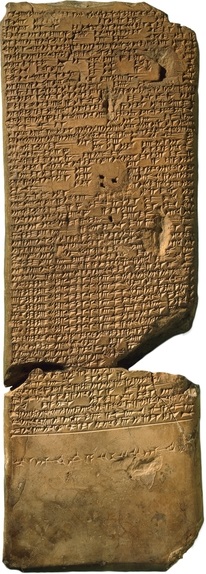
Mesopotamian Magic, Maqlu Cuneiform Tablets, Babylonian Dark Rites of Anti-Witchcraft

mesopotamianmagicheadline

“Climb the ladder of lights and appeal to the gods for their protection and for the destruction of the enemy and all evil-doers, wicked witches and warlocks of the world…”
–Necronomicon Anunnaki Bible

How often we have heard of the “Dark Arts” born of a ‘polarized’ and often ‘dualistic’ view of the universe – and the forces that occupy it. For every ‘white witch’ there is a ‘black spell’ and to every system of Order, there is a Chaos factor; for no fragmented experience of reality can ever actually find “balance”, but the pendulum swing – the tidal ebb and flow of universal currents will always seek it.

maqluthumb This mardukite.com blog post is extracted officially from Mardukite Liber M, available as either MAQLU MAGIC or NECRONOMICON SPELLBOOK II, in addition to the Year-3 anthologies either MESOPOTAMIAN MAGIC or NECRONOMICON WORKBOOK and the mega-anthology NECRONOMICON GNOSIS.

…So, too is movement possible in the physical world – or at least one’s perception of the ‘3-D’ reality experienced. As such, with the once united ‘crystal’ being cracked into the varied refractions of human experience, language and culture, a ‘dualistic’ world emerged in consciousness; right before the very eyes of ancient Mesopotamians – at the heart and cradle of human civilization.

WHAT IS THE MAQLU CUNEIFORM TABLET SERIES?

Before approaching the more ‘colorful’ elements of the tradition – those that could most appropriately be given classifications as ‘Dark Arts’, ‘Sumerian Sorcery’, ‘Babylonian Witchcraft’, ‘magickal warfare’ or ‘wizards duels’ – it is important that the context for which such exists, a background screen onto which to express the story of the MAQLU in its projected spectrum of rainbow lights and kaleidoscope glory.

MesopotamianThumb The name MAQLU can be interpreted differently as with most things – such variegated perceptions are not even restricted to foreign languages for even a shared one is not free of semantic issues in its own vocabulary. Most typically, MAQLU is translated to mean “the Burnings” by ‘Sumeriologists’ and such. This is a good ‘base’ for our context, as we do indeed find the origins of a community bonded for ‘burning evil in effigy’.

The Simonian work, in regards to a Babylonian Necronomicon practice, interprets the tablets as ‘Rites of Burnt Offering’ or else a ‘Book of Burnings’ for literary purposes. As with most of the work ‘restored’ by the Mardukite Chamberlains, a surface interpretation is never accepted and a ‘deeper mystery’ can often be uncovered in the very ‘literal’ meanings behind these very old words that do not appear to have had the same ‘metaphorical’ meaning that modern language users often take for granted – for the Mardukites have interpreted the MAQLU more appropriately – and not without its other diverse cultural parallels – as Burning Man [maq-lu].

cuneisdgsdg Though it seems that the MAQLU operation was once a much more simple, internalized, meditative and solitary application used by early priests and magicians in Mesopotamia, it later developed more dramatically as a public Fire Festival in Sumer and Babylonia, involving the entire population of the community who gathered together in a ‘combined’ and ‘harmonic’ effort of intention to ‘drive out’ or ‘dispel’ the “evil” and “evil-doers” of the land.

As “ridiculous” as this might sound to the naïve skeptic or right-wing fundamentalist, it can and should be noted that more recent public scientific studies all over the globe have now shown the effective abilities of consciousness moving energies when large groups, or better, the majority of the population is focused on a single emotional event.

These types of ‘quantum’ effects appear to have very real ramifications for the population of the planet and the greater cosmos as a whole in this entangled universe whether or not people are aware of this phenomenon taking place in their environment and even internal ‘spirito-mental’ being (which are self-honestly All-as-One).

necrognosisTHUM In the instance of the MAQLU, the Burning Man is the representation of the ‘evildoers’ of the world – those who ‘plagued’ humanity with their wickedness and thereby upsetting the ‘world order’ of the gods, in addition to the gods themselves. Upsetting such a balance was usually felt in the community as ‘illness’ and ‘pestilence’, ‘disease’ and ‘famine’. Such could prove devastating to still developing human civilizations, and as such they were considered ‘evil’, the most wicked of ‘demons’ and anything that might lead to them – mostly uncleanliness and misappropriated living – were considered taboo (the original non-moral tribal sins) and for good reason.

Eating from an unclean plate was taboo (a sin) because it could lead to the spread of disease. Ancient humans were far from primitive in their understanding of the natural world and their relationship with
it. Before the wrongful use of authority in classical times, the taboos and sins were not given from dogma, but from medicinal necessity.

Representative images are often used in ‘idol magic’ or ‘sympathetic magic’, but not as a result of worship – as some mythographers have repeatedly put forth – but to actually embody the ‘energetic current’ that is universally entangled to ‘focal object’ and its form.

WICKER MAN OF THE DRUIDS

cunei The representation of a ‘demon’, like the ‘plague-god’ Namtaru, was not to worship the deity with homage or to glorify the ‘daemonology’ of the Babylonian priests. Such statuary was typically constructed only to be ‘ceremonially’ annihilated or buried as a ‘ward’ against what the statue (deity) was representative of. In making such an object, the magicians show their understanding of the ‘entanglement’ of the universe in its mystical oneness and the interconnection of all things.

Certainly not primitive.

It is almost impossible to bring up the topic of the Burning Man without conjuring to mind a much more geographical and time-recent example made popular in the images of motion pictures and familiar Roman-inspired writings of the Celtic Druids – and that is the Wicker Man, also called ‘Burning Man’ by some neopagans.

Far removed in time and space we see evidence for the same rite being conducted and for similar reasons – the preservation of the early agricultural civilizations that were ‘guided’ by Sky God traditions – called the Anunnaki on Mesopotamian tablets or the Tuatha de Dannan (Tuatha d’Anu) in European Celtic and Druidic sources.

1001015_318340804969022_2026839541_n “Fire” is a very common element to the early ‘magical’ and ‘shamanic’ systems, and its mastery in correlation to the development of modern humans is certainly indisputable. Any connection to the Fire Festivals of Europe is going to be difficult for one to understand without having been familiarized to the rigorous research found in other Mardukite materials that gives Mesopotamia as the birthplace of the Druidic Tradition.

Sir Francis Frazer (Golden Bough) mentions both a ‘solar’ alignment and ‘purification’ style to these types of operations. The later European Wicker Giants appear to be more ‘agricultural’ in nature then the MAQLU version that targets actual ‘practitioners’ of the ‘Dark Arts’ that negatively affect the well-being of the greater population, the community at large and by extension the “moral balance” perceived of ‘universal forces’.

The ancient Sumerians and Babylonians were no less dependent on the ‘agricultural’ fertility then the Celts – far from it. Thriving of a human numbers in the lands of Mesopotamia were so heavily dependent on the skilled use of arid land and the redirection of water from the Tigris and Euphrates rivers in a skillful way since lost to the Arabs and other occupiers of the land since.

babel98769878 In Europe, we find the appearance of the Burning Man during the fertile and seed-sowing and nurturing ‘spring’ seasons, particularly the Equinox (Easter) observation, Beltane (a notorious ‘Fire Festival’) and finally Midsummer. The annual survival of the agricultural Celts was wholly dependent on the success of this season above all others.

IN CONCLUSION…

One of which does correlate with Europe is an esoteric observation of Beltane – opposite it, Samhain (modern-day Halloween) is also significant. The Sumerio-Babylonian AKITU festival is concurrent with the Spring Equinox. So, regardless of where we turn, there is a unifying (universal) picture forming to define the ceremonial observation of the Burnings.

Leave a comment

Filed under akkadian, ancient esoterica, ancient near east, assyrian, babylonian, excerpt, magick & mysticism, mardukite, mesopotamian, modern occultism, new babylon, plans & proposals, research development, sumerian, truth seeker press

ANU – Sumerian gods, Mesopotamian Religion, Babylonian Pantheon Kingship in Heaven

claytabletsheader

The Sumerian tradition made popular in the last century revealed that the Anunnaki pantheon depicted an archetypal “Olympian” pantheon of deities that were originally assigned to twelve positions in the cosmos, later yielding the lore that would give us our “zodiac.”

MesopotamianReligionFrontcrop This mardukite.com blog post is excerpted from the Liber-50 material first appearing in Sumerian Religion by Joshua Free, in addition to the Sumerian Religion anthology Mesopotamian Religion and the Year-2 anthology Gates of the Necronomicon, materials also appearing in the Year-1+2 mega-anthology Necronomicon Anunnaki Legacy (Silver Edition).

Prior to the Ammonite fascination with the local Sun, best observed among the Egyptians and other solar-cults, it was the more “distant” stars that were deemed the “rulers of fate” and “keepers of the
sacred cycles” that kept the organized universe in order.

The “Ancient Ones” from Sumerian prehistory (Abzu, Tiamat, Lahamu, etc.) are given mention in the literature but are viewed as more insubstantial or metaphysical essences of creation, barely able to be personified as traditional deities. We have shown in correlative chapters how such forces could be seen as the primordial essence of the All-Source being first made manifest, but the Sumerians viewed these essences as originally being made substantial in their own personal “All-Father,” a figure-head for their
hierarchical pantheon.

nec The position of Anu in the Sumerian pantheon is as an undisputed “father in heaven,” who acts as the supreme “progenitor” or “father of the gods” from his place as the “king of the local universe.” The “House of Anu” (the traditional “heaven” or “abode of the gods”) is sometimes written as UR.ANU or “Uranus” (from the Greek “Ouranos”) and his most sacred place of “worship” on earth was in Uruk at the temple of E.ANNA – also translated to mean “House of Anu.” The number of his rank is sixty – the number of cosmic perfection.

Mesopotamian traditions came to view Anu in a similar manner as the abstract Babylonian expression of Ilu, where he became the “Lofty One” or “Supreme God Most High” in the pantheon, a remote, distant and indiscriminate All-Father much more representative of the “Heavenly Father” that Jesus alluded to in the New Testament then that of the Old Testament God of the Hebrew. The solidity of his personification becomes increasingly faint in descending traditions, and though within his power, he rarely intervenes or makes an appearance to the “earth” world of gods and men. His main function in the pantheon is as the “Father” of the gods, who are then mainly left to deal with material universe on their own accord.

cuneisdgsdg Few of the incantation tablets (or “prayers”) invoke the powers of Anu directly. The heavenly force is perceived as too vast to be channeled directly by the successors and to degrade it to anything more accessible would be to compromise the nature of what is represented.

In the Semitic traditions the role of Kingship in Heaven is equated to the full extent of power that keeps the universe in motion, contained in an “unspeakable” and “unknowable” name (termed the “Tetragrammaton” in the modern Hebrew-based mysticism).

It is more common for the Sumerian magician or priest to evoke a subsidiary deity from the pantheon (lineage) to invoke the names known to them rather than pursue methods of Egypto-Hermetic cryptomancy to divine and compel spirits against their will using “true-names.” In the Chaldeo-Babylonian tradition, the names of Enki and Marduk are evoked to speak the names (and later deriving traditions often used them to replace obscure and “secret” names altogether).

“True indeed there was a supreme name which possessed the power of commanding the gods and extracting from them a perfect obedience, but that name remained the inviolable secret of Hea [EA – Enki]. In exceptionally grave cases he [the enchanter] besought Hea, through the mediator Silikmulukhi [Marduk], to pronounce the solemn word in order to re-establish order in the world and restrain [temper] the powers of the abyss. But the enchanter did not know that name, and could not in consequence introduce it into his formulae… he could not obtain or make use of it, he only requested the god who knew it to employ it, without endeavoring to penetrate the terrible secret himself.”
–M. Lenormant, Chaldean Magic & Sorcery, 1874

1 Comment

Filed under akkadian, ancient esoterica, ancient near east, assyrian, babylonian, excerpt, magick & mysticism, mardukite, mesopotamian, modern occultism, new babylon, new release, plans & proposals, prophecies & predictions, research development, sumerian, truth seeker press, youtube

Ancient Mesopotamian Religion: Secrets of the Anunnaki in Sumerian Mythology with Joshua Free

claytabletsheader

The most critically acclaimed and bestselling materials from the Mardukite Research Organization now available in one volume!

MesopotamianReligionFrontcrop A master compilation of mythological and religious exploration into the heart of the ancient Mesopotamian Mysteries, this easy-to-read post-modern anthology illuminates the ancient world using revolutionary teachings and source materials of the modern Mardukite Chamberlains (Mardukite Research Organization) and edited by Joshua Free, the presiding Nabu of the administration since its inception…

SumRelSet MESOPOTAMIAN RELIGION is a highly innovative and accessible ‘academic edition’ of the Mardukite Chamberlains “Year-2” research and development, including the complete text from two installments: Sumerian Religion: Secrets of the Anunnaki & The Origins of Babylon (Liber 50) & Sumerian Religion II: Secrets of the Anunnaki in Babylonian Mythology (Liber 51/52) in a single incredible compilation!

The quest toward the uncovering of ancient arts has a fundamental theme in mind: the establishment of true knowledge concerning the powers these arts were dedicated to and then a working relationship with these powers. This is the true “wizard’s” art, who pleases the “gods” in such a way as to attain “favors,” and does not waste time provoking malignant spirits to their circle, fearing for their lives at the mistaken utterance of an incantation. The true and ancient system is nothing like this.
Joshua Free in MESOPOTAMIAN RELIGION

cunei Given what is available in the most ancient writings recovered, we are brought to the traditions and spirito-mystical systems of the Middle East, those born from the ancient Sumerians and alter extended to interpretations by the Chaldeo-Babylonians, Akkadians, Assyrians and even Egyptians. The spread of this tradition across Europe led to even more fanciful and colorful realizations of the primary Olympian mythology that had first been realized in ancient Mesopotamia.

1001015_318340804969022_2026839541_n The ancient Sumerians called this race of “Sky Gods,” the “Anunnaki.” Their legacy and influence on the planet and towards the cultivation of human civiliz-ation is only recently becoming common knowledge within the last few decades. Of course, with this, has also come an increased amount of “fluff” and “bullshit” by many who have caught this wave and either believe they do know something, or else are intentionally misguided to further the misrepresentations that now run rampant in modern spiritual revivals, New Age literature and on the internet.

MesopotamianReligionFrontcrop Given the restricted access to a lot of the source materials available, many in contemporary society are simply uneducated enough, themselves, to properly discern this flood of information. This was, in fact, on the surface level, one of the purposes for the establishment of the modern Mardukite Ministries, far more than to extend covert devotion to a specific deity in the pantheon, Marduk, for which the name was derived.

The Anunnaki beings are in fact the “gods” who made an appearance as “divine representatives” to all of the ancient cultures on the earth planet. What’s more, their presence was later interpreted in the guise of “fairy tales,” which seem to carry remnants of a folk magic tradition from ancient times into to today. Curiously, the “ceremonial magic” of the priests of old, including the self-styled magicians of today, are really working with these same forces, simply under other guises and names. Given this to be the case, the proper understanding of and establishment of our position with these beings, as part of the greater whole, is perhaps the most paramount endeavor of our physical existence.
Joshua Free in MESOPOTAMIAN RELIGION

2 Comments

Filed under akkadian, ancient esoterica, ancient near east, assyrian, babylonian, excerpt, magick & mysticism, mardukite, mesopotamian, modern occultism, new babylon, new release, plans & proposals, research development, sumerian, truth seeker press, Uncategorized, youtube

Mardukite Necronomicon Babylonian Anunnaki Bible – Inside the Fifth Anniversary Edition

claytabletsheader

The Necronomicon of Mesopotamia… Sumerians… Star-Gates of Babylon… The Anunnaki… Ancient Alien Gods… The Mardukite Babylonian Religion…

NEW 5th ANNIVERSARY PAPERBACK EDITION

NEW 5th ANNIVERSARY PAPERBACK EDITION

The world has waited long enough! Here it is! An authentic NECRONOMICON for the masses! Released in commemoration of the 5th Anniversary of the Necronomicon Anunnaki Bible, the Mardukite Truth Seeker Press proudly presents the new abridged compact portable travel edition of Joshua Free’s NECRONOMICON BABYLONIAN BIBLE excerpting the primary source book of the Mardukite Chamberlains Research Organization uncovered during their first active year of development in 2009!

cuneisdgsdg Following the Mardukite StarGate Ceremony on Beltane 2009 — also coinciding with the initiation of the first official ‘Mardukite Chamberlains’ — the first of a series of installments arrived for the Year-1 Cycle of materials… called simply: NECRONOMICON… the book that later became the basis for an entire revival of interest into Sumerian Anunnaki and Babylonian Tablets, led by world-renown esoteric expert JOSHUA FREE. Containing a wealth of information not found in the original ‘Liber-N’ hardcover, this new 5th Anniversary Edition of the NECRONOMICON is a new prestigious portable abridged travel edition of the ‘Babylonian Anunnaki Bible‘ excerpting critical portions of the 5th Edition NECRONOMICON ANUNNAKI BIBLE — also found in the mega-anthology: NECRONOMICON – ANUNNAKI LEGACY (SILVER EDITION).

SO… WHAT TABLET SERIES ARE EXCERPTED OR ABRIDGED IN THIS NEW PAPERBACK EDITION ???

Here’s the inside scoop!

COMPLETE INTRODUCTION
Preface to the Third Edition (December 2009)
Preface to the Second Edition (June 2009)
Preface to the First Edition ( May 2009 )
An Introduction to Necronomical Studies
Toward a New Vision: Egypto-Babylonian Structure
First Steps Toward Gatekeeping
The Magick of the Necronomicon Anunnaki Bible

TABLET EXTRACTIONS, EXCERPTS & SELECTIONS
Tablet A – Book of the Anunnaki & Igigi (Liber N)
Tablet B – Book of Babili StarGates (Liber N)
Tablet C – Book of Crossings (Liber N)
Tablet D – Book of Dzyan (Liber L)
Tablet E – Book of Eclipses & Astrologie (Liber L)
Tablet F – Book of the Fifty Names of Marduk (Liber N)
Tablet G – Book of Generations (Liber N)
Tablet H – Book of Headaches & Demonologie (Liber 9)
Tablet J – Book of Al-Jilwah (Liber 9)
Tablet K – Book of Kings & Dragonblood (Liber N)
Tablet L – Book of the Law of Marduk (Liber L)
Tablet M.0 – Book of Exorcisms & Banishings (Liber N)
Tablet N – Book of Nemesis [Enuma Elis] (Liber N)
Tablet O – Book of Chaldean Oracles (Liber G)
Tablet P – Book of [Anunaki] Prayers (Liber L)
Tablet Q – Book of Qlippoth (Liber 9)
Tablet R – Book of the Return & Last Days (Liber N)
Tablet T – Book of Nabu-Tutu (Liber L)
Tablet U – Book of the Underworld (Liber C)
Tablet V – Book of Variations (Liber C)
Tablet W – Book of Marduk by Nabu (Liber W)
Tablet X – Book of Crossings II (Liber G)
Tablet Y – Book of Ceremonies of Marduk (Liber G)

NEW 5th ANNIVERSARY PAPERBACK EDITION

NEW 5th ANNIVERSARY PAPERBACK EDITION

This compact abridged 5th Anniversary edition of the NECRONOMICON edited by Joshua Free, is not Lovecraftian or Simonian (while it could serve to offer validity to materials from both sources for those who seek it), neither is it “dangerous” or a “hoax” (though those who fear the revelation of these truths for the world will think it the former and label it the later). This portable edition of the full NECRONOMICON ANUNNAKI BIBLE is the single most ancient and pure unaltered lore concerning the hottest topics of our time and all times, including divinity, creation, human origins, aliens, religion, pantheistic magickal traditions, alternate dimensions, portals and the afterlife.

“In this new millennium of uncertainties, it is most likely that the uncovering of the past will reveal our future…” — Joshua Free

1 Comment

Filed under akkadian, ancient esoterica, ancient near east, assyrian, babylonian, limited edition, magick & mysticism, mardukite, mesopotamian, modern occultism, new babylon, new release, new release, nexgen, plans & proposals, prophecies & predictions, research development, sumerian, truth seeker press

Oldest Writings Reveals Sumerian Anunnaki Stargate Religion Seeks All-as-One God

claytabletsheader

Cuneiform tablet sources, the most ancient written records kept by humans, identify The Primordial Abyss, which later came to be viewed as the “all-source” for the first manifestations of material existence — it was originally nameless…

SumerianReligion2ndfrntcrop [This mardukite.com blog post is officially excerpted from Mardukite Liber 50, available as Sumerian Religion by Joshua Free, materials also found in the Year-2 anthology Gates of the Necronomicon and the mega-anthology Necronomicon: The Anunnaki Legacy silver edition.]

Fundamentally, the beauty and simplicity of the infinitude of space and pure potentiality of existence is enough for an “All-Existing Being” — but this is an almost “static” existence with no forces in movement – quite simply All-is-One (or none!) in the universe.

The non-existence was not animated, not yet manifest and so required the “motion” of existence. This was born of duality, but of the highest spiritual intent and not to be confused with physical morality – for it was by the vary opposition of the currents of “chaos” and “order” set in motion with a gentle pendulum-like drive toward constant activity with one another that caused existence.

cuneisdgsdg A common interpretation of the ancient Sumerian semantics of this All-Being is best given as “ILU” in Chaldeo-Babylonian literature, a concept derived from the Sumerian “DIN.GIR” meaning essentially the “All-God”, drawn from the Source, but later pantheistic interpretations would translate this as a plural form: gods.

[SUMERIAN RELIGION — Prolific writer, Joshua Free, presents this topic such as the modern world has never before had access to, developed from the revolutionary work conducted by the next generation of Seekers actively using a revival Anunnaki tradition in the present day…]

The name ILU was held in reverence to the priests of Babylon who sought to “re-connect” with this source by “ascending” the “Ladder of Lights” or “BAB.ILU”The Gateway to/of God (also known as the “Tower of Babel”). Later, when the name became blended with “gods” it was also connected to “stars” and the function of such became more clearly defined to some as a “Gateway to the Stars” or (as Daniel Jackson would prefer) a StarGate.

SumRelSet The simplicity is immediately shattered when enter the philosophers and religious scientists for we have all-too-easily overlooked the stumbling block of our most ancient tablets concerning divinity.

“[For] the idea of Ilu was too comprehensive and too vast to receive a very definite exterior form, and consequently [too obscure for] the adoration of the people. The personality of Ilu was not clearly defined for a long time; his office and title as ‘God One’ were at first given to Anu, ‘the ancient god,’ and the first person of the supreme trinity, which was afterward held to emanate from Ilu; the priests did not distinguish the primordial principle from the chief of this trinity.”
–M. Lenormant, Chaldean Magic & Sorcery (1874)

Biblical scholars now have conceded to the idea that the Semitic books of Genesis are indeed the product of a far more ancient Mesopotamian influence. God, the creator of existence, is found alone and everywhere at once, a “primordial sea” washing through an infinite abyss.

cunei “First was the primeval sea. Nothing concerning the origin or creation of the primeval sea has as yet been discovered in the available Sumerian texts, and the indications are that the Sumerian sages looked upon the primeval sea as a kind of first cause and prime mover, never asking themselves what preceded it in time and space.”
–S.N. Kramer, Sumerian Mythology (1944)

1 Comment

Filed under akkadian, ancient esoterica, ancient near east, assyrian, babylonian, excerpt, magick & mysticism, mardukite, mesopotamian, new babylon, new release, nexgen, plans & proposals, research development, sumerian, truth seeker press, Uncategorized, youtube

Secrets of Sumerian Language, Akkadian, Babylonian, Cuneiform with Joshua Free

NBRheaderSMALLnotuse

The education of the Babylonians was entirely in the hands of the priests, who derived their knowledge from Nabu, the inventor of writing and letters, and every kind of learning – the Lord of ‘Houses of Tablets’ (or books), i.e. libraries.
~ E.A. Wallis Budge
Babylonian Life & History, 1925

sumlangthumb The overt evolution of the Sumerians into a Babylonian Empire is, as we have described in the prior section on history, not altogether surprising – on the surface. However, the seeker should keep in perspective just how quickly all of this developed from seemingly nothing. It is true that societal living was originally organized around state religion, but prior to this it was culminated not by the social relationships shared between people, but by their living relationship with the earth. Where first we have loosely organized nomadic hunter-gatherers that are forced to wander about or dwell in caves, essentially rolling the dice of chance for their survival, very little time passes before the sweeping transition in Mesopotamia toward planned agricultural farming and pasturing shepherds.

claytabletsheader

Available to the public for the first time ever — a comprehensive, practical, concise and economical guide to cuneiform writing, Sumerian language and its refined Akkadian use in Babylon, brought to the surface realm from the underground vaults of the world renown Mardukite Research Organization.

sumlangthumb SECRETS OF SUMERIAN LANGUAGE:
THE ARCHAIC HISTORY & DEVELOPMENT OF BABYLONIAN-AKKADIAN TABLET WRITING
(A DICTIONARY OF CUNEIFORM SIGNS)
edited by Joshua Free

Credited with many ‘firsts’ in the development of human history, it is the incorporation and evolution of ‘writing’ that the Sumerians can be esteemed for – something which was undoubtedly entirely necessary for the civic growth of the human world. In fact, it is only with ‘writing’ that we have any concept at all of the history of humanity; everything prior to this inception, is rightfully considered ‘prehistoric’, at least by ‘modern’ standards.

cunei The Mardukite Research Organization (Mardukite Chamberlains) have worked diligently since 2008 actively ‘reintroducing’ the long-forgotten paradigms of the ancient world, with particular emphasis on those considered Mesopotamian, meaning Sumerian and Babylonian. A central aspect of this work, no less so today then at the time of its original use, is the ‘written word’ is critical in the preservation, relay, spiritual life and use of the ‘traditions’ as they were set down in writing. Obscure ‘clay tablets’ with worn ‘wedged writing’ that we relied so long on for the basis of our completed archives that it seems only appropriate to give the entire ‘language system’ its respects.

–Secrets of Sumerian Language by Joshua Free–

According to the ancient tablets, the decision to cultivate civilization in the Middle East was not of men, but of a genetically distinct race known as the Anunnaki – those that ‘came down from the sky’ and were later called the gods of the original ‘pantheon’ of deities on earth. These cuneiform tablets also describe the originating purpose behind the ‘genetic upgrade’ of humanoids on the planet to make them fit to be workers for the gods. This began prior to what we call the Deluge and was still under the direction of ‘divine’ overseers, not yet the mortal priest-kings found in the more popular chronicles – thus not yet truly ‘human’ civilization. With the rule of men, believing themselves to be gods, the ‘seat’ of power shifts frequently throughout history – as frequently as the whims and devotions of humans change…

–Secrets of Sumerian Language by Joshua Free–

1 Comment

Filed under akkadian, ancient esoterica, ancient near east, assyrian, babylonian, excerpt, mardukite, mesopotamian, modern occultism, new babylon, new release, new release, nexgen, plans & proposals, prophecies & predictions, research development, sumerian, systemology, truth seeker press