

** NEW RELEASE **
BABYLONIAN WICCA
(A Practical Beginner’s Guide):
Using Ancient Mesopotamian Religion to Reshape Modern Wiccan Tradition
A collected works anthology featuring works by Joshua Free and Kyra Kaos
Edited by Rowen Gardner
“Babylonian Wicca: A Practical Beginner’s Guide” provides everything someone needs to establish their own personal Babylonian Wiccan tradition-either as a solitary practitioner, or with others in a group. Experienced Wiccans will, of course, have the option of simply accenting and enhancing their own preexisting tradition. However, this book is appropriate for introducing the entire subject of Wicca and Mesopotamian Religion to a newcomer, or a beginner, that is still just starting to explore these subjects for the first time.
This special collected works “Babylonian Wicca” anthology premier edition combines three underground classics edited together in one volume for the first time:
“Sumerian Religion: Introducing the Anunnaki Gods of Mesopotamian Neopaganism“ by Joshua Free;
“Priestess of Babylon: An Account of Ancient Mesopotamian Religion From a Modern-Day Practitioner“ by Kyra Kaos writing with Joshua Free; and
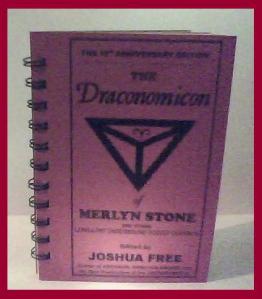
“The Witch’s Handbook: A Complete Grimoire of Witchcraft (The Book of Shadows)“ by Joshua Free writing as Merlyn Stone.

There is no expectation that a reader of “Babylonian Wicca” is already familiar with the subjects contained-whether the “Anunnaki” deities, the “land between the rivers” in the Ancient Near East, or the structure of modern “Wiccan” tradition. It is in this sequence that Rowen Gardner edits together the data for this anthology:
— starting with “Sumerian Religion” to introduce the Anunnaki pantheon of Sumerians and Babylonians;
— then “Priestess of Babylon” to describe beliefs and practices as they originally appeared in ancient Mesopotamia;
— and finally, “The Witch’s Handbook” where we see how the Old Ways evolved into a formula useful for crafting modern traditions of paganism.

The lore contained within “Babylonian Wicca” drawn from Ancient Near Eastern cuneiform tablets, the original native writings on planet Earth describing the actions and attributes of their deities. This Anunnaki pantheon is quite special to the ancient world and quite far-reaching; because it influenced the nature of other later emerging “celestial” mythologies thereafter and the entire structure of understanding “gods” and “goddesses” in the very first historical civilizations.
Mesopotamia is also unique its union (or absence) of Divine “sex/gender” characteristics. We find both a god and goddess (as a “Divine Couple”) representing aspects like the Moon and Sun, rather than polarizing them. This is just one of the many major implications when developing modern “Babylonian Wicca” traditions for the New Age.

























 * MARDUKITE ACADEMY OF SYSTEMOLOGY *