Tag Archives: sumerian

Mesopotamian, Sumerian & Babylonian Cuneiform: Wisdom Tablets, “Destiny” as Origins of Astrology

claytabletsheader

3. “When disaster is self-made, no man can interfere.” (1)

Mesopotamian religious and spiritual traditions carry a uniquely dynamic vision of ‘divinity’ and ‘spirit’. As explained in Secrets of Sumerian Language,” the cuneiform ‘cross’ sign ‘dingir‘ (Akk., ilu ) that prefixes divine names of the Anunnaki pantheon also applies to ‘celestial’ or ‘heavenly’ bodies – “planets” and “stars” symbolic and representative of the Anunnaki pantheon thought to hold precedence over mundane affairs. The belief literally stood that all physical worldly manifestations and outcomes on earth (in the material world) possessed an ‘unseen’ influence of “perturbation” by ‘divine’ and ‘otherworldly’ energetic currents (from the ‘spiritual’ or metaphysical world). Initial correspondents of these currents between individual Anunnaki and their associated planets. Additional systematization of these concepts led the Babylonian inception of astrological traditions still observed today.
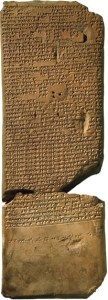
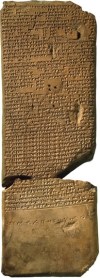
cuneisdgsdg nig-ku-lam-ma dingir-ra-na-ka su—tu-tu nu-ub-zu (2)
‘The destruction is from his own (personal) god; he knows no savior.’ (3)

Literal translation of dingir-ra(-na-ka) indicates that the aforementioned disaster comes from “one’s own personal god.” While ancient Sumerian and Babylonian spirituality did incorporate personal tribal or familial (ancestral) ‘deities’ and “guardian spirits,” such are generally related to lesser spirits: the sedu (spirits) and lamassu (guardians) that make greater appearances in the religion and magical traditions of the (post-Sumerian) Babylonian (Akkadian and Assyrian) Mardukites. Modern interpreters of this line read it literally and translate the sentiment as: when a man loses his favor with his personal deity then he has no one to appeal for him to the higher powers. (6)

sumlangthumb In Secrets of Sumerian Language, the distinct philosophical difference in Mesopotamia between ‘fate’ and ‘destiny’ is described based on its cuneiform usage. A person’s life has a ‘destination’ or ‘destiny’ that is fixed “in the heavens” by the gods or ‘stars’ in “zones of influence.” In comparison, a person’s ‘fate’ refers to subconsciously chosen environmental conditions that comprise a life-path that is not necessarily “fixed” while they are on their way to a destination that is fixed. In other words, it is the ‘route’ one travels on their way to a final ‘destiny’. Whether decreed by one’s own ‘personal god’ or ‘personal star’ or even erupting from one’s own “god-self,” this cuneiform line seems to indicate a ‘thing’ that is unavoidable or cannot be prevented by the person themselves or another human: such a thing on earth has been decreed in the heavens. (3)

SUMERIAN VOCABULARY
[nig-] – ‘abstract’ / a thing (7)
ku-lam-ma – destruction (4); a thing forgotten (8)
dingir – ‘prefix determinative’ / god, star, planet, spirit (5)
su—tu-tu nu-ub-zu – it cannot be prevented; or ‘avoided’ (9)
MesopotamianReligionFrontcrop Original analysis of the original Sumerian Proverb tablet series occurred using an elementary understanding of cuneiform script and Mesopotamian languages. Thorkild Jacobsen replaced Gordon’s original translation of su—tu-tu as “savior,” noting the Akkadian equivalent (‘ekimu‘) implies to “rob, steal or take away” (and not “to save”), meaning that the disaster/destruction that has been brought on into one’s life cannot be “touched” or “interfered” with and is thus “inevitable.” This more advanced rendering reveals a much deeper understanding of the ideal that what a person is due, they are due and a person receiving the harsh lessons of their life is unable to be assisted or coddled through it by any other power – they must simply experience, endure and, hopefully, survive the course with lessons learned. Quite simply, no one can interfere and safeguard against a person hellbent on making their own mistakes. (3)(9)


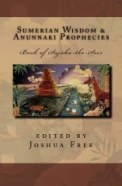
(1) Translation of Sumerian Proverb tablet by Joshua Free for Sumerian Wisdom II (tentative title) materials, the forthcoming sequel to Sumerian Wisdom & Anunnaki Prophecies: The Book of Sajaha the Seer edited by Joshua Free. These tablets attempt to preserve Sumerian language proverbs in cuneiform script during the Old Babylonian period.

(2) Derived from the original “Sumerian Proverbs” collection found in Nippur by the University Museum of the University of Pennsylvania. Some transliterations omit the ‘-na-ka‘.

(3) Original translation provided in the “Sumerian Proverbs” museum monograph by Edmund Gordon. The translation and interpretation has since been updated by Thorkild Jacobsen in the 1959 edition notes to the monograph: “–the disaster is of his own making (lit., ‘is of his personal god’), it brooks no interference.” His interpretation warns that “against self-imposed burdens, self-willed destruction, others can do very little.”

(4) Vocabulary supplement derived from the ‘Sumerian Glossary and Concordance’ for the Gordon “Sumerian Proverbs” museum monograph.

(5) Vocabulary inclusion of student translation is derived from the Mardukite handbook: Secrets of Sumerian Language edited by Joshua Free.

(6) Edmund Gordon explains his interpretation: “When a man’s personal god is against him, he has no one to intercede on his behalf before the assembly of the gods.”

(7) The Sumerian cuneiform prefixing sign ‘nig‘ – found at the start of lines throughout this particular series of ‘proverb’ tablets – indicates an attached statement regarding a ‘thing’ as an “abstraction” (concept) rather than always to be treated as a literal “thing” (object).

(8) An alternate translation to nig-ku-lam-ma is offered in the collected notes and revised additions of the 1959 edition by Edmund Gordon as: “a thing which has been forgotten.”

(9) Alternatively suggested by Joshua Free as “no one can prevent” or “no one can avoid” from the literal Akkadian ekimu – “none may ‘steal’ away.”

1 Comment

Filed under akkadian, ancient esoterica, ancient near east, assyrian, babylonian, excerpt, mardukite, mesopotamian, new babylon, new release, news, plans & proposals, research development, special offer, sumerian, truth seeker press

Sumerian Wisdom & Babylonian Cuneiform Tablets: Wisdom on Civil Disobedience, Submission & Defiance

2. “What is given in submission is a catalyst for defiance.” (1)

The ‘Near East’ of the ancient world, now called the ‘Middle East’ today, has never found an equilibrium of political or military peace. Imaginary borders and boundaries, not to mention total conquest of the Babylonian Empire, meant a king could be a true conqueror of the ‘known world’ and legitimately the most powerful of figures in its midst.

cuneisdgsdg nig-gu-gar-ra nig-gaba-gar-ra (2)
That which is given in submission becomes a medium of defiance.‘ (3)

When the annals of Mesopotamian history are examined, a seeker discovers a broad legacy of constantly shifting sands of power, dynastic reign and the geographical realm of an empire’s capital city all play a part in military management of these ancient forces that fought for control of the Tigris and Euphrates river valley (Mesopotamia), the resources it contained (abundant when tapped properly), the recognition of and authority over a sweeping population (the largest urban centers of the ancient world) and the state-religions governing the whole system (that have gone on to shape even the programming of the modern world).

sumlangthumb The actual cuneiform verse can be translated in two different ways. Both are meant to convey the same sentiment. Early transliteration scholars recognized that ‘gu-gar‘ and ‘gaba-gar‘ refer to ‘things’ of submission (gu-gar) and defiance (gaba-su-gar), which makes the statement we have above possible. However, if the ‘figure of speech’ is to be taken literally, then the ‘thing’ given is a “neck” (gu) beneath (“submission”) your opponents foot – or else, “sticking your neck out” – and this ‘thing’ becomes a ‘thing’ (placed) against the opponents chest, a sign of “defiance.” (7)

SUMERIAN VOCABULARY
[nig-] – a thing / ‘abstract’ (4)(7)
gu-gar – to submit / give submission (4)
gu – neck (5)
gaba-su-gar – of defiance / to defy (4)
gaba – chest / breast (4)

sajahafronthumb The cuneiform author suggests ‘taking one for the team’, giving motivational due to one who executes gainful sacrifice for a better future outcome – or, at least, the possibility of one. Considered in the spirit of ‘civil disobedience’ as suggested by classic writer, Henry David Thoreau, the advice may be for the ‘common folk’ rather than warlords and kings, and suggests that one keeps their head down in order to ‘fight another day’. (6)


(1) Translation of Sumerian Proverb tablet by Joshua Free for “Sumerian Wisdom II” materials, forthcoming sequel to Sumerian Wisdom & Anunnaki Prophecies: The Book of Sajaha the Seer edited by Joshua Free. These tablets attempt to preserve Sumerian language proverbs in cuneiform script during the Old Babylonian period.
(2) Derived from the original “Sumerian Proverbs” collection found in Nippur by the University Museum of the University of Pennsylvania.
(3) Original translation provided in the “Sumerian Proverbs” museum monograph by Edmund Gordon.
(4) Vocabulary supplement derived from the ‘Sumerian Glossary and Concordance’ for the Gordon “Sumerian Proverbs” museum monograph.
(5) Vocabulary inclusion of student translation is derived from the Mardukite handbook: Secrets of Sumerian Language edited by Joshua Free.
(6) As explained by Edmund Gordon, regarding ‘passive resistance’ alluded to in this tablet: “…the enemy will eventually be overthrown by means of whatever has been surrendered to him.”
(7) The Sumerian cuneiform prefixing sign ‘nig‘ – found at the start of lines throughout this particular series of ‘proverb’ tablets – indicates an attached statement regarding a ‘thing’ as an “abstraction” (concept) rather than always to be treated as a literal “thing” (object).

1 Comment

Filed under akkadian, ancient esoterica, ancient near east, babylonian, excerpt, mardukite, mesopotamian, new babylon, new release, news, nexgen, plans & proposals, research development, sumerian, truth seeker press

Sumerian Proverbs & Babylonian Wisdom: Ancient Cuneiform Tablets Reveal Emphasis on “Truth”

claytabletsheader

“Whoever partners with Truth, creates Life.” (1)

At the forefront of the ‘Sumerian Proverbs’ [Liber-P] Old Babylonian (Akkadian) cuneiform tablet series is a homage to the universal and ineffable spirit of Truth – that enigmatic force – a driving pursuit at the core of all language arts at the cradle of modern human civilization sciences…

cuneisdgsdg nig-ge-na-ta a-ba in-da-di nam-ti i-u-tu (2)

‘Whoever has walked with truth generates life.’ (3)

Communicating this philosophy to modern minds in English language is difficult. The sentiment carried is greater than to simply say: ‘whoever is true’ or ‘whoever is with truth’. It also does not say ‘whoever is filled with truth’. Whether we adopt the -da/-ta (together with) or -ta[b] (partnered with) interpretation, the implication is that ‘whoever’ is deeply ingrained or ‘bound’ to Truth; it is next to them, it is their companion, or else they have taken it as a friend, forsaking all others that might break that bond.

sumlangthumb I favor this preferred meaning over the original interpretation of having ‘walked with truth’ (impermanent past-tense). I understand the original author/translator meaning to imply the ‘walking with a companion’, but the interpretation seems vague if not misrepresenting the actual Sumerian Lexicon being evoked.

SUMERIAN VOCABULARY

[nig]-ge-na – truth (4)

-da/-ta – beside, in vicinity of, together with (5)

-ta[b] – friends, companion, partner (5)

a-ba – who? / whoever (5)

nam-ti – fate/nam; life/ti (5)

u-tu – to bear ‘children’, give birth to (5)

MesopotamianReligionFrontcrop Given that the word for ‘generating’ or ‘creating’ life given here is the same word meant to imply literal ‘birth-giving’, the romantic interpretation of this proverb is that ‘whoever partners with Truth as a lover’ will ‘give birth to Life’ – they will ‘radiate’ or ‘generate’ a prosperous life. The subject is not simply ‘building’ or ‘constructing’ the life out of preexisting materials but is literally ‘giving birth to’ their existence, life or reality as a result of their union with Truth – living in harmony with observed cosmic forces and thereby manifesting the desired life and result. (6)


(1) Translation of Sumerian Proverb tablet by Joshua Free for “Sumerian Wisdom II” [Liber P] materials, forthcoming sequel to Sumerian Wisdom & Anunnaki Prophecies: The Book of Sajaha the Seer edited by Joshua Free, with translation assistance by Khem Juergen. These tablets attempt to preserve Sumerian language proverbs in Old Babylonian (Akkadian) cuneiform script.

(2) Derived from the original “Sumerian Proverbs” collection found in Nippur by the University of Pennsylvania, combined with lines 1-2 of the “GGG” tablet text (catalogue number U.17207-58) excavated from Ur and transliterated for the 1959 edition.

-GGG-

1. nig-ge-na-ta a-ba in-da-[DI]

2. nam-ti ia-u-t[u].

(3) Original translation provided in the “Sumerian Proverbs” museum monograph by Edmund Gordon.

(4) Vocabulary supplement derived from the ‘Sumerian Glossary and Concordance’ for the Gordon “Sumerian Proverbs” museum monograph.

(5) Vocabulary inclusion of student translation is derived from the Mardukite handbook: Secrets of Sumerian Language edited by Joshua Free.

(6) As explained by Edmund Gordon: “…a man who lives in accord with the universally recognized ‘cosmic and immutable truths’ will be able to obtain for himself all the good things in life.”

1 Comment

Filed under akkadian, ancient esoterica, ancient near east, babylonian, excerpt, mardukite, mesopotamian, new babylon, new release, news, nexgen, plans & proposals, prophecies & predictions, research development, sumerian

NEW BABYLON RISING – Books of Pheryllt, Mesopotamian Mathematics & The Anunnaki – Winter 2014 eZine

NBRheaderSMALLnotuse

GREETINGS & SALUTATIONS FELLOW TRUTH SEEKER!

Welcome to our tenth online eZine/issue of “New Babylon Rising: Anunnaki, Alien Gods & Spiritual Traditions“, developed by Mardukite Truth Seeker Press in a NexGen futurist effort of public inform in dedication to ancient literary records — primarily those cuneiform — and the preservation of the Anunnaki legacy including the human evolution of its societal systems and traditions inspired across global space and time. The feature articles of this issue emphasis numbers and mathematics as it applied to Sumerians and Babylonians, the newly released debut title in the series Books of Pheryllt, and a very special offering: a concise, easy-to-read, A-to-Z quick-study guide to the Anunnaki!

Enki2 The collective efforts of the Mardukite Research Organization reveal these antiquated mysteries for ALL; our archive of books developed explicitly to shine a new light to understand the most critical subjects for the Next Generation: where we come from, what we are, where we are and where we’re going “..in this ocean of chaos”!

In addition to those otherwise cultural specific elements (Mesopotamian and Celtic), the work publichsed by the Mardukite Truth Seeker Press offers a wide range of NexGen education including — the origins and development of human belief systems — particularly what wisdom and knowledge may be drawn from ancient “divine” encounters contributing to establishment of the illusive artificially generated social “systems” among the population, NexGen evolution of transhumanism, and, of course, fragmented languages, religions, and the global distribution and corruption of “esoteric” or otherwise “occult” knowledge regarding the true superior spiritual (internal) potential of the human condition, its external manifestation in engineering the reality we experience everyday and the progression of the “immortal” spirit beyond this realization…

Indeed, we are in dangerous territory…
And this time…
THERE BE DRAGONS!


FEATURED NEW RELEASE:

PHERYLLT_banner

The Druids believed in books more ancient than the flood. They styled them the ‘Books of Pheryllt’ and the writings of Hu.
– Ignatius Donnelly, Atlantis

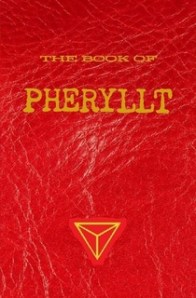
PHERYLLT_cover_thumb_lg PHERYLLT:
A Modern Guide to the First Systematizers of the Ancient Celts & The Pre-Druidic Religion

edited by Joshua Free

Where the Druids are concerned, hundreds of years of diverse academic and philosophical debate await the Seeker on their look back. It is now even more controversial to speak of the Pheryllt in neodruid circles… For two decades a modern movement of neodruids influenced by modern Pheryllt Druidism have become bystanders amidst the unbreakable schism… BUT, for now — The Legend is Real…

WOULD YOU LIKE TO KNOW MORE ???

:: BOOK OF PHERYLLT – Controversial New Age Writer Brings Druids Legend of Welsh Bards to Life
27, November 2014 — druidschool.wordpress.com

:: Uncovering the Pheryllt: First Systematizers of the Celts & Welsh Celtic Druidism with Joshua Free
28, November 2014 — druidschool.wordpress.com


FEATURED ARTICLES: MESOPOTAMIAN MATHEMATICS

claytabletsheader

:: Mesopotamian Mathematics: How to Measure Reality? (Necronomicon Numerology)
21, November 2014 — necrogate.com
“As significantly as sigil-scripts, colors and mystical alphabets have played their parts in ritualized magical drama, spiritual incantations and other ceremonial applications, so, too, are numbers viewed as mystical signs in the realm of form, representative of endless wisdom and correspondences…”

:: Babylonian Astrology & Age of Aquarius: How the Sumerians Measured the Heavens
23, November 2014 — mardukite.com
“The ancient Sumerians understood the connection between cycles, time and mathematics. In addition to the pragmatic use of the wheel or circle, they also developed the initial calculations of the circle to be 360 degrees. Their use of base-60 ‘sexagesimal’ math in the systematic measurement of time has carried with humanity to this day…”


SPECIAL FEATURE: THE ANUNNAKI — A-to-Z

anunnakisumerianreligionheader

Mastering Mardukite Mesopotamian Mythology
A Brief Anunnaki A-to-Z Directory (Study Guide)
edited by Joshua Free for Liber-52

Part 1: The Anunnaki – ADAD to AYA
Part 2: The Anunnaki – BAU to ENLIL
Part 3: The Anunnaki – ERESHKIGAL to NABU
Part 4: The Anunnaki – NAMTAR to NINHURSAG
Part 5: The Anunnaki – NINKI to TIAMAT

2 Comments

Filed under ancient esoterica, ancient near east, babylonian, excerpt, magick & mysticism, mardukite, mesopotamian, modern occultism, new babylon, new release, nexgen, plans & proposals, research development, special offer, sumerian, systemology, truth seeker press